
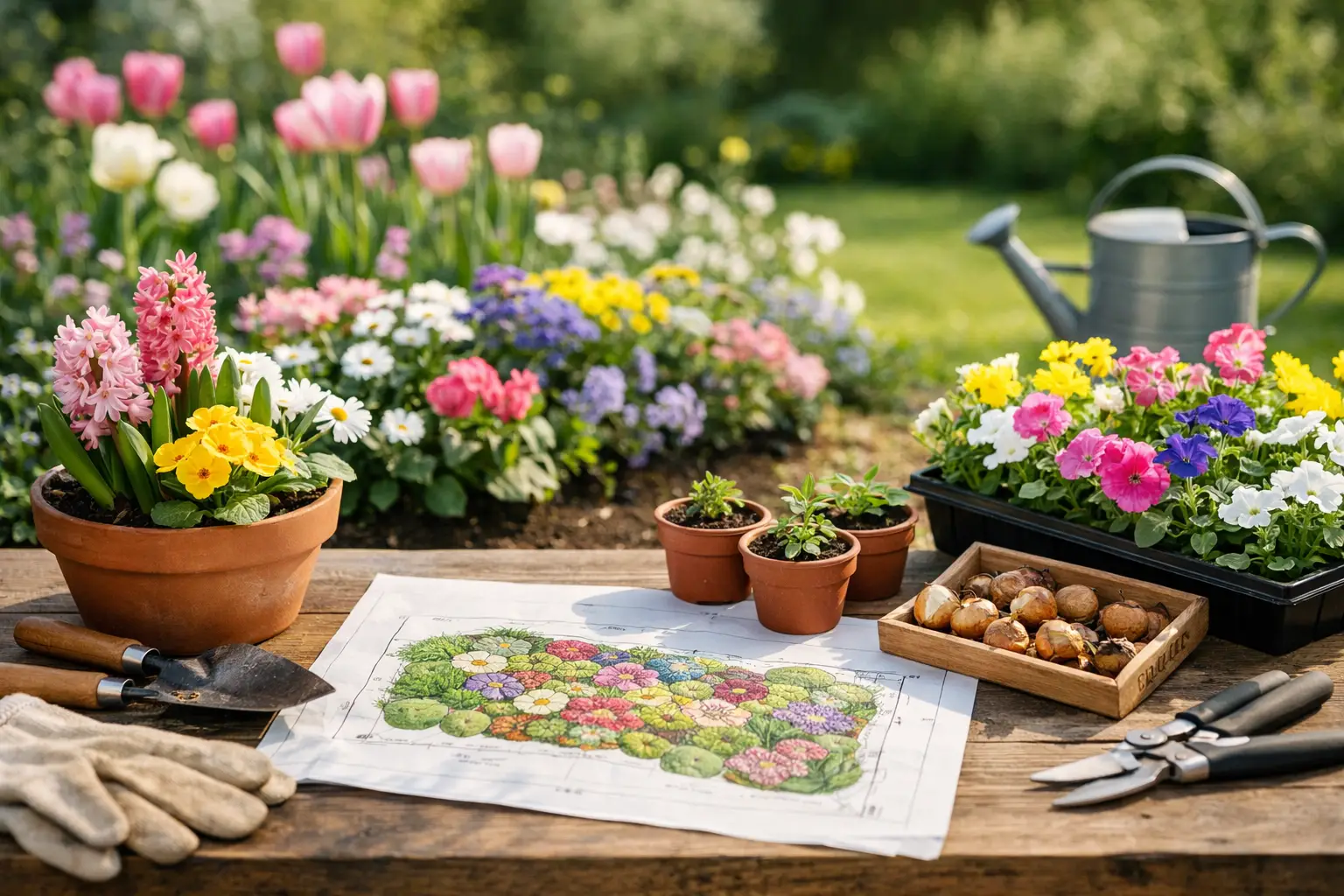
The difference between a flower bed that looks polished in April and tired by Memorial Day usually comes down to planning, not luck. Good spring flower bed planning means thinking about bloom time, sun exposure, soil, and how the bed will look from the street, the walkway, and your favorite window inside the house.
On Long Island, spring beds have to do a little more than just look pretty for a weekend. They need to handle cool nights, shifting temperatures, and that stretch when early color fades before summer annuals really take over. When you plan with those conditions in mind, you get beds that feel fuller, cleaner, and far more intentional.
Why spring flower bed planning matters
Spring is when most homeowners notice every empty spot in the yard. After winter, bare edges, thin planting areas, and worn mulch stand out fast. A well-planned flower bed adds color, but it also sharpens the whole property. It frames the front entry, softens foundations, and gives the landscape a cared-for look that carries the rest of the season.
The biggest mistake is choosing flowers first and location second. That usually leads to sun-loving plants in part shade, varieties that bloom all at once and disappear, or beds that look crowded in May and sparse in June. Planning first helps you match the right plants to the actual conditions in your yard.
It also helps with shopping. Instead of walking through the garden center and grabbing whatever catches your eye, you can choose plants with a purpose. That saves time and usually leads to a stronger result.
Start with the bed you actually have
Before picking colors, look at the basics. How many hours of direct sun does the bed get? Is the soil quick-draining or does it stay damp after rain? Is the bed viewed mainly from one side, or from multiple angles? These details shape every decision that follows.
A front foundation bed often calls for a layered look, with taller material in back and lower flowers in front. An island bed in the lawn needs a more balanced arrangement because it is seen from all sides. A mailbox bed or walkway border usually looks best with a simpler mix that stays neat and low enough not to feel overgrown.
Size matters too. A narrow strip along the house cannot handle the same plant mix as a deeper, curved bed near the driveway. Many spring plantings fail because the space is too tight for the plants chosen. Giving flowers enough room is what makes a bed look lush instead of cramped.
Choose a color plan before you shop
Color sells people on plants, but too many colors in one bed can make the whole area feel busy. For most homes, two or three main colors are enough. That might mean soft pastels for a classic spring look, bright yellow and purple for more contrast, or pinks and whites for something cleaner and more understated.
The house itself should guide the palette. Red brick, neutral siding, dark shutters, and stone accents all interact differently with flower color. Cooler shades can feel fresh and elegant near gray or blue-toned homes, while warmer flowers often pop against brick or beige exteriors.
There is also the question of duration. Some spring flowers make a strong early statement but do not carry the bed for long. Others bloom later or keep a cleaner appearance after the first flush. The best beds usually combine immediate color with plants that help bridge the gap into early summer.
Build the bed in layers
The easiest way to make a flower bed look professionally planned is to think in layers. Start with structure, then fill in with seasonal color. Structure can come from dwarf shrubs, compact evergreens, or reliable perennials that give the bed shape even when everything is not in bloom.
Once that framework is in place, add flowering plants by height. Taller material belongs toward the back of a bed against the house, or in the center of a bed viewed from all sides. Mid-height flowers create the main body of color. Lower edging plants soften the front and help define the line between bed and lawn or walkway.
This is where restraint helps. Repeating the same plants in small groups usually looks better than using one of everything. A few strong drifts of color create rhythm and make the bed feel bigger and more cohesive.
Pick plants for Long Island spring conditions
Not every spring favorite performs the same way in every yard. Long Island gardens can deal with cool winds, wet stretches, sudden warm spells, and soil that varies block by block. That is why plant selection should be practical as well as attractive.
For sunny beds, pansies, violas, alyssum, dianthus, and early annual color can be strong choices, especially when paired with perennials or shrubs that give the space some backbone. In part sun or lighter shade, the approach often changes. You may want to rely more on foliage contrast and bloom timing than on nonstop flower power.
This is also where it helps to think past April. If your spring bed is made entirely of short-term bloomers, it may peak fast and then lose momentum. Mixing in plants that hold their shape, along with material that transitions well into the next season, keeps the bed from looking spent too early.
Soil, edging, and mulch do more than people think
A lot of homeowners focus on flowers and underestimate the supporting pieces. Healthy soil gives new plantings a much better start, especially after winter compaction and temperature swings. If the bed has been neglected, refreshing the soil can make a visible difference in how quickly plants fill in.
Edging matters because it creates definition. Even beautiful flowers can look messy if the bed line is uneven or fading into the lawn. A crisp edge instantly makes the entire planting look more intentional.
Mulch is not just a finishing touch. It helps conserve moisture, suppress weeds, and visually unify the bed. The right mulch color can also make flowers stand out more clearly. Too much mulch, though, can crowd smaller spring plants, so the balance matters.
Timing your spring flower bed planning
One reason spring projects feel rushed is that people wait until the first warm weekend to start thinking about them. By then, the yard is already calling for attention. The smartest move is to plan early, even if planting happens in stages.
Early spring is a good time to clean up beds, shape edges, assess what survived winter, and map out where color is needed. Then you can install cool-season flowers and supporting plants at the right moment, rather than trying to do everything at once.
If you are reworking a larger area, phasing the project can make more sense than replacing everything in one trip. Front entry beds, mailbox plantings, and highly visible foundation areas often deliver the biggest impact first. That approach keeps the project manageable while still improving curb appeal right away.
When to keep it simple and when to go bigger
Some flower beds need only a seasonal refresh. If the structure is already good and the shape of the bed works, adding fresh annual color, new mulch, and a cleaner edge may be enough. That is often the best route for homeowners who want a fast seasonal lift without changing the whole landscape.
Other beds need more than flowers. If shrubs are overgrown, spacing is off, drainage is poor, or the bed never really looked balanced, no amount of seasonal color will fully fix it. In those cases, redesigning the planting layout is usually the smarter investment.
That is where local experience matters. A bed that looks great in a photo still has to perform in your yard, on your block, and through your spring weather. Westminster Nursery helps homeowners across West Hempstead, Nassau County, and Long Island find the right mix of seasonal flowers, perennials, shrubs, and landscape support to make that happen.
Make your flower bed feel finished
The best spring beds are not always the biggest or the most expensive. They are the ones that feel complete. The colors make sense together, the plant heights are balanced, and the bed looks good from the curb as well as up close.
A container by the front door, a hanging basket nearby, or fresh plantings around the walkway can tie the whole scene together. Those small additions often make the bed feel connected to the rest of the property instead of standing alone.
If you are planning your spring landscape now, aim for a bed that still looks good after the first burst of bloom. That is the real win – a yard that welcomes the season and keeps working for you as spring moves on.