
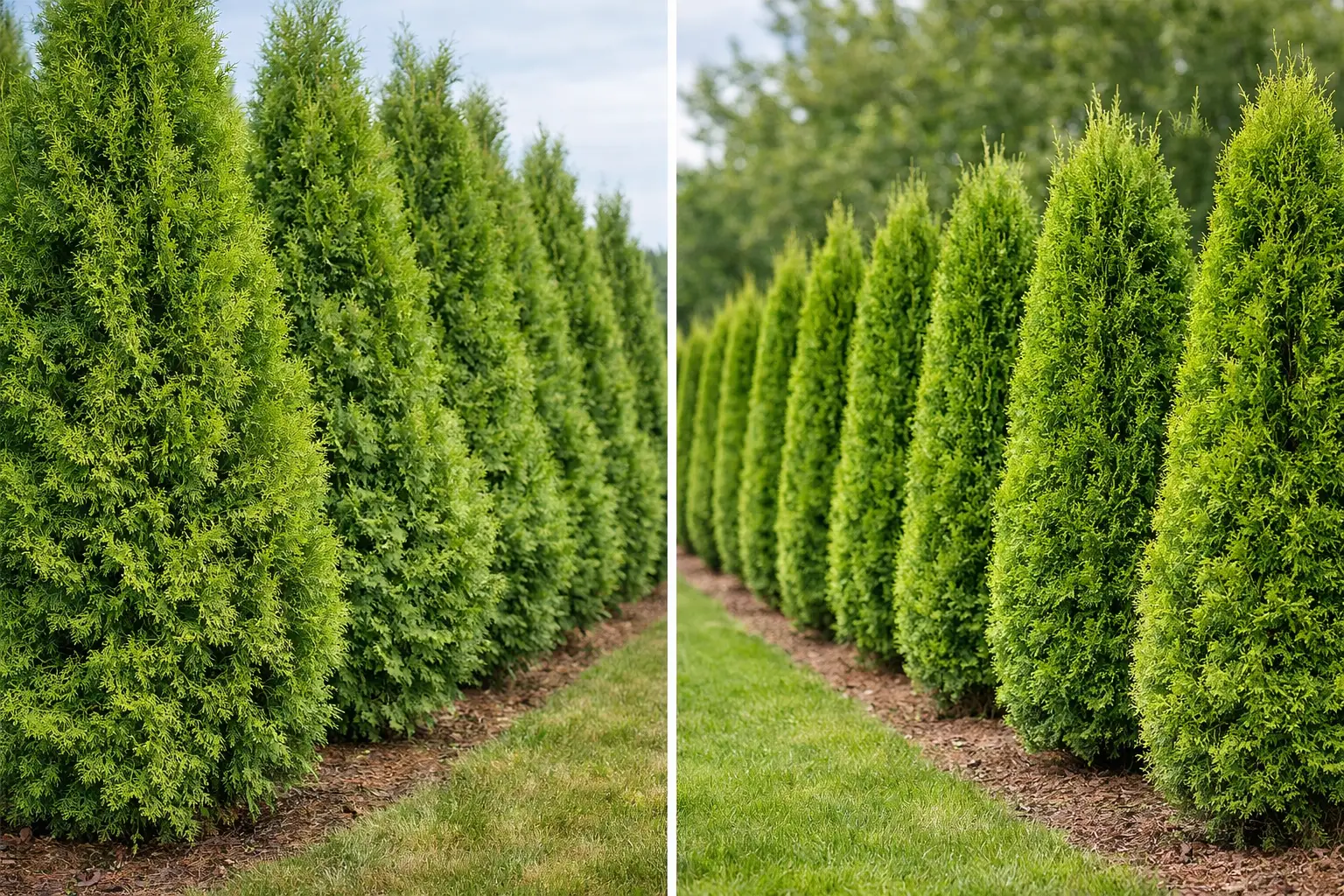
A privacy hedge can fix a lot in a Long Island yard. It can block a close view, soften street noise, frame a pool, and make the whole property feel more finished. When homeowners ask about green giant vs arborvitae, they are usually trying to answer one real question – which plant will give me the right screen without becoming a problem later?
That is the right way to look at it, because this choice is less about picking a “better” evergreen and more about matching the plant to the space. Some properties need quick height and a bold living wall. Others need a narrower, tidier hedge that stays in scale with the house, driveway, or patio. The best result comes from choosing for your yard as it exists now and as it will look in five or ten years.
Green Giant vs arborvitae: the core difference
The biggest difference in green giant vs arborvitae is size and speed. Green Giant is known for fast growth and substantial height, which makes it a strong option when you need privacy sooner and have room to let it develop. Standard arborvitae varieties, especially the ones most homeowners picture first, are often chosen because they stay narrower and are easier to fit into tighter residential spaces.
That matters all over Nassau County and Long Island, where lot sizes, neighbor lines, and pool layouts can make every foot count. A plant that looks perfect in a nursery row can feel oversized once it matures next to fencing, sheds, walkways, and property lines. The reverse is also true. A smaller hedge can disappoint if your goal is a tall, substantial screen.
When Green Giant makes more sense
If you have a larger property, Green Giant often solves the privacy problem faster. It grows quickly, fills in well, and creates a more commanding screen than many compact arborvitae choices. For homeowners with open rear property lines, wide side yards, or areas that need stronger separation from neighboring homes, this can be a very practical answer.
Green Giant also works well when you want a more natural evergreen wall rather than a tightly formal look. It has a full, lush presence and can make a newer landscape feel established sooner. If your house sits on a broad lot or you are trying to screen an unattractive view beyond the immediate property edge, that extra scale can be a real advantage.
The trade-off is simple. You need the space. Green Giant is not the plant to squeeze into a narrow strip between a fence and a walkway and hope for the best. Even if it starts out looking manageable, mature size changes the equation. Planting too large a hedge in too small an area is one of the most common mistakes homeowners make.
When arborvitae is the better fit
Arborvitae is often the easier choice for classic suburban properties. If your goal is a clean privacy line without overwhelming the yard, many arborvitae varieties fit that need beautifully. They offer evergreen color, dependable screening, and a more contained footprint that works well near patios, driveways, and tighter side-yard plantings.
For many homeowners, arborvitae also feels more predictable. It is easier to picture a row of upright evergreens that stay relatively neat and proportional to the rest of the landscape. On properties where a huge hedge would dominate the front or backyard, arborvitae can give privacy without making the planting bed feel crowded.
This is especially useful if you are balancing privacy with usable lawn space. A narrower hedge leaves more room for entertaining, play areas, garden beds, or simply easier access around the perimeter of the property.
Growth rate and patience level
One reason Green Giant gets so much attention is its growth rate. If privacy is urgent, fast growth is appealing. You plant it, establish it properly, and it starts moving toward that screening goal sooner than slower evergreens.
But faster is not automatically better. A quickly growing hedge still needs proper spacing, watering during establishment, and enough room to mature. Fast growth in the wrong spot just means you reach the problem stage sooner.
Arborvitae is often a better match for homeowners who are willing to be a little more patient in exchange for better scale. If the property does not call for dramatic height, moderate growth can actually work in your favor. It gives the landscape time to settle in and keeps maintenance decisions more manageable.
Size at maturity matters more than size at purchase
This is where many hedge decisions go off track. A six-foot plant in a nursery can make two different varieties look surprisingly similar at the moment you buy them. A few years later, they can behave very differently.
Green Giant is generally chosen for its eventual height and presence. Arborvitae is more often selected for shape control and a narrower habit, depending on the variety. That is why mature dimensions should drive the choice, not just how the plants look on day one.
If you are planting near a fence, pool, sidewalk, air conditioning unit, or property line, think ahead. Will the hedge still fit comfortably once it fills out? Will you still have access around it? Will it block windows or crowd outdoor living areas? Those practical questions matter more than the appeal of instant height.
Care and maintenance on Long Island properties
Both Green Giant and arborvitae need a strong start. Good planting, consistent watering during establishment, and attention to spacing all make a major difference in long-term performance. Once established, both can be relatively dependable, but your maintenance expectations should still guide the choice.
Green Giant tends to be lower-fuss when it has enough room to grow naturally. If you are trying to keep it much smaller than it wants to be, maintenance becomes more demanding. Arborvitae, depending on the variety, can be easier to keep in bounds in a tighter residential landscape.
Exposure, soil conditions, drainage, and deer pressure can all influence success too. That is one reason local plant guidance matters. A hedge is not a one-season purchase. It is a structural part of the property, and it should suit the site, not just the idea.
Which looks better?
That depends on the style of your home and yard. Green Giant has a bigger, softer, more expansive presence. It feels strong and substantial, which suits larger landscapes and homes that can handle that visual weight. Arborvitae usually reads as more tailored and upright, which can feel cleaner in compact or more formal settings.
Neither look is automatically better. If you want a tall green backdrop behind a patio or across a rear lot line, Green Giant often delivers that effect well. If you want a crisp row along the side of a property or around a pool area without taking over the space, arborvitae may look more balanced.
Green Giant vs arborvitae for privacy
For pure screening power, Green Giant has the edge when you have room and want a taller barrier sooner. It is a strong choice for broad boundaries and homeowners who want to create noticeable separation. Arborvitae remains a great privacy plant too, especially where width is limited and a refined hedge is the better design move.
So the answer is not really which one creates privacy. Both can do that. The better question is what kind of privacy you need. Are you trying to block a second-story sightline, frame a larger yard, or create a contained backyard retreat without sacrificing too much space? The right plant changes with the goal.
The best choice for your yard
If your property has the room, your privacy need is significant, and you want quicker impact, Green Giant is often the stronger pick. If your yard is tighter, your landscape needs better scale, or you want a hedge that feels more controlled from the start, arborvitae is often the smarter investment.
For many Long Island homeowners, the deciding factor is not growth rate or popularity. It is layout. Fence placement, lawn size, neighboring structures, and how you actually use the yard should lead the decision. That is where an in-person look at the planting area can save a lot of second-guessing later.
At Westminster Nursery, we help homeowners sort through privacy hedge options every season, whether the goal is a quick screen, a cleaner property line, or a full landscape upgrade. The right evergreen should make your yard easier to enjoy, not harder to manage.
If you are choosing between the two, picture the mature hedge first, then choose the plant that will still feel right when it gets there.