
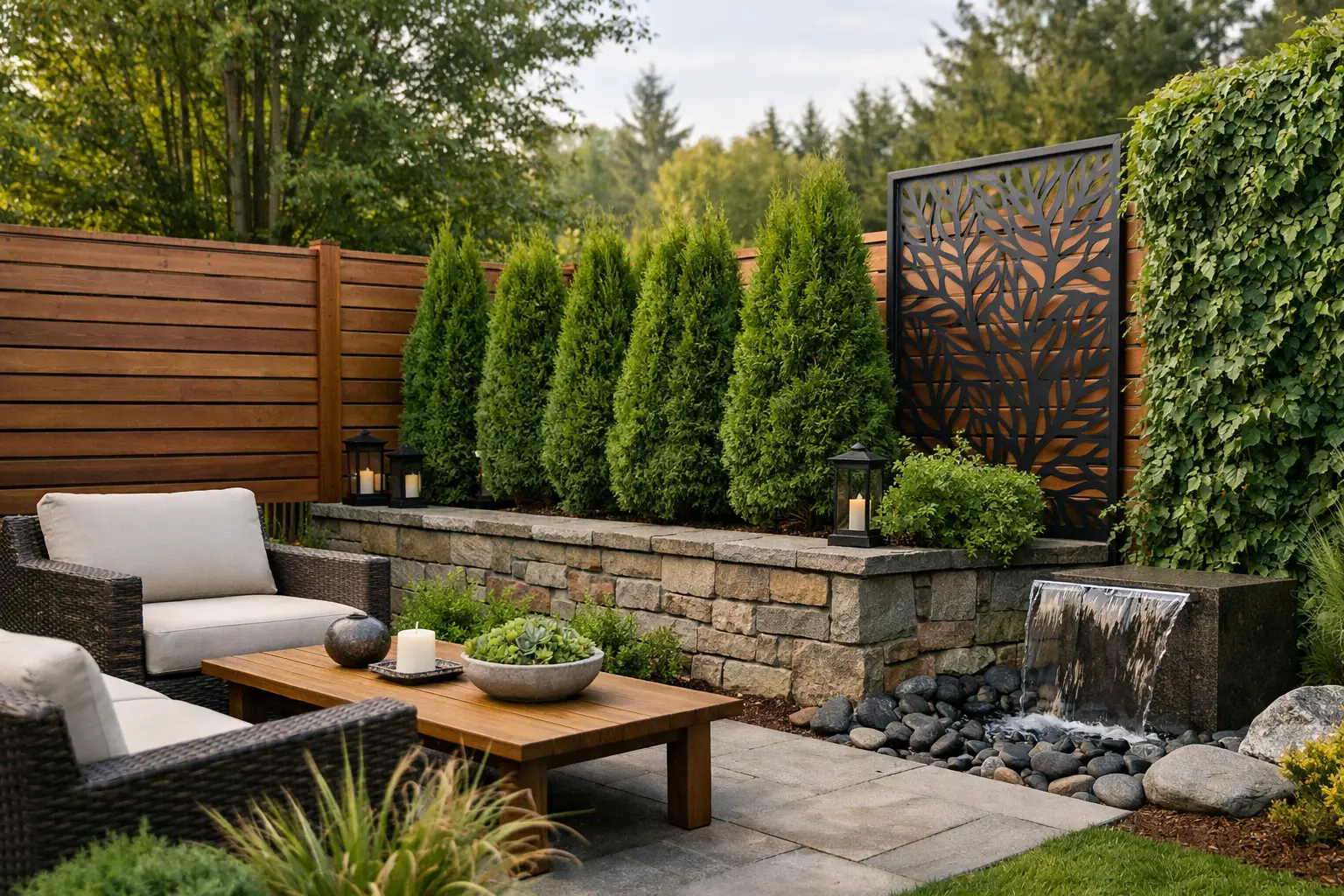
The moment you notice your neighbor’s second-story window looking straight onto your patio, backyard privacy stops feeling like a nice extra and starts feeling like the project. If you’re wondering how to create backyard privacy, the right answer usually is not one thing. It is a layered plan that fits your yard, your timeline, and how you actually use the space.
On Long Island, that matters even more. Many properties have close lot lines, visible side yards, and outdoor living areas that need screening without making the yard feel boxed in. A good privacy plan should give you separation, soften the view, and still leave room for light, airflow, and planting that looks right with the rest of your landscape.
How to create backyard privacy without closing in the yard
The biggest mistake homeowners make is treating privacy like a wall problem instead of a landscape problem. A tall fence can block a view, but it can also make a smaller yard feel tighter. A row of evergreens can create year-round cover, but if the spacing or plant choice is off, it can swallow valuable lawn space or struggle over time.
The better approach is to start with the exact views you want to block. That might be a pool area, a patio, a dining space, a hot tub, or a property line where traffic and neighboring homes are most visible. Once you know where the exposure is, you can choose a solution that matches the scale of the problem.
For some yards, that means a dense living screen along one edge. For others, it means combining plantings with a fence, pergola, or raised containers near the seating area. Privacy works best when it feels intentional, not dropped into the yard as an afterthought.
Start with the fastest path to privacy
If you want immediate screening, mature hedge material, fencing, or a mixed solution will usually get you there faster than starting with small plants alone. That does not mean bigger is always better. Larger plant material gives faster impact, but it also needs proper installation, watering, and spacing to establish well.
Evergreen hedges remain one of the most dependable choices for backyard privacy because they screen through every season. Arborvitaes are popular for a reason. They create a clean vertical look, work well along property lines, and suit many suburban landscapes. Green Giants are a strong option when homeowners want faster growth and more height, but they need enough room to mature. Leyland cypress can provide a tall screen quickly in the right setting, while skip laurels offer a broader-leaf look that feels a little softer and fuller.
This is where trade-offs matter. Faster-growing plants can be excellent for screening, but they still need the right placement and maintenance. Narrow upright evergreens fit tighter side yards, while broader plants create a more substantial visual barrier but take more space. If you choose purely for speed and ignore mature size, you may end up pruning constantly or crowding the yard.
The best privacy solutions depend on where you need coverage
Not every backyard needs the same type of screen. If the issue is a direct side-to-side view from a neighboring property, a hedge line often makes the most sense. If the problem is overlooking from above, you may need layered tree canopy, taller evergreens, or a structure placed near the activity zone.
For patios and seating areas, privacy can be more targeted. A small section of fencing, a pergola with climbing plantings, or grouped containers with upright material can create a comfortable sense of enclosure without screening the whole property. This works especially well in compact yards where a full perimeter hedge would take up too much room.
Pool areas often call for a balance between seclusion and openness. Dense evergreens can provide privacy, but spacing, access, and sun exposure still matter. You want screening that feels lush and substantial without trapping the space or crowding walkways.
If your backyard backs up to a road, open common area, or commercial edge, a mixed planting border usually looks better than a single flat line of the same plant. Combining evergreens with flowering shrubs, ornamental grasses, or shade trees can soften noise, add seasonal interest, and make the screening feel like part of the landscape instead of a barrier.
Living screens vs. fences
Homeowners often ask whether plants or fencing are better. The real answer is that each solves a different problem.
A fence gives immediate privacy and a clear boundary. It is useful when you need a strong screen right away, especially at ground level. It also helps define spaces for kids, pets, and entertaining. But fences do not soften sound as well as layered plantings, and by themselves they can look hard or flat, particularly in larger backyards.
Living screens bring texture, movement, and year-round landscape value. They can increase privacy while improving the look of the property from inside and out. They also adapt better to irregular property lines or sloped areas where fencing may feel abrupt. The trade-off is patience. Even with substantial plant material, living privacy develops over time and needs regular care.
That is why a blended approach often works best. A fence can provide instant separation close to the patio, while evergreens and shrubs create depth beyond it. You get privacy now and a more natural landscape as the planting fills in.
Plant choices that work hard in backyard privacy designs
When homeowners ask how to create backyard privacy that still looks polished, plant selection is the whole game. Shape, growth rate, width, deer pressure, sun exposure, and maintenance tolerance all matter.
Arborvitaes are a classic solution for a reason. They fit cleanly along property lines, offer strong evergreen coverage, and work well in many residential settings. Green Giant arborvitaes are ideal when there is space for height and spread, especially if you want a substantial screen over time. Leyland cypress can create a tall visual barrier quickly, while skip laurels add dense broadleaf coverage with a more traditional garden look.
The right choice depends on your yard and your expectations. If your lot is narrow, a broad hedge may create more privacy but leave less usable lawn. If you want a softer layered border instead of a formal screen, mixing hedge material with companion shrubs can produce a more natural result. If you want minimal upkeep, pick plants whose mature habit already suits the space instead of forcing them into shape with constant trimming.
Long Island conditions also affect the plan. Wind exposure, winter burn, drainage, and salt can all influence performance depending on the site. That is one reason local guidance matters. A privacy planting should look good the first season, but more importantly, it should still be doing its job years from now.
Design details that make privacy feel better
Good privacy is not just about what blocks the view. It is about how the space feels once the screen is in place.
Layering helps. A single row of evergreens can do the job, but adding lower shrubs or perennials in front gives the planting more presence and helps it blend into the yard. This matters most in backyards where a straight hedge line would otherwise feel stark.
Curves can help too, depending on the property. A gently shaped planting bed often feels more natural than a ruler-straight strip, especially behind patios and along rear property lines. In formal landscapes, straight lines may be exactly right. It depends on the architecture of the home and the overall look you want.
Think about sound and light as well. Privacy screens can reduce the sense of exposure, but dense plantings also change how a space receives sun and airflow. That can be helpful near a road or open exposure, but it may not be ideal if you are trying to preserve afternoon light around a patio or garden bed.
When it makes sense to bring in a landscape team
Some privacy projects are straightforward. If you know the exposure, the dimensions, and the plant material you want, a simple hedge installation may be enough. But when the yard has multiple sightlines, drainage issues, grade changes, or competing goals for shade, screening, and usable space, professional planning saves time and costly do-overs.
A full-service landscape team can help map out where screening is actually needed, how far plants should be set from fences and property lines, and what material will fit the scale of the home. That is especially useful when homeowners want privacy that also improves curb appeal and ties into the rest of the property.
For Long Island homeowners looking to shop privacy hedge material and move the project forward with confidence, Westminster Nursery offers the plant selection and landscape support to help turn an exposed yard into a more comfortable outdoor space.
The best backyard privacy never feels forced. It feels like the yard was always meant to work that way – calmer, greener, and finally your own.