
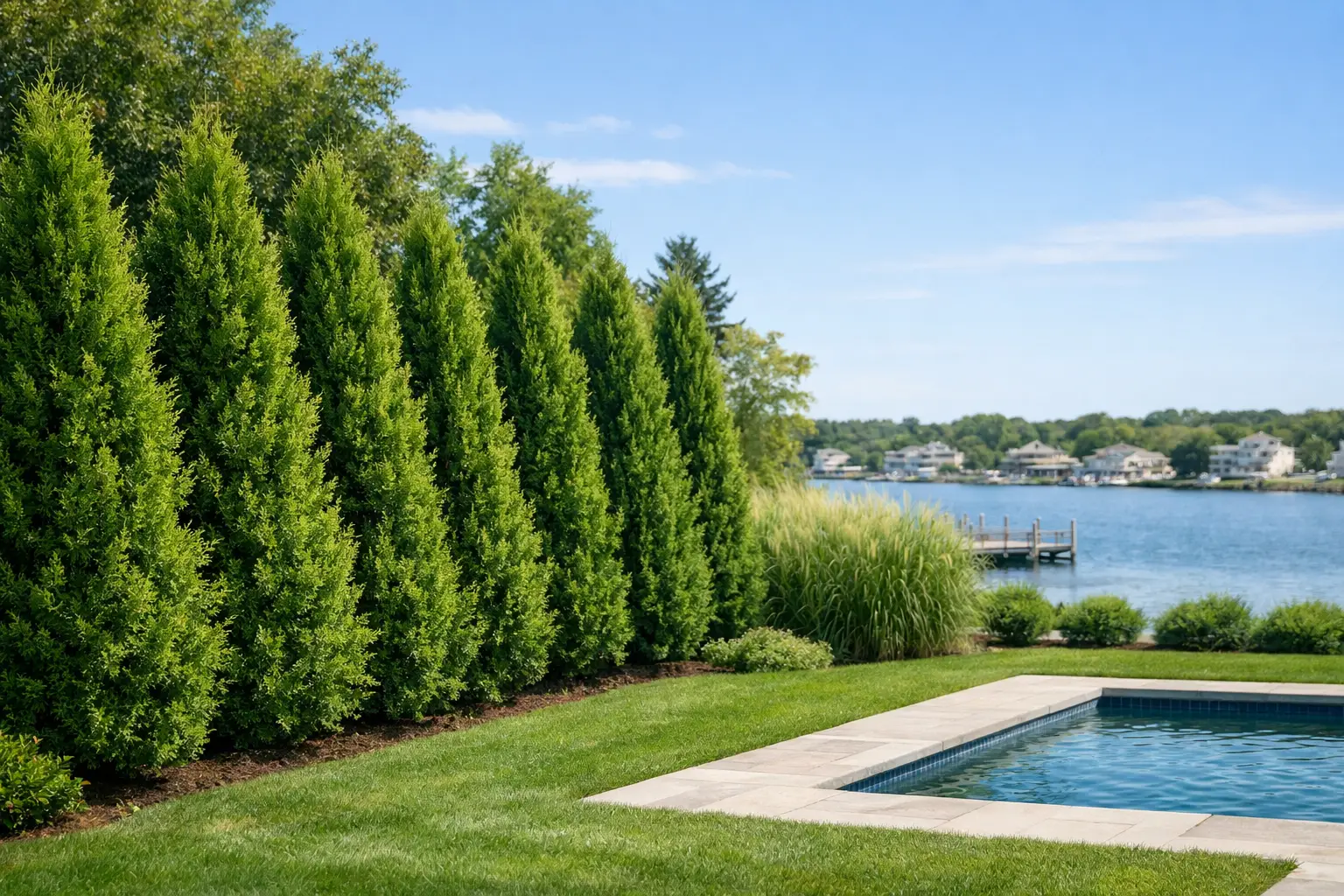
A backyard can feel a lot smaller when the view includes a neighbor’s deck, a busy road, or a fence line that never quite does the job. Fast growing privacy trees are often the quickest way to make outdoor space feel calmer, greener, and more finished – especially on Long Island, where many properties need screening without losing every inch of usable yard.
The trick is choosing trees that grow with purpose, not just speed. A tree that shoots up fast but struggles in local soil, winter wind, salt exposure, or tight suburban lots can turn into a frustrating purchase. For Nassau County homeowners, the best privacy planting usually comes down to balancing growth rate, mature size, density, and how much maintenance you actually want to take on.
What makes fast growing privacy trees worth planting
Privacy trees do more than block a view. They soften property lines, reduce visual clutter, help absorb some street noise, and give a landscape a more established look much sooner than slower-growing evergreens. If you’ve recently installed a patio, pool, fence, or play area, waiting years for coverage is rarely the goal.
That said, faster growth usually comes with trade-offs. Some trees need more pruning to stay full. Others grow tall quickly but may not stay as dense near the ground unless they’re spaced correctly. A smart screen is not just a row of tall plants. It’s a planting plan built around how your yard functions through every season.
The best fast growing privacy trees for Long Island yards
For most local properties, evergreens are the first place to look because they hold their screening year-round. A few standouts continue to be the most practical choices for homeowners who want results without making the wrong long-term investment.
Green Giant arborvitae
Green Giant is one of the most popular answers for fast privacy, and for good reason. It grows quickly, develops a tall pyramidal shape, and creates a dense green wall once established. On larger properties, it gives substantial screening without the formal look of a tightly clipped hedge.
This tree works especially well when you need height in a relatively short timeframe. It also tends to be more forgiving than some other evergreens, which makes it attractive for homeowners who want strong performance without constant fussing. The main consideration is size. Green Giants can get quite large, so they are better for yards with enough depth to support a long-term screen.
Arborvitae for a narrower footprint
Not every property can handle a giant evergreen row. In tighter side yards or smaller suburban lots, arborvitae varieties with a slimmer habit are often the better fit. They still provide that classic evergreen screen, but they’re easier to use where space matters.
Arborvitaes are a strong option when you want a more orderly look and dependable year-round coverage. They’re often chosen for fence-line planting, pool privacy, and softening a close rear property line. Spacing matters here. Plant too tightly and you can create crowding problems later. Plant too far apart and the screen takes longer to fill in.
Leyland cypress
Leyland cypress is another fast-growing favorite when homeowners want a tall, soft-textured privacy border. It fills in quickly and gives a fuller, more natural appearance than some more rigid screening plants. For larger landscape designs, it can create a substantial visual barrier in a shorter period than many slower evergreens.
The catch is that Leyland cypress is not the right answer for every site. It needs enough room and benefits from thoughtful placement where airflow and long-term maintenance are considered. If a property line is very narrow or already crowded, another tree may be a safer choice.
Skip laurels as a privacy alternative
Skip laurels are technically broadleaf evergreens rather than classic upright privacy trees, but they deserve a place in the conversation. They’re a strong choice when you want screening that feels lush, dense, and a little more refined. They can be especially effective where you need a lower or mid-height screen instead of a towering wall of green.
In some yards, skip laurels solve the privacy problem better than taller trees. If the goal is blocking a neighbor’s first-floor view, defining the edge of a patio, or creating fullness under taller existing trees, they can be a smarter fit than planting something that eventually outgrows the space.
How to choose fast growing privacy trees without regretting it
The best tree is not always the fastest one on the tag. Before planting, think about what you need the screen to do in three years, and also in ten.
If you need to block a second-story view, height matters most. If your issue is a chain-link fence or a close patio line, density at lower levels may matter more. If your lot is narrow, mature width is just as important as growth rate. Homeowners often focus on how fast a tree gets tall, then realize too late that it either swallowed the bed or never filled in where they needed coverage most.
Sun exposure also matters. Most fast-growing screening evergreens perform best with solid sunlight, though some can tolerate partial shade better than others. Soil drainage is another major factor on Long Island. A tree that dislikes wet feet can struggle in low spots or compacted areas, even if it looks great at planting time.
And then there’s deer pressure. In some neighborhoods, that issue shapes the entire planting plan. If browsing is common, it makes sense to ask for guidance before investing in a full privacy row.
Spacing, installation, and the part people underestimate
A privacy screen looks simple from the street, but getting it right takes planning. Spacing controls how fast the row fills in, how healthy the trees stay, and whether the planting will still look good years down the line. Trees planted too close together may give a quick visual payoff, but they can compete for light and air as they mature.
Installation quality is just as important. Planting depth, soil preparation, and early watering set the pace for establishment. Even fast growing privacy trees need time to root in before they really take off. The first season is usually about root development, not explosive top growth, and that’s completely normal.
Mulch helps conserve moisture and moderate soil temperature, but it should be kept away from the trunk. Watering needs to be consistent, especially during hot spells and the first year after planting. A neglected new hedge rarely catches up as quickly as people hope.
When a mixed privacy planting makes more sense
A single-species row has a clean, uniform look, and many homeowners love that. But in some landscapes, a mixed planting creates a stronger result. Blending evergreens with different textures or layering taller trees with lower shrubs can look more natural and provide better visual depth.
This approach can also help if the property has changing conditions along the line – more sun in one area, more shade in another, or a mix of drainage patterns. Instead of forcing one plant to perform everywhere, a mixed screen lets the landscape work with the site. It can feel less rigid and more established from the start.
Why local guidance matters with privacy trees
Privacy planting is one of those projects that looks easy until the details show up. Size at planting, available inventory, timing, exposure, soil, and long-term maintenance all affect the result. A tree that looks perfect in a photo may not be the right match for a windy corner lot, a narrow side yard, or a backyard with limited sunlight.
That’s why many homeowners prefer to shop locally and talk through the project with people who know Long Island growing conditions. Westminster Nursery regularly works with customers looking for arborvitaes, Green Giants, Leyland cypress, skip laurels, and other privacy material that can help shape a more comfortable, more usable yard. For larger projects, professional landscape support can make the difference between simply planting a row and building a screen that actually solves the problem.
If privacy is high on your list this season, now is a good time to think beyond fast growth alone. The best screen is the one that fits your property, fills in well, and still looks right years from now – because real privacy should feel like a long-term improvement, not a rushed fix.