
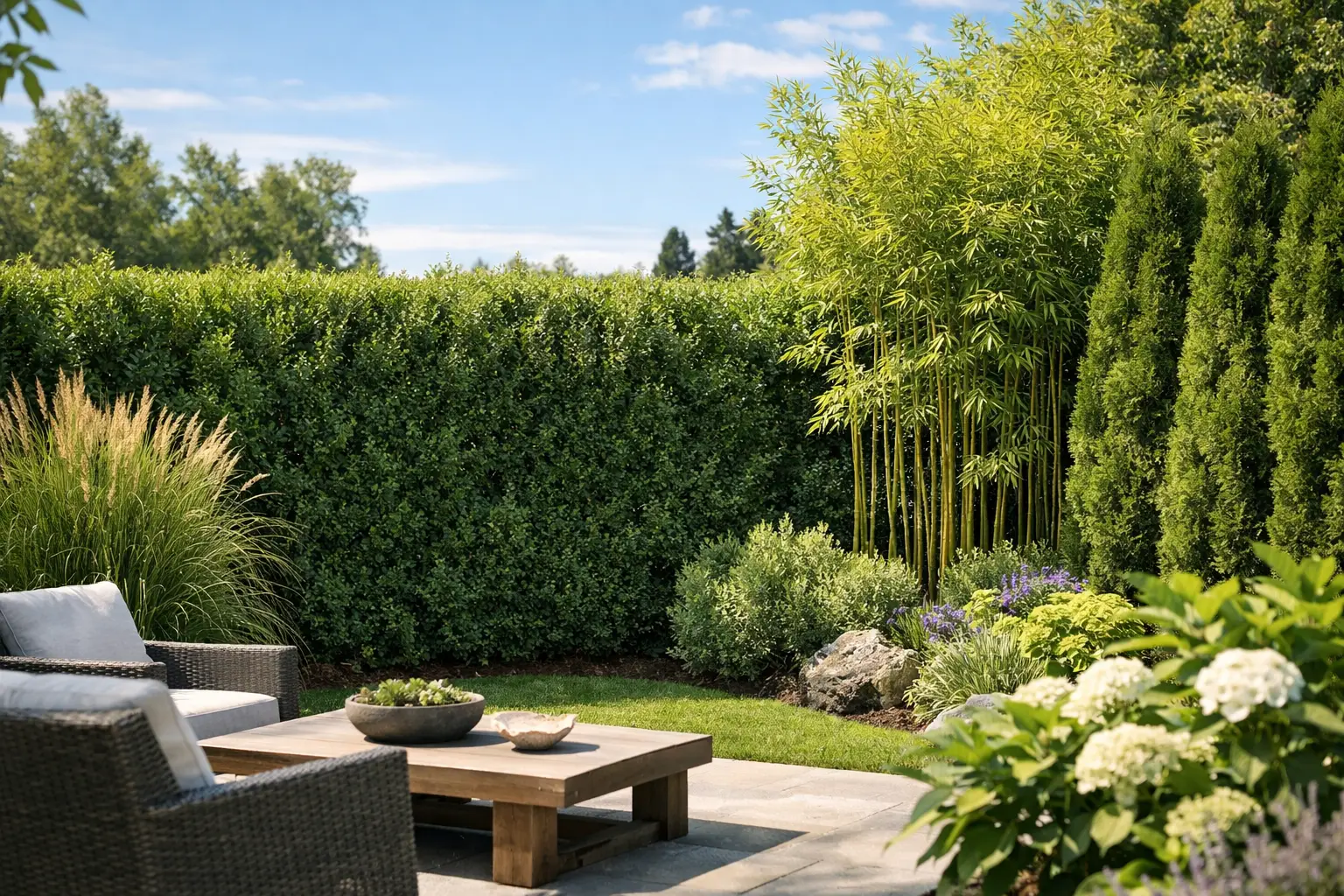
That patio feels a lot smaller when the neighbor’s second-story window looks straight into it. If you are searching for a guide to backyard screening plants, the right answer usually is not just “plant a row of evergreens and hope for the best.” On Long Island, privacy planting has to handle wind, salt, varying sun exposure, and the fact that most yards do not have endless space to work with.
A good screen should do more than block a view. It should fit the scale of your property, hold its shape through the seasons, and make the yard feel finished instead of boxed in. That means choosing plants based on how you actually use the space – around a pool, along a fence line, beside a patio, or between neighboring homes where every foot matters.
What backyard screening plants need to do
The best screening plants solve a specific problem. Sometimes you need height fast because a deck sits above your fence line. Sometimes the goal is softening the look of a property line without creating a dark green wall. In other cases, you want year-round coverage near a seating area, but a looser, more natural look along the back of the yard.
That is why plant choice depends on more than mature height. Width matters just as much, especially in Nassau County yards where planting beds can be narrow. Growth rate matters too. Fast growers can deliver privacy sooner, but they often need more pruning and more thoughtful spacing. Slower-growing plants usually ask for more patience upfront, but they can be easier to maintain over time.
A guide to backyard screening plants for Long Island yards
For most local homeowners, evergreen privacy plants are the first place to start. They keep coverage through winter, they frame the property well, and they create a cleaner visual backdrop for lawns, patios, and foundation plantings.
Arborvitae remains one of the most popular options for a reason. It offers a classic upright shape, dependable screening, and a tidy look that works in both traditional and newer landscapes. It is especially useful when you want a formal hedge or a strong green border without taking up too much width. The trade-off is that spacing and variety selection matter. Plant them too tightly and they can crowd each other as they mature. Put the wrong variety in the wrong spot and the scale can feel off fast.
Green Giant arborvitae is often the answer when homeowners want faster growth and substantial height. It creates a bold screen and can be a strong fit for larger properties or rear property lines where there is room to let it develop. In a tighter backyard, though, it can eventually need more space than people expect. It is a great plant in the right setting, not a universal fix for every lot.
Leyland cypress is another fast-growing screening choice that appeals to homeowners who want a full, soft evergreen wall quickly. It has a lush look and can provide serious visual coverage. Still, it is best used where there is enough airflow and room for mature growth. When speed is the top priority, this plant gets attention, but the long-term plan needs to be just as clear as the short-term goal.
Skip laurels bring a different look to privacy planting. Their broadleaf evergreen foliage feels richer and softer than needle evergreens, which makes them a strong choice near patios, entrances, and outdoor living areas where appearance matters up close. They can be shaped into a more formal hedge or allowed to grow naturally for a fuller screen. The advantage is their polished, substantial look. The consideration is that they need proper siting and maintenance to stay dense and attractive.
Matching the plant to the spot
The smartest way to choose screening plants is to start with the problem area itself. A sunny rear property line gives you more options than a side yard that gets only partial light. A yard near the water or a road exposed to winter salt asks for tougher plant material than a protected interior lot.
If your goal is to block a direct line of sight from a neighboring yard, you may not need the tallest plant available. Often, a medium-height evergreen placed strategically does the job better than an oversized screen that swallows the bed. Around patios and pools, a layered approach can look better than one long monoculture. A backdrop of evergreens with lower shrubs in front helps the planting feel intentional and gives the landscape more depth.
For narrow side yards, columnar or upright plants usually make more sense than broad growers. For wide open backyards, mixing textures and heights can prevent the screen from feeling flat. That is one of the biggest differences between a planting that simply hides something and one that actually improves the property.
How much privacy do you really want?
Not every backyard needs a solid wall of green. Some homeowners want complete year-round coverage from every angle. Others just want enough screening to make dinner on the patio feel private. Those are different goals, and they lead to different plant choices.
A dense evergreen hedge creates maximum privacy, but it can also feel formal and visually heavy if the yard is small. A softer mixed screen can still block views while feeling more open and natural. This is where plant texture matters. Fine-textured evergreens read differently than broadleaf shrubs, and mixing them can create a more comfortable transition between lawn, hardscape, and property edge.
There is also the timing question. If you need privacy this season, larger installed material may be worth it. If you can wait for the screen to mature, younger plants may give you more flexibility and better long-term spacing. It depends on your budget, your patience, and how quickly you need that exposed area to disappear.
Planning for growth, not just the day of planting
One of the most common mistakes with backyard screening plants is planting for the size they are now instead of the size they will be in a few years. A privacy row that looks a little sparse on installation day often fills in far better than one planted too close. Overcrowding can reduce airflow, create uneven growth, and lead to pruning headaches later.
Soil conditions matter too. Some plants tolerate a wider range of conditions, while others perform best when the site is prepared properly from the start. Watering through the establishment period is critical, especially for larger privacy material. Even strong, reliable screening plants need consistent care while they root in.
This is also where professional guidance can save time. Planting a privacy line sounds simple until you start measuring spacing, accounting for mature width, and figuring out how the screen will look from the patio, the street, and the neighbor’s side all at once.
When to shop and plant screening material
Privacy planting is one of those projects people often start once they notice the problem, which is usually when they are spending more time outdoors. Spring and fall are both strong planting windows, but inventory and plant size can vary seasonally. Shopping earlier gives you more flexibility in variety and sizing, especially if you want a coordinated look across a full property line.
It also helps to think beyond the hedge itself. Screening plants look better when they are part of a complete landscape plan. Fresh mulch, clean bed lines, accent shrubs, and a few lower plantings in front can take a privacy row from basic to finished. That kind of layered result tends to look more natural and adds value beyond simple screening.
Choosing a screen that fits your home
A guide to backyard screening plants should make one thing clear: the best privacy plant is the one that fits your yard, your goals, and your maintenance comfort level. Fast growth can be a plus, but only if you have the room and are ready for upkeep. Narrow plants can be ideal, but only if they still provide enough density where you need it. Broadleaf evergreens can add a richer look, but they should be chosen with the site in mind.
For Long Island homeowners, the strongest results come from starting with the real conditions on the property, then choosing screening plants that make sense for that space. Whether you are looking at arborvitaes, Green Giants, Leyland cypress, skip laurels, or a more layered privacy design, the goal is the same – create a backyard that feels comfortable, attractive, and usable all season long.
If your yard needs more privacy but you are not sure where to begin, seeing quality screening material in person makes the decision a lot easier. The right plant can change how the whole backyard feels, and a well-planned screen is one of the smartest upgrades you can make to an outdoor space.