
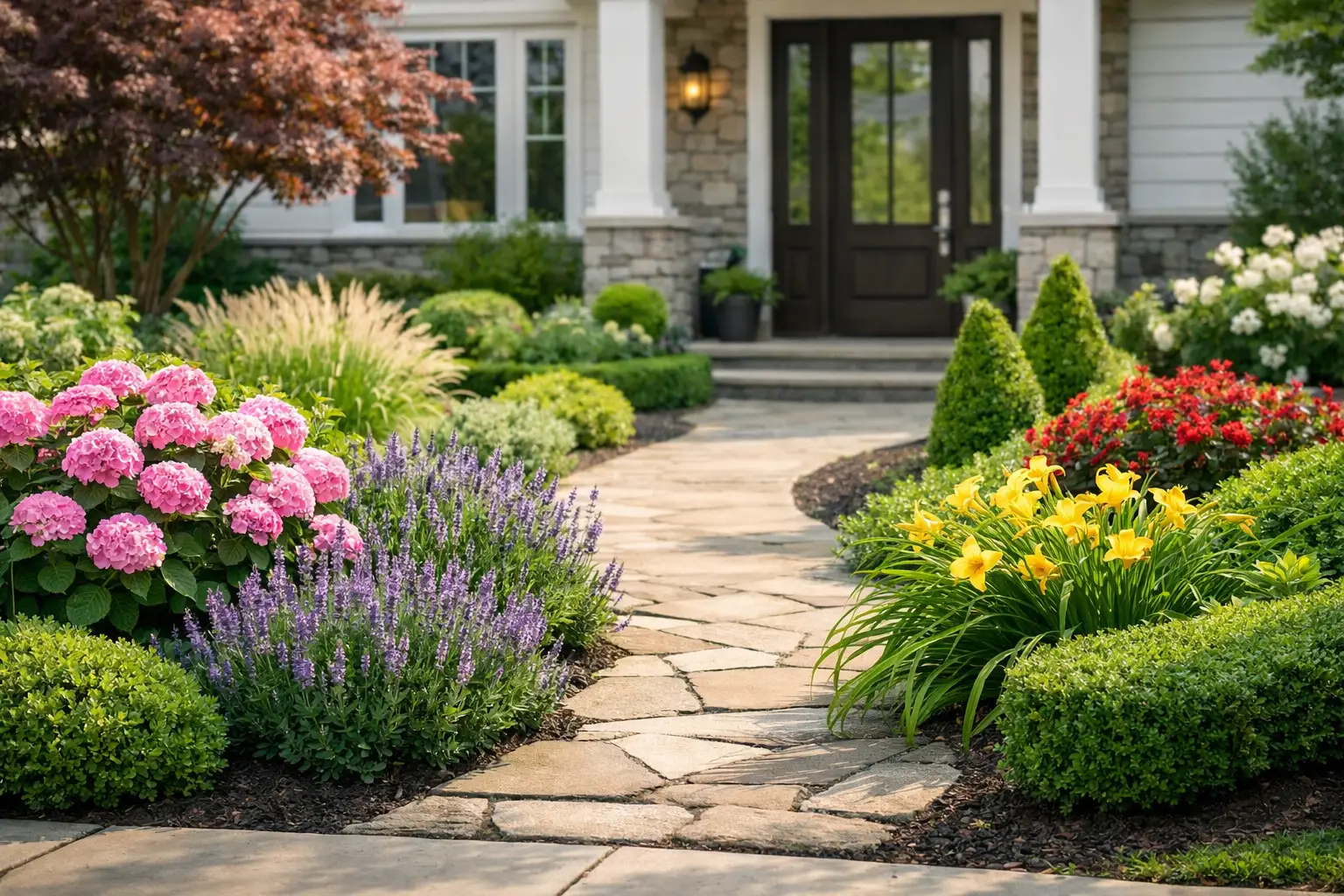
Pull up to almost any well-loved Long Island home, and you can usually spot the difference before you even reach the walkway. The best plants for front yard spaces do more than fill beds – they frame the house, soften hard edges, carry color through the seasons, and make the whole property feel cared for. The right mix is not always the flashiest one. Around Nassau County, the strongest front yard plantings balance year-round structure, seasonal interest, and realistic maintenance.
What makes the best plants for front yard spaces?
A front yard has a different job than a backyard. It is the first thing neighbors, guests, and potential buyers see, so every plant has to earn its spot. Good front yard choices need to look tidy from the street, handle local weather, and fit the scale of the house instead of swallowing it.
That is why a great front yard planting usually includes a blend of evergreens, flowering shrubs, perennials, and at least one focal point. Evergreens keep the property from looking bare in winter. Flowering shrubs bring color and shape. Perennials fill in the edges and keep the beds from feeling stiff. A small ornamental tree or standout shrub can anchor the whole design.
It also helps to be honest about upkeep. Some homeowners want polished foundation beds with crisp shapes all year. Others want strong color without constant pruning. Neither approach is wrong, but it changes which plants make sense.
12 best plants for front yard planting on Long Island
Boxwood
Boxwood is one of the most reliable front yard staples for a reason. It gives you clean structure, rich green color, and a finished look in every season. In formal landscapes, it can be shaped into low hedges or rounded accents. In more relaxed designs, it still adds order without feeling rigid.
The trade-off is maintenance. If you want a very neat look, plan on periodic trimming. Still, for entrances, walkway borders, and foundation beds, boxwood remains one of the smartest choices.
Hydrangea
Hydrangeas are hard to beat when you want impact. Big blooms, generous foliage, and a long season of interest make them a favorite in front yards across Long Island. Panicle hydrangeas are especially dependable because they handle sun well and offer strong summer color.
They do need room. A hydrangea squeezed too close to the foundation will eventually look crowded. Give it space, and it can become the plant that makes the whole front bed feel established.
Arborvitae
If privacy, screening, or vertical structure is part of your front yard plan, arborvitae deserves a close look. It creates height without taking up as much width as many broader evergreens, which makes it useful near property lines or corners of the house.
Not every front yard needs a wall of evergreens, though. In smaller spaces, one or two strategically placed arborvitaes often look better than a full row. The goal is structure, not bulk.
Spirea
Spirea is one of those shrubs that quietly does a lot of work. It stays manageable, offers bright seasonal color, and fits easily into foundation plantings. Many varieties also bring attractive foliage tones, which helps even when the plant is not in bloom.
For homeowners who want color without constant fuss, spirea is a strong option. It responds well to shaping, but it does not demand the same attention as more finicky flowering shrubs.
Skip Laurel
Skip laurel gives front yards a fuller, darker evergreen look than many needle evergreens. The leaves feel substantial, and the overall effect is lush and polished. It works especially well where you want screening with a softer appearance.
This is a good example of choosing based on feel as much as function. If boxwood is tailored and arborvitae is upright, skip laurel reads richer and more layered. In the right setting, that makes a big difference.
Coneflower
For lower beds and sunny borders, coneflower brings long-lasting color and a more natural look. It is especially useful when a front yard needs energy in summer without relying only on shrubs. The flowers draw the eye, and the upright stems mix well with more structured evergreen plantings.
Coneflower is less formal than boxwood or tightly clipped hedges, so it works best when the overall design has some softness. In a straight-line, highly symmetrical front yard, use it sparingly. In a layered planting, it shines.
Black-Eyed Susan
Black-Eyed Susan delivers cheerful color at a time when many beds start to fade. It is bright, dependable, and easy to notice from the street. In front yard beds, that visibility matters.
The biggest advantage here is late-season punch. If your front yard looks strong in spring but flat by August, this plant helps close that gap. Pair it with evergreens and flowering shrubs so the bed still has substance before and after bloom.
Japanese Maple
A Japanese maple can completely change the look of a front yard. It adds shape, texture, and a focal point that feels refined without being overdone. Near an entry, in a small lawn island, or as the star of a front bed, it gives the landscape a clear center.
Placement matters more than anything. This is not a plant to tuck in as an afterthought. It needs enough room to show off its branching form, and it should be positioned where it complements the home instead of blocking it.
Rhododendron
Rhododendrons have a classic look that suits many Long Island homes. Their broad evergreen leaves keep beds from looking empty in winter, and their spring flowers bring a strong burst of color when people are ready to be outside again.
They can be a little more site-sensitive than tougher shrubs, so conditions matter. If the spot is right, though, they reward you with a mature, established appearance that younger landscapes often lack.
Daylily
Daylilies are practical in the best sense. They offer reliable blooms, arching foliage, and a wide range of color options, all without asking for much. In front yards, they work well along walkways, in curbside beds, or mixed into shrub borders.
They are not usually the star of the landscape, and that is part of their value. Daylilies support the design. They fill space cleanly and keep the planting from looking thin.
Green Giant Arborvitae
For larger properties, Green Giant arborvitae can create impressive scale and privacy. This is a bigger move than standard arborvitae, and it is not for every front yard. On the right property, though, it can frame the home, buffer the street, and add a strong evergreen backdrop.
The key is restraint. Because it grows large, Green Giant belongs where it has room to mature. Used too close to the house or in a tight suburban front bed, it can become more problem than solution.
Seasonal annual color
Not every front yard needs to rely only on permanent plantings. Annuals can give the entrance and front beds a fresh, high-color look from spring through fall. They are especially useful near porches, mailboxes, and front steps where you want immediate brightness.
This is also where homeowners can change the mood of the house with the season. A more permanent planting of shrubs and evergreens gets an instant lift when annual color is layered in thoughtfully.
How to choose the right mix for your home
The best front yard planting is rarely made of one type of plant. A strong bed usually starts with evergreen anchors, then adds flowering shrubs for seasonal interest, and finishes with perennials or annuals for color at eye level. That combination keeps the yard from looking empty in winter or flat in summer.
House size should guide plant size. A low ranch can be overwhelmed by large screening shrubs, while a taller colonial often needs more height and substance out front. Sun exposure matters too. A bed with full sun opens the door to hydrangeas, coneflowers, and Black-Eyed Susans, while shadier spots may call for a different mix and a more foliage-driven look.
Maintenance style is the other big factor. If you like a clean, clipped front yard, lean into boxwoods, laurels, and structured shrubs. If you prefer color with a softer shape, work in more hydrangeas, perennials, and seasonal plantings. Most homes benefit from some balance between the two.
A front yard should look good now and three years from now
One of the most common front yard mistakes is shopping only for what looks good in the pot today. Small plants are appealing, but mature size is what determines whether the yard will still feel balanced later. Plants packed too tightly may look full right away, but they often become crowded, high-maintenance, and expensive to fix.
That is where local guidance makes a difference. In West Hempstead and across Nassau County, homeowners are working with specific conditions – coastal weather swings, summer heat, winter exposure, and the visual expectations of established neighborhoods. Choosing the right plants from the start saves time and gives the whole property a stronger result.
Whether you want a simple refresh with fresh color and shrubs or a full redesign with screening, foundation planting, and curb appeal upgrades, the smartest front yard is one that fits your home, your schedule, and your style. If a plant earns its place in every season, it is probably the right one.