
How to Design Entryway Planters for Curb Appeal
Learn how to design entryway planters with layered plants, right-size containers, and Long Island seasonal color for a welcoming front door year-round.
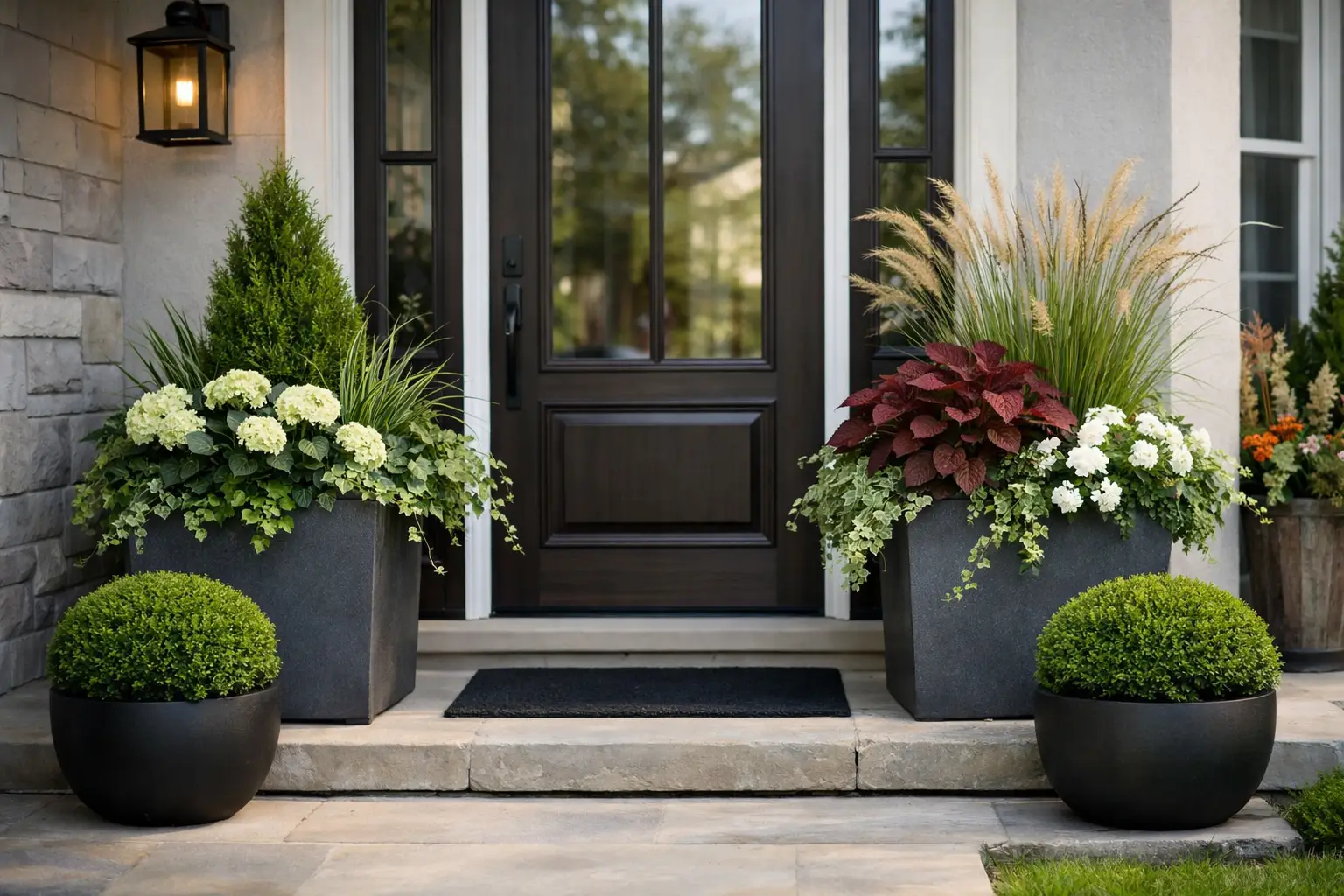
The front door gets noticed before anyone steps inside. Learning how to design entryway planters gives your home an immediate lift, whether you are dressing up a classic colonial, a cozy cape, or a modern Long Island renovation. The best arrangements do more than add a few flowers. They frame the entrance, complement the home, and make the property feel cared for in every season.
Start With the Scale of Your Front Entry
A planter that looks generous in the garden center can disappear beside a wide front door. Before choosing a container, step back to the sidewalk or driveway and look at the full entry. Notice the width of the door, the size of the stoop, the height of nearby columns, and whether the porch is open or covered.
For a standard single front door, containers around 18 to 24 inches wide usually create enough presence without crowding the walkway. A double-door entry, a broad porch, or tall columns can handle larger pots, often 24 to 30 inches wide. Narrow steps may call for taller, slimmer containers that preserve room for guests and deliveries.
Symmetry is a reliable choice for most front entrances. Matching planters on either side of the door create a polished, welcoming look and work especially well with formal architecture. If your entry has only one practical placement area, use a single substantial container instead of two small pots that compete for attention. The goal is visual balance, not a rigid formula.
Choose Containers That Match the House
The container is part of the design, even when it is filled with colorful plants. Choose a finish that feels connected to your exterior rather than treating the pot as an afterthought.
Dark charcoal, black, bronze, and aged stone colors are versatile choices against brick, siding, and natural stone. White or light gray planters can brighten a shaded porch and look crisp against darker facades. Terracotta brings warmth to traditional homes and works beautifully with herbs, annuals, and Mediterranean-style planting. For a clean contemporary entry, consider simple square or tapered pots in matte finishes.
Material matters, particularly through Nassau County weather. Lightweight resin containers are easy to move and hold up well outdoors. Glazed ceramic offers richer color and weight but should be selected carefully for year-round exposure. Natural fiber, metal, and wood can bring character, although each has different drainage and weathering needs. Whatever you choose, make sure water can escape. A beautiful planter without drainage is likely to create root problems after heavy rain.
If you are selecting a pair, buy them together and check that their height, opening, and color are truly consistent. Small differences become obvious once they are placed on either side of the door.
How to Design Entryway Planters With Layers
The most successful entryway planters have shape from top to bottom. Think in layers: a taller focal plant, rounded or flowering plants through the middle, and trailing material that softens the edge. This approach gives the arrangement depth and keeps it from looking flat when viewed from the street.
Start with one vertical element in each container. This could be a small evergreen, a tropical palm for summer, ornamental grass, a structured dracaena, or a narrow upright annual. The focal plant should be proportionate to the pot. It needs enough height to be seen, but it should not block house numbers, door hardware, or sightlines from inside.
Next, add fuller plants around the center. This is where you can introduce color, leaf texture, or a repeated shade that ties to the front door, shutters, or seasonal decor. Finish at the edges with a trailing selection such as sweet potato vine, ivy, bacopa, or calibrachoa. On a covered porch, choose plants that tolerate reduced sun and less rain.
Do not feel obligated to use every layer if the style of the house calls for restraint. A sculptural evergreen in a handsome pot can be more effective than an overstuffed arrangement. Contemporary homes often benefit from fewer varieties and stronger forms, while cottage-style entries can support a fuller mix of blooms and foliage.
Match Plants to Light, Not Just the Color Palette
A front entry may get blazing afternoon sun, gentle morning light, or nearly full shade under a deep roofline. That condition should guide your plant choices before color enters the conversation. Sun-loving flowers placed in shade will become sparse, and shade plants in a hot, reflective location can struggle quickly.
For sunny entries, petunias, calibrachoa, lantana, geraniums, angelonia, and sun coleus offer long-lasting color and structure. Add ornamental grasses or a tropical centerpiece for height. For bright shade or filtered light, begonias, impatiens, ferns, coleus, and colorful foliage plants are dependable choices. A shaded doorway can feel especially inviting when you focus on leaf texture, mixing broad leaves, fine fronds, and trailing forms instead of relying only on flowers.
Long Island summers can bring heat, humidity, and stretches of heavy rain. Select plants with similar watering needs in the same container. A thirsty fern paired with a drought-tolerant succulent makes daily care harder than it needs to be. Good design should look great, but it should also fit the attention you can realistically give it.
Build a Color Story That Feels Intentional
A planter does not need every color in the garden center to make an impact. Limit the arrangement to two or three main colors, then use foliage to connect them. This creates a cleaner result from the curb and helps the entry complement the home rather than compete with it.
For a red brick home, creamy white, soft yellow, deep purple, and chartreuse foliage are classic partners. Blue or gray siding looks sharp with white flowers, silver foliage, and deep blue or violet accents. A black front door can carry almost any seasonal palette, from bright pink and lime in summer to burgundy and copper in fall.
Consider how the colors will appear at different distances. Fine flower details are lovely up close, but bold foliage and larger color blocks read better from the street. Repeating one color in both planters creates unity, even if the individual plants are not identical.
Refresh the Planters With the Season
Entryway planters are one of the easiest ways to signal the season without changing the entire landscape. Instead of forcing a summer planting to last until winter, plan for seasonal transitions. This keeps the entrance looking fresh and lets you take advantage of the best plants available throughout the year.
In spring, tulips, daffodils, pansies, violas, and early greenery bring welcome color after winter. Summer is the time for heat-loving annuals, tropical foliage, lush ferns, and flowering baskets. Fall planters can combine mums, ornamental peppers, kale, cabbage, grasses, pumpkins, and branches for rich texture. During winter, evergreen boughs, magnolia leaves, winterberry stems, pinecones, and decorative branches can fill containers with color and structure when flowering plants are resting.
Keep one or two permanent elements if you want seasonal updates to move faster. A small evergreen, a pair of durable containers, or a simple trellis can become the foundation while seasonal color changes around it.
Plant for Healthy Growth and Easy Care
Use a high-quality container mix rather than heavy garden soil. Container mixes drain better and give roots the air they need. Fill the pot high enough that the finished soil line sits about an inch below the rim. Planting too low makes an arrangement look undersized, while overfilling leaves no room for watering.
Water deeply after planting until moisture runs from the drainage holes. During summer, check containers often, especially dark pots in full sun and planters beneath covered entries that do not receive rain. Feed flowering annuals regularly according to the product directions, and remove spent blooms when needed to keep the display tidy.
Leave enough space between plants for air circulation, but do not make the first-day arrangement look empty. Seasonal annuals are meant to fill in quickly. If a container starts to look tired by midsummer, replace one or two weak plants rather than abandoning the whole design.
Let the Entry Set the Standard
The best front-door planters look like they belong exactly where they are. They respect the scale of the house, suit the light, and offer enough color and texture to make arriving home feel special. If you want help selecting containers, seasonal plants, or a complete look for your property, Westminster Nursery can help bring the right materials and local plant knowledge together. Start with one well-proportioned pot, then let the entrance tell you what it needs next.