
How to Care for Palm Plants Indoors and Out
Learn how to care for palm plants with practical light, watering, soil, humidity, feeding, and seasonal tips for healthy Long Island palms all year
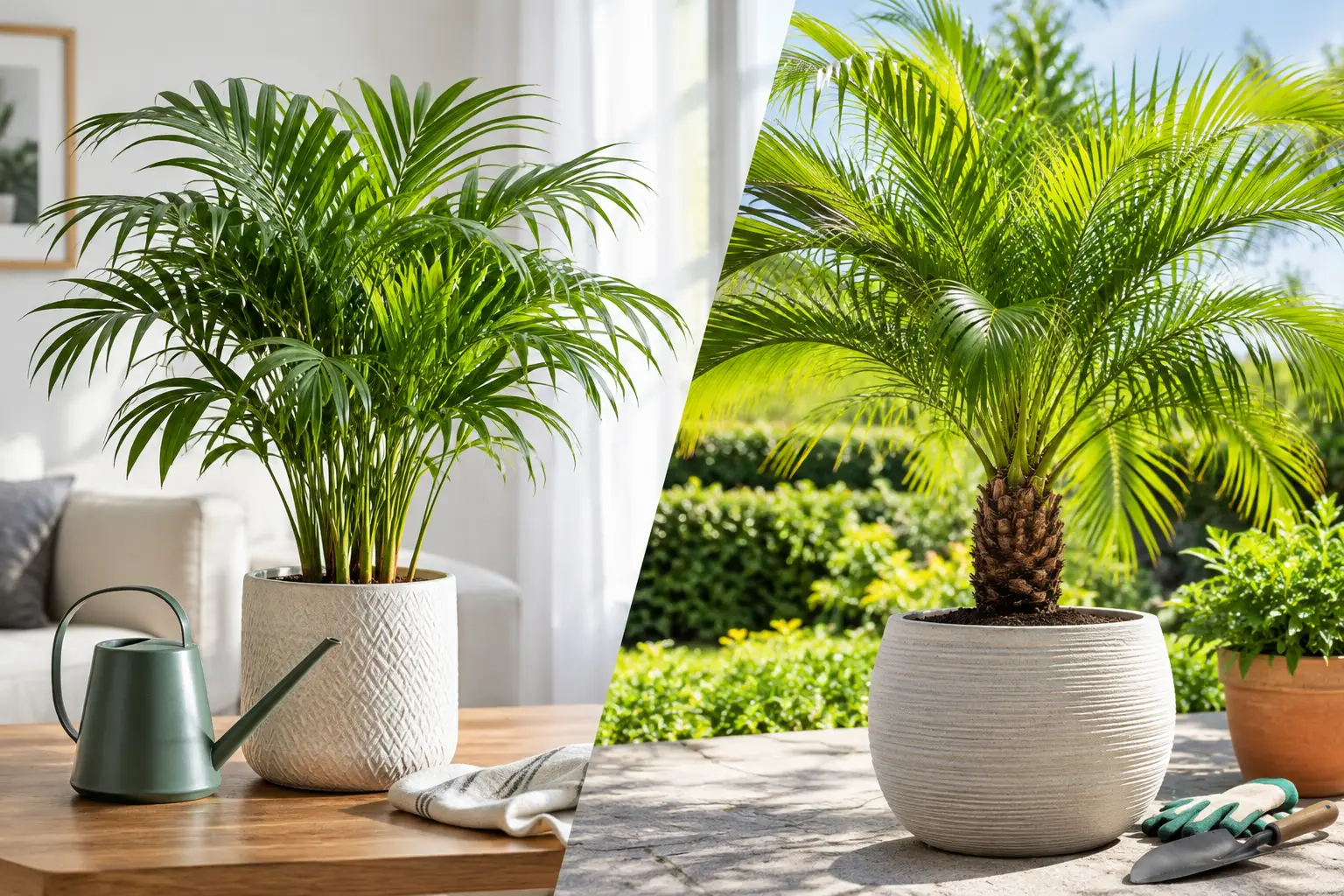
A palm can make a living room feel brighter, a patio feel more like a getaway, or a front entry feel instantly more polished. The trick is knowing how to care for palm plants based on the particular palm you brought home. A parlor palm near a window has very different needs from a sun-loving patio palm, and Long Island's changing seasons add another layer to the decision.
Most palm problems are not caused by a lack of attention. They come from the wrong kind of attention: too much water, harsh direct sun, cold drafts, or a pot that stays wet for too long. Start with the plant's label, then use the guidelines below to give it conditions that feel closer to its natural habitat.
How to Care for Palm Plants: Start With Light
Light is the first thing to get right. Many popular house palms, including parlor palms, kentia palms, lady palms, and bamboo palms, prefer bright, indirect light. Place them near an east-facing window or a few feet back from a bright south- or west-facing window. A sheer curtain can soften intense afternoon sun.
If a palm receives too little light, growth slows and new fronds may emerge smaller or farther apart. If the light is too strong, especially through glass in summer, leaves can bleach, develop dry brown patches, or curl at the edges. Move the plant gradually if you are changing its location. A sudden jump from a low-light corner to full sun can scorch foliage quickly.
Areca palms and majesty palms generally appreciate brighter conditions, but even they benefit from protection from the hottest indoor afternoon rays. For palms on a deck, patio, or porch, morning sun and afternoon shade are often a comfortable arrangement. Watch the foliage for the first week after bringing a new plant outside.
Water Thoroughly, Then Let the Soil Breathe
Palms like consistent moisture, not constantly soggy soil. Before watering, check the top inch or two of the potting mix with your finger. When that layer feels dry, water slowly until excess begins to drain from the bottom of the container. Empty the saucer afterward so the roots are not sitting in water.
The timing will shift with the season, temperature, light level, and pot size. A palm in a warm, bright room may need water more often than one in a cooler room during winter. Rather than following a strict calendar, check the soil regularly and let the plant guide you.
Overwatering is one of the most common causes of decline. Yellowing lower fronds, a musty smell, limp stems, and soil that remains wet for many days can point to excess moisture. Let the mix dry somewhat before watering again, and make sure the container has drainage holes. If the pot has no drainage, use it only as a decorative cover around a nursery pot.
Underwatering usually shows up as dry leaf tips, crispy edges, drooping fronds, or soil that has pulled away from the sides of the pot. Give the plant a slow, complete drink. If water rushes through very dry soil without soaking in, water once, wait a few minutes, then water again.
Choose a Container and Soil That Drain Well
A healthy root system needs air as much as it needs moisture. Use a quality indoor potting mix that drains well. For palms that tend to stay wet, mixing in perlite or fine orchid bark can improve airflow around the roots. Outdoor container palms also need a loose mix that does not turn dense after repeated watering.
Choose a pot only slightly larger than the existing root ball when repotting. Moving a small palm into an oversized container creates a large volume of damp soil around the roots, which can slow growth and encourage rot. Spring and early summer are usually the best times to repot, when active growth gives the plant time to settle in.
Palms can stay comfortably snug in their containers for a while. Repot when roots are circling heavily, pushing up through the soil, or growing from drainage holes, or when the plant dries out unusually fast despite regular watering.
Give Indoor Palms the Right Humidity and Temperature
Many palms appreciate humidity, particularly in heated homes where winter air gets dry. You do not need to turn your house into a greenhouse. Grouping plants together, keeping the palm away from heating vents, and using a small humidifier nearby can make a noticeable difference.
Brown tips are often blamed on low humidity, but they can also result from inconsistent watering, mineral buildup, or cold air. Trim only the brown portion with clean scissors, following the natural shape of the leaf. Avoid cutting into healthy green tissue whenever possible.
Keep most indoor palms in temperatures between about 65 and 80 degrees. Do not place them directly beside an exterior door, drafty window, air conditioner, radiator, or heating vent. A palm that looks fine in July may struggle in January if it is sitting next to cold glass or a blast of dry heat.
Feed During the Growing Season
Palms are not heavy feeders, but they do benefit from regular nutrition while actively growing. Use a balanced fertilizer formulated for palms or houseplants, following the product directions carefully. Feed from spring through late summer, then reduce or pause feeding when growth slows in fall and winter.
More fertilizer is not better. Excess salts can build up in the soil and contribute to brown leaf tips or root stress. If you see a white crust on the soil surface or pot rim, flush the pot thoroughly with water and allow it to drain. This is another reason containers with drainage holes matter.
Prune With a Light Touch
Palm fronds do not grow back once cut. Remove only leaves that are fully brown, broken, or clearly spent. Yellowing lower fronds may be part of the palm's normal aging process, especially when new growth is appearing at the center.
Never cut the central growing point, sometimes called the spear, on a single-trunk palm. That is where new leaves emerge. If the spear pulls out easily or looks soft and discolored, the plant may be dealing with crown rot and needs prompt attention.
Wipe dust from broad fronds with a damp cloth every few weeks. Cleaner leaves capture light more efficiently and make it easier to spot early signs of pests.
Watch for Pests Before They Spread
Spider mites, scale, and mealybugs can settle onto palms, especially when indoor air is dry. Check the undersides of leaves and where leaf stems meet the trunk. Fine webbing, sticky residue, tiny bumps, or cottony clusters are signs to investigate.
Isolate an affected plant from nearby houseplants while you treat it. Rinsing foliage with lukewarm water and wiping pests away can help with a small problem. For a larger infestation, use an appropriate insecticidal soap or horticultural treatment according to the label. Repeat applications are often necessary because eggs may hatch after the first treatment.
Bringing Patio Palms Through a Long Island Season
On Long Island, many tropical palms are best treated as warm-season patio plants. Bring them outdoors only after nighttime temperatures are reliably above 50 degrees. Start them in a shaded, protected spot for several days, then slowly introduce more light. This transition prevents sunburn and wind damage.
As fall approaches, bring tropical palms inside well before cold nights arrive. Inspect leaves carefully for pests, rinse the foliage if needed, and let the container drain before placing it indoors. The light indoors will be lower, so reduce watering and expect growth to slow.
A few palms, such as windmill palms, may be considered for protected outdoor planting in suitable local microclimates, but winter survival depends on exposure, drainage, wind, and severe cold. A sheltered location near a south- or west-facing wall is very different from an open, windy yard. Ask for guidance before planting one as a permanent landscape feature.
At Westminster Nursery, homeowners can find palms for bright rooms, shaded corners, patios, and seasonal displays, along with practical advice on choosing a variety that fits the space you actually have. The best palm is not always the largest one on the sales floor. It is the one whose light, temperature, and watering needs match your home or outdoor setting.
Give your palm a stable spot, check the soil before reaching for the watering can, and let each new frond be your sign that the conditions are working.