
A Guide to Indoor Plant Watering That Works
Use this guide to indoor plant watering to spot thirst early, avoid root rot, and keep houseplants healthy through Long Island’s changing seasons indoors.
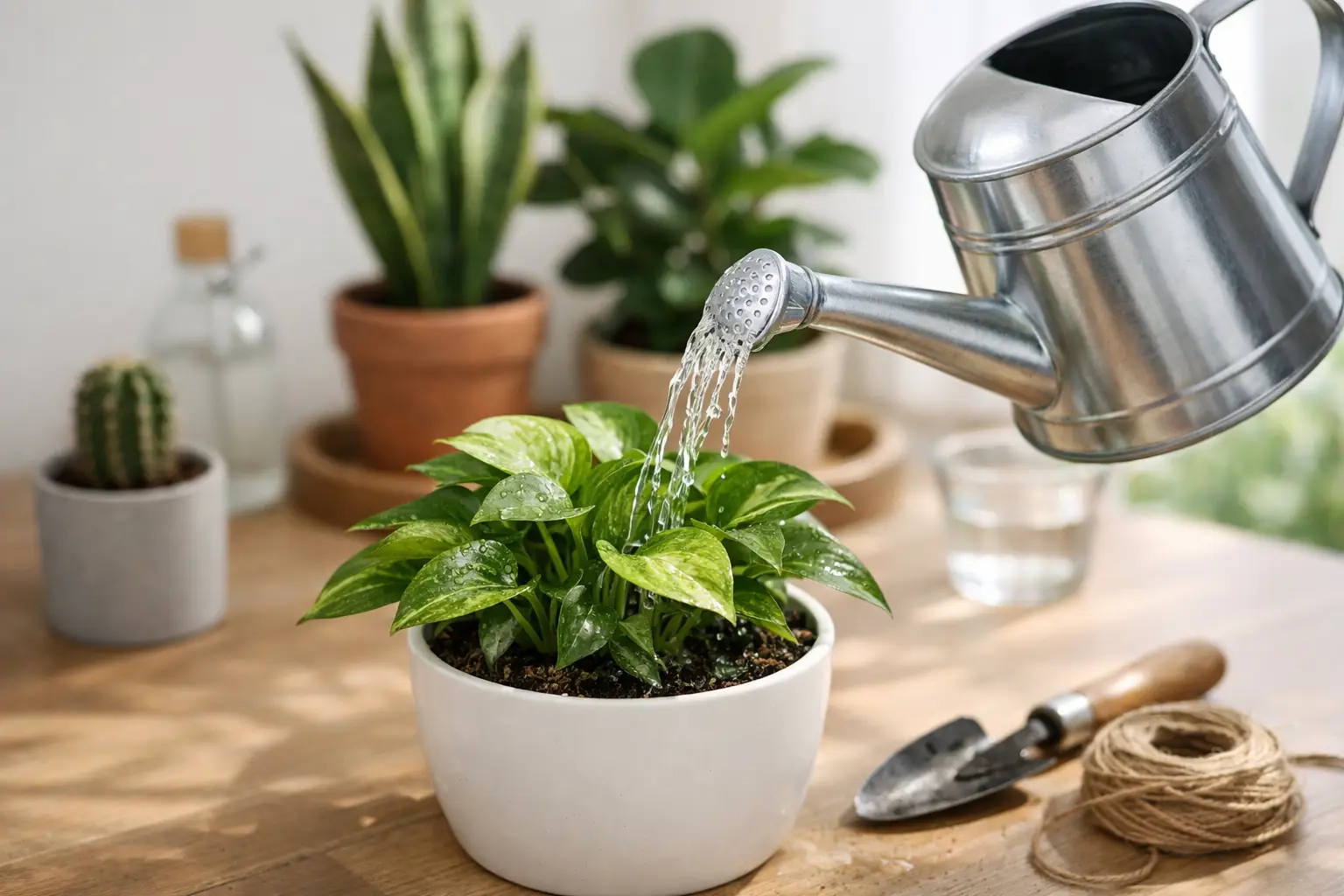
A houseplant can look perfectly happy on Monday and suddenly have yellow leaves, limp stems, or dry, curling edges by the weekend. The difference is often not a lack of care. It is watering at the wrong moment. This guide to indoor plant watering helps Long Island plant owners read what their plants and potting mix are actually telling them, rather than relying on a calendar.
Guide to Indoor Plant Watering: Start With the Soil
The best watering schedule is not a schedule at all. It is a quick soil check. Before reaching for the watering can, press a finger about one to two inches into the potting mix. If it feels dry at that depth, many common houseplants are ready for a thorough drink. If it is still cool and damp, wait.
This simple habit matters because homes change throughout the year. During a bright summer stretch, a plant near a sunny window may dry quickly. In winter, when daylight is shorter and indoor heat is running, the same plant may use much less water even though the air feels dry. Water needs also shift after repotting, moving a plant to a new room, or bringing home a new tropical.
The surface of the soil can be misleading. It may look dry while the root zone remains wet, especially in a large pot. On the other hand, a small plant in a warm, bright spot can become dry well below the surface before its leaves show any signs of stress. Checking the soil gives you a more useful answer than watering every Saturday because the calendar says so.
Water Deeply, Then Let Excess Drain
When a plant is ready, water slowly and evenly across the soil until moisture begins to run from the drainage hole. That runoff is a good sign: it means water has reached much of the root ball instead of wetting only the top layer.
Let the pot drain completely, then empty any water that collects in the saucer or decorative cachepot. Roots need oxygen as much as they need moisture. When a plant sits in standing water, the mix stays saturated and roots can weaken or rot. A pot without drainage can work only with very careful, limited watering, so it is usually a tougher choice for everyday plant care.
Avoid the common habit of giving a little splash every few days. Small amounts of water may keep the top layer damp while leaving lower roots dry, and they can encourage a shallow root system. A full soak followed by an appropriate drying period is usually the better routine.
Know What Your Plant Naturally Prefers
“Houseplant” is a broad category. A peace lily, a snake plant, and a cactus should not be watered the same way just because they sit in the same room. Their growth habits and native environments are different.
Tropical foliage plants such as pothos, philodendrons, monsteras, and peace lilies generally appreciate evenly moist soil, but not soggy soil. Let the upper inch or two dry before watering. Peace lilies often droop when thirsty, but it is better not to make dramatic wilting their regular reminder. Repeated severe drying can stress the plant.
Succulents, cacti, snake plants, and ZZ plants need a much longer dry period. Wait until the potting mix is dry most or all the way through before watering thoroughly. These plants store moisture in their leaves, stems, or roots, which makes overwatering far more likely than underwatering in a typical home.
Ferns, calatheas, fittonias, and other humidity-loving plants can be less forgiving. They often prefer consistent moisture and may develop brown edges if the mix repeatedly dries out. Still, consistent moisture does not mean constantly wet. A well-draining mix remains essential.
If you are shopping for new indoor plants, ask about the particular variety rather than relying on a general label. A knowledgeable garden center can help match a plant’s care needs to your light level, pot size, and routine.
Light, Pots, and Seasons Change the Rules
Light is one of the biggest drivers of water use. More light usually means faster growth and faster drying. A plant in a bright south- or west-facing window may need attention much more often than an identical plant several feet away from the glass. Low-light plants grow more slowly and should be checked carefully before watering.
Pot material also makes a real difference. Unglazed terracotta is porous and allows moisture to evaporate through the sides, so soil often dries faster. Glazed ceramic, plastic, and metal containers hold moisture longer. Larger pots stay damp longer than smaller pots, particularly if a small plant is placed in an oversized container.
On Long Island, seasonal changes can be especially noticeable indoors. Air conditioning, winter heat, cold window glass, and changing sun angles all affect how quickly a plant dries. Do not be surprised if your routine changes from weekly checks in winter to more frequent checks during a warm, sunny summer period. The plant has not become difficult. Its environment has changed.
Use Water That Supports Healthy Roots
For most houseplants, ordinary tap water at room temperature is suitable. Letting very cold water warm slightly before use can be helpful, especially for tropical plants. If you notice brown leaf tips on sensitive plants such as calatheas, dracaenas, or spider plants, water quality may be one possible factor alongside dry air, fertilizer buildup, or inconsistent moisture.
A simple adjustment is to occasionally flush the soil. Water thoroughly until extra water runs through the drainage hole, allowing mineral salts to move out of the potting mix. This is particularly useful if you fertilize during the growing season. Just be sure the pot drains well and never leave it standing in the runoff.
Read the Difference Between Too Dry and Too Wet
Leaf problems are not always a watering problem, but plants often offer clues. Dry, crispy leaf edges, drooping paired with dry soil, and a very light pot usually point toward thirst. Yellowing lower leaves, soft stems, a musty smell, fungus gnats, or soil that stays wet for many days can point toward excess moisture.
The challenge is that both overwatering and underwatering may cause leaves to droop. That is why soil inspection comes first. If a drooping plant has bone-dry mix, water it. If it has heavy, wet soil, do not add more. Give it brighter indirect light if appropriate, improve airflow, and check whether the container drains properly.
If roots are already damaged, simply changing the watering frequency may not be enough. Remove the plant from the pot and inspect the roots. Healthy roots are generally firm and pale or light-colored. Dark, mushy roots should be trimmed away with clean tools before the plant is repotted into fresh, well-draining mix.
A Practical Indoor Watering Routine
Instead of assigning every plant a fixed day, build a quick check into your week. Walk through your plants, feel the soil, lift smaller pots to judge their weight, and look at the leaves. Grouping plants with similar moisture needs makes this easier: tropical foliage plants in one area, drought-tolerant plants in another.
For a household with a mix of indoor greenery, these four checkpoints prevent most watering mistakes:
- Check soil depth, not just the surface.
- Water all the way through when the plant is ready.
- Empty saucers and cachepots after draining.
- Adjust care when light, temperature, pot size, or season changes.
A moisture meter can be useful for large floor plants or deep pots where a finger test is difficult. It should support your observations, not replace them. Test in more than one spot, because moisture can vary around a dense root ball.
Give New Plants Time to Settle In
A newly purchased plant may need a brief adjustment period after it comes home. Its light, temperature, humidity, and airflow have all changed. Check its soil rather than watering automatically, and avoid repotting immediately unless there is a clear issue such as damaged roots or no drainage.
Westminster Nursery can help you select indoor plants that fit your home and explain the watering needs before you bring them home. Bring a photo of the room, note the direction of your windows, and choose a container with drainage to give your plant the strongest start.
The goal is not to water more often. It is to notice sooner. A few calm minutes spent checking the soil will do more for healthy roots and lasting indoor color than any rigid watering calendar ever could.