
Commercial Landscape Examples That Work Harder
See commercial landscape examples for Long Island offices, retail sites, apartments, and more, with planting ideas designed for curb appeal and easy care.
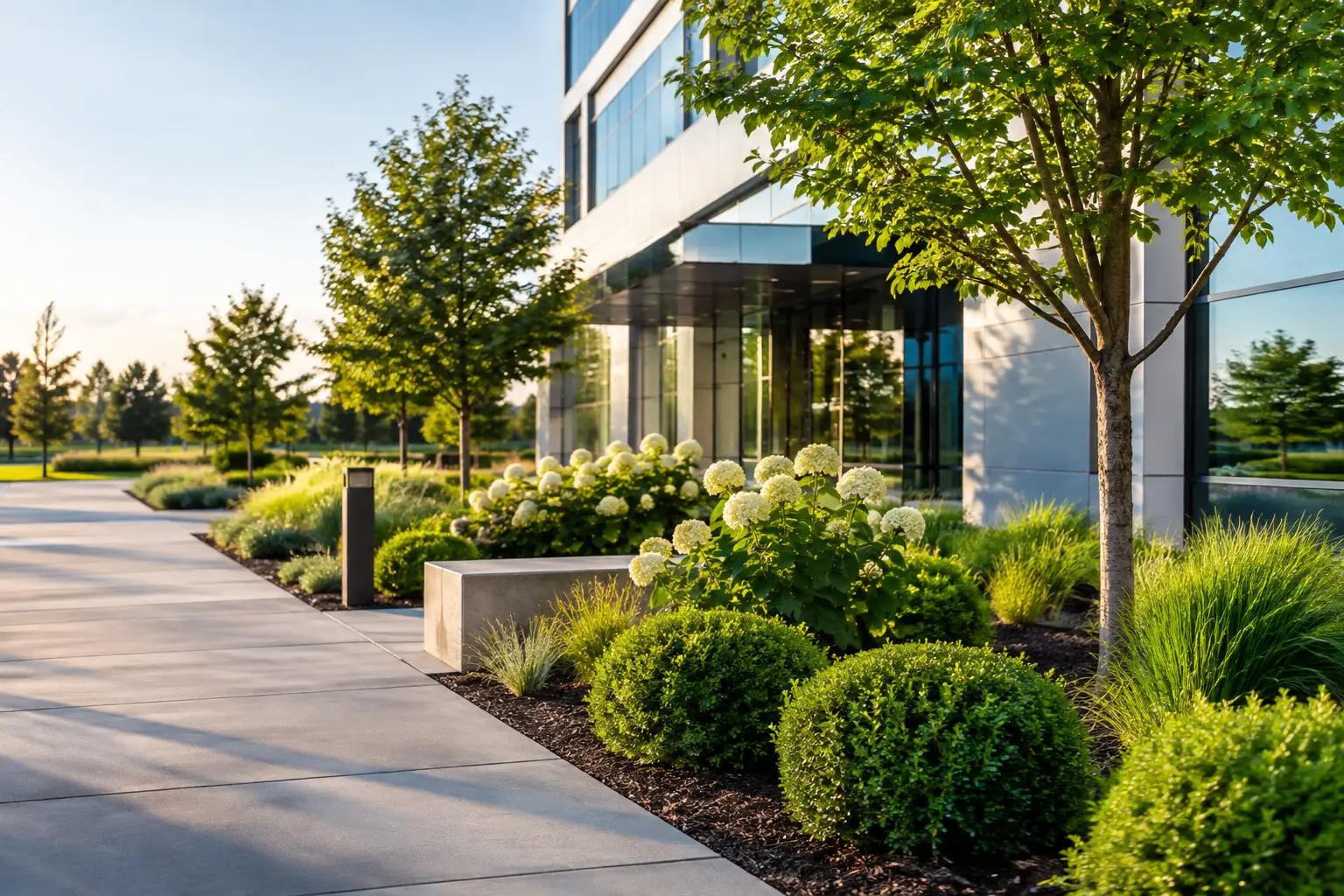
A commercial property has only a few seconds to make an impression. The entry planting, parking lot islands, walkways, and seasonal containers tell customers, tenants, and visitors whether the property feels cared for before they ever reach the door. These commercial landscape examples show how Long Island businesses can use plants, hardscaping, and ongoing maintenance to create grounds that look welcoming and perform well through changing seasons.
For a business property, attractive landscaping is not just a decorative extra. It helps define entrances, direct foot traffic, soften large paved areas, and create a more polished setting for the people who use the site every day. The best approach depends on the property type, sunlight, irrigation access, maintenance schedule, and how much traffic the landscape must handle.
Commercial landscape examples for busy properties
Office entrances that feel established
An office building entrance should be easy to find and pleasant to approach. A layered planting bed gives the front of the building a finished look without blocking signs, doors, or windows. Evergreens can provide year-round structure, while flowering shrubs and perennials add color during the active growing season.
For a Nassau County office property, a dependable combination might include arborvitae or skip laurels for screening, hydrangeas for summer blooms, ornamental grasses for movement, and low-growing perennials along the walk. The exact plant list should reflect the amount of sun and the size of the bed. A south-facing entrance can handle a broader range of flowering plants than a shaded building foundation.
Large planters near the main doors are another practical option. They bring color closer to visitors and can be refreshed with seasonal annuals, evergreen accents, or holiday arrangements as the year changes. Containers work especially well where permanent beds are limited by pavement or underground utilities.
Retail centers with color and clear sightlines
Retail landscapes have to do more than look good. They need to keep storefronts visible, guide shoppers toward entrances, and hold up around busy parking lots and sidewalks. Low, well-spaced plantings are usually more useful than tall shrubs that hide signs or create blind corners.
Parking lot islands are ideal places for durable ornamental trees, compact shrubs, and mulch beds that break up wide expanses of asphalt. Trees provide shade over time, but they need adequate soil space to develop properly. In narrow islands, choosing plants that stay proportionate to the space prevents roots, branches, and maintenance needs from becoming a long-term problem.
Seasonal color at key points can make a retail property feel actively maintained. Bright spring annuals near an entrance, heat-tolerant summer displays, mums in fall, and winter greens in planters keep the property visually current. It does not mean every bed needs a complete redesign four times a year. Concentrating seasonal displays around signs, doors, and gathering areas delivers a strong result while keeping the broader landscape consistent.
Apartment and condominium grounds built for daily use
Multifamily properties need landscapes that residents enjoy from their windows and use on foot every day. The goal is often a mix of curb appeal, privacy, safety, and manageable maintenance. Foundation plantings can soften buildings, while hedges and small trees create separation around patios, parking areas, dumpsters, and shared spaces.
Privacy screening is one of the most requested features at these properties. Green Giant arborvitaes, Leyland cypress, skip laurels, and other hedge material can create a living boundary when matched to the site correctly. Spacing matters as much as plant choice. Plants set too closely may look full quickly, but they can compete for light, water, and air circulation as they mature.
Shared courtyards and pool surroundings benefit from a more intentional design. Shade trees, flowering shrubs, and durable perennials can make a common area feel like an amenity rather than leftover space between buildings. Where residents pass through frequently, plant selections should stay clear of walkways and avoid sprawling growth that creates constant trimming needs.
Medical and professional offices with a calm arrival experience
At medical offices, professional practices, and service businesses, the landscape should make arrivals feel clear and comfortable. Clean edging, healthy turf, visible building numbers, and maintained plant beds communicate care without becoming distracting. These properties often benefit from a restrained plant palette repeated throughout the site.
Repeating the same evergreens, flowering shrubs, and groundcovers creates a cohesive look from the street to the front door. It also makes maintenance more predictable. A few stronger accents, such as a specimen tree or colorful entry containers, can provide visual interest without making the property appear cluttered.
Accessibility should remain central to the plan. Plants cannot encroach on ramps, curb cuts, parking spaces, or pedestrian routes. Mature size matters here. A beautiful new shrub is not a good fit if it will soon spill into a walkway or obscure a directional sign.
Restaurants and hospitality spaces that extend the experience outdoors
Restaurants, event spaces, and hospitality properties can use landscaping to create atmosphere as well as curb appeal. Fragrant plantings near a patio, lush containers around a host stand, and layered screening around outdoor dining areas help make the experience feel more intentional.
These sites require careful choices. Plants around dining areas should be attractive, but they should not drop excessive fruit, create slippery conditions, or demand constant cleanup. Where space is tight, containers may offer more flexibility than in-ground beds. They can define an entrance, frame a seating area, and change with the season without committing the property to a permanent layout.
Lighting and hardscape features often belong in this type of project, too. A planting plan looks better and functions better when it works with paths, patios, signage, and evening visibility. Landscape design is most successful when these elements are considered together instead of added one at a time.
What makes a commercial landscape succeed
The strongest commercial landscape examples share a common trait: they are designed for real conditions, not just a first-day photo. On Long Island, that means accounting for summer heat, winter exposure, salt near roads and parking lots, drainage, wind, deer pressure in some areas, and the level of care available throughout the year.
A plant that looks impressive in a nursery can still be the wrong selection for a windy corner, a deeply shaded courtyard, or a bed beside a plowed parking area. There is no single best plant list for every commercial site. A thoughtful design uses the property’s conditions to narrow the choices before installation begins.
Maintenance also shapes the right design. Formal hedges and extensive annual displays can look exceptional, but they need regular attention. A lower-maintenance property may be better served by evergreen structure, reliable shrubs, mulch beds, and targeted seasonal color near the entrance. The result can still look polished because the investment is focused where visitors notice it most.
Start with the parts visitors notice first
When planning a commercial property update, begin at the street and walk the site as a customer would. Is the address visible? Does the entrance stand out? Are the beds edged, mulched, and proportioned to the building? Are shrubs blocking windows, lights, or signs? Small corrections in these high-visibility areas often change the entire impression of a property.
Then look at the functional needs: screening, shade, drainage, safer pedestrian routes, and durable plantings around pavement. A professional landscape plan can coordinate those needs with a plant palette that fits the site and the maintenance schedule. Westminster Nursery brings more than 30 years of local landscaping experience to commercial design, installation, seasonal color, and property maintenance across Nassau County and Long Island.
A well-planned commercial landscape gives people a better reason to pause, enter, return, and feel confident about the property they are visiting. Start with the entrance, choose plants that belong in the space, and let every season reinforce the care behind your business.