
Arborvitae Versus Leyland Cypress for Privacy
Compare arborvitae versus Leyland cypress for Long Island privacy screens, including growth, spacing, care, and planting guidance for Nassau County homes.
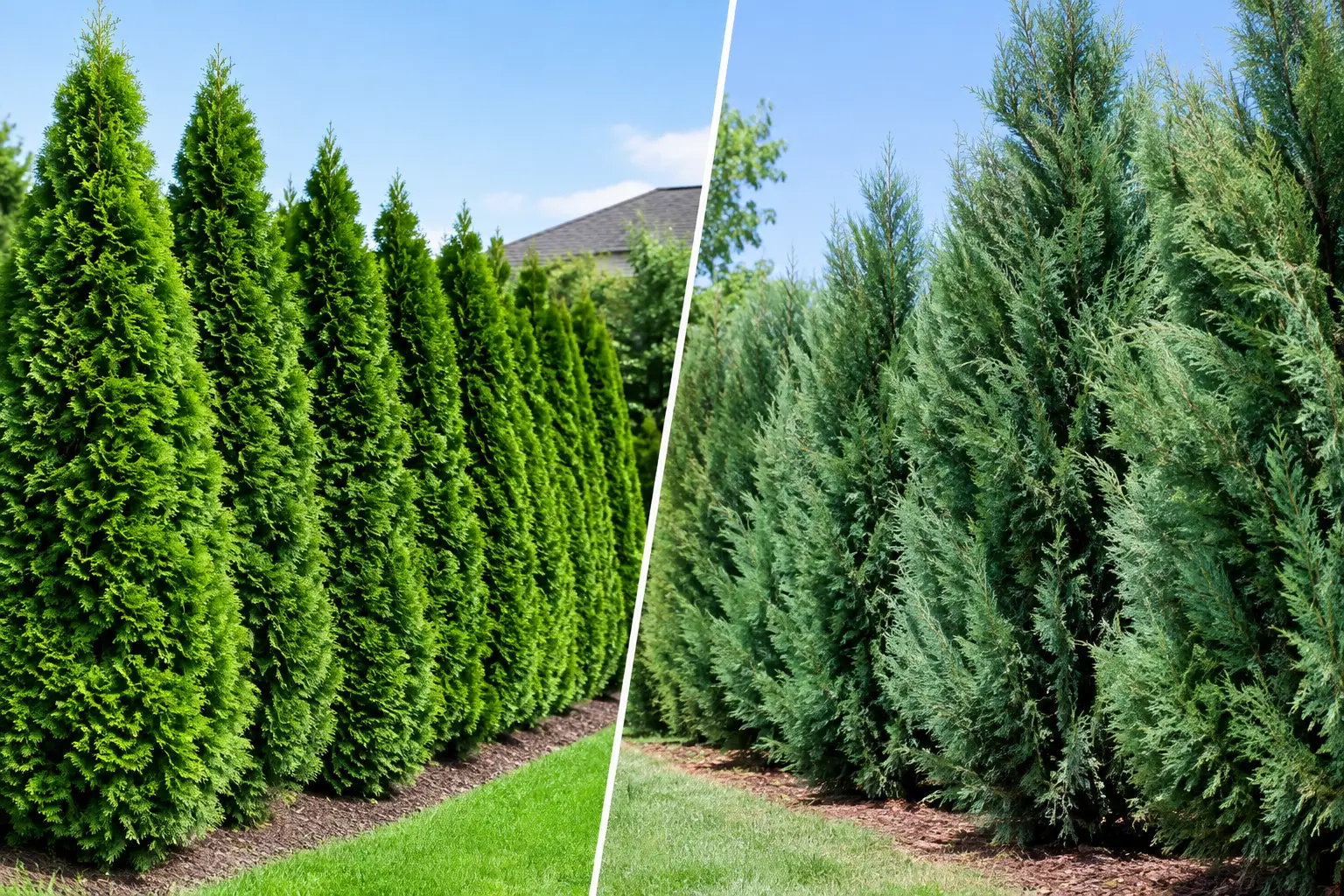
A privacy planting has to do more than block a view. It needs to fit the scale of your yard, handle Long Island weather, and still look good years after installation. When comparing arborvitae versus Leyland cypress, the right choice often comes down to how much room you have, how quickly you want coverage, and how much ongoing pruning your landscape can support.
Both are popular evergreen choices for Nassau County homes. Both can create a green backdrop around patios, pools, property lines, and busy streets. Their differences, however, matter more than they first appear at the nursery.
Arborvitae Versus Leyland Cypress: The Quick Difference
Arborvitae is often the more flexible choice for residential privacy. It comes in several sizes and forms, from narrow upright varieties to large, vigorous Green Giant arborvitae. Its tidy look works especially well where a hedge needs to stay within a defined space.
Leyland cypress is known for speed and scale. It can quickly build a tall screen on a larger property, but it is not a small-yard evergreen. A Leyland planted too close to a fence, driveway, home, or neighboring property can become a long-term maintenance challenge.
For many Long Island landscapes, arborvitae offers a more manageable path to privacy. Leyland cypress can be a strong fit when the site is open, sunny, and spacious enough for its mature size.
Growth Rate and Mature Size
The temptation with privacy trees is to choose the fastest grower available. Fast growth is valuable, but only when there is enough room for the plant to mature naturally.
Green Giant arborvitae is a favorite for larger privacy screens because it grows quickly while holding a dense, pyramidal shape. In good conditions, it may add several feet of growth in a season when young. At maturity, it can reach roughly 30 to 40 feet tall and 12 to 18 feet wide, depending on conditions and maintenance.
Emerald Green arborvitae is considerably smaller and narrower. It is better suited to tighter side yards, foundation planting areas, and formal rows where a uniform, polished look matters. It grows more slowly than Green Giant, but that slower pace can be an advantage near homes and walkways.
Leyland cypress can grow exceptionally fast, often putting on 3 to 4 feet annually during its active early years. It also becomes much larger. Mature Leylands can reach 50 to 70 feet tall with a spread of 15 to 25 feet. That is impressive on a broad property, but it can overwhelm a typical suburban backyard if planted without a long-term plan.
A useful rule is simple: choose for the size you want in 10 years, not the size that looks best on planting day.
Which Evergreen Handles Long Island Conditions Better?
Long Island gardens deal with humid summers, changing winter temperatures, coastal exposure in some areas, and heavy wet snow. Soil can vary widely from one neighborhood to the next. A plant that performs beautifully in a protected inland yard may struggle in a windy, exposed location.
Arborvitae generally performs well in this region when it is planted in full sun to partial shade and given reasonably well-drained soil. It appreciates consistent moisture while becoming established, particularly during hot summer stretches. Green Giant arborvitae is valued for its vigor and broad adaptability, while narrower arborvitae varieties offer a clean, structured look for smaller properties.
Leyland cypress prefers full sun and good air circulation. It dislikes sitting in wet soil, and crowded planting can encourage disease problems over time. Humid conditions can increase the risk of canker and other foliage issues, especially where plants are stressed by drought, poor drainage, or tight spacing.
Neither plant is truly set-it-and-forget-it. The first two growing seasons are especially important. Deep watering, mulch kept away from the trunk, and attention during dry periods give a new screen the best chance to establish strong roots.
Deer, Wind, and Winter Appearance
Deer pressure is a major consideration in many Nassau County neighborhoods. Arborvitae can be highly appealing to deer, particularly in winter when other food sources are limited. A row of arborvitae may need protection while young, and even mature plants can be damaged where deer are persistent.
Leyland cypress is usually less appealing to deer, though no plant is completely dependable when deer are hungry. If browsing has repeatedly damaged arborvitae in your yard, Leyland may deserve a closer look if your site has enough space and sun.
Wind exposure matters, too. Arborvitae can experience winter bronzing or drying on exposed sites, especially when frozen ground prevents roots from replacing moisture lost through foliage. Leyland cypress can also suffer in harsh wind, and its larger canopy gives storms more material to push against. A protected planting area with adequate spacing helps either evergreen look better through winter.
Spacing Makes or Breaks a Privacy Hedge
Most privacy-screen problems begin with plants placed too close together. Young trees look far apart at installation, so it is understandable to want an instant wall of green. But overcrowding reduces airflow, creates competition for water and nutrients, and can leave a hedge thin or stressed as it matures.
Green Giant arborvitae is often spaced about 5 to 8 feet apart for a connected screen, depending on the size of the plants and how quickly you want them to fill in. Emerald Green arborvitae is commonly placed closer because its mature width is more compact. The goal is to let branches meet over time, rather than forcing trees to grow into one another immediately.
Leyland cypress usually needs more space, often 8 to 12 feet between plants for a privacy row. Planting them closer may give faster early coverage, but it also creates a denser, more disease-prone planting as the trees mature.
Before deciding on spacing, consider the full planting area. Leave room from fences, structures, utility equipment, walkways, and property lines. Mature width matters just as much as height. A landscape professional can lay out a screen that provides privacy without turning future pruning into a yearly battle.
Pruning and Long-Term Care
Arborvitae usually requires less aggressive pruning than Leyland cypress. It naturally keeps a narrow-to-pyramidal profile, especially in varieties selected for hedging. Light shaping can maintain a neat line, but avoid cutting deep into old brown interior wood, which may not fill back in.
Leyland cypress benefits from regular attention if you need it to stay at a controlled height or width. Once it becomes too large, severe pruning can leave bare areas and an uneven appearance. On a large property where it can grow more naturally, this is less of a concern. In a compact yard, the maintenance commitment is significant.
For either choice, mulch 2 to 3 inches deep around the root zone, keeping it several inches away from the trunks. Water deeply rather than lightly and frequently. Monitor foliage for discoloration, thinning, or branch dieback so concerns can be addressed before they spread through a row.
When Arborvitae Is the Better Choice
Choose arborvitae when you want a more tailored privacy screen, have a modest-to-average-size yard, or prefer a hedge that is easier to keep in proportion with the rest of the landscape. It is also a practical choice when you want options: tall Green Giants for substantial screening, narrower Emerald Greens for limited space, or other forms that suit a specific design.
Arborvitae works beautifully as a living backdrop for flowering shrubs, perennial beds, and seasonal containers. Its softer texture and more controlled silhouette make it easy to integrate into a complete landscape plan rather than treating privacy as an afterthought.
When Leyland Cypress Is the Better Choice
Choose Leyland cypress when rapid height is the top priority and your property can support a very large evergreen screen. It is best suited to sunny, open areas where trees can be spaced generously and where their mature width will not interfere with buildings, fences, or neighboring spaces.
It can be particularly effective for screening a distant road, a large commercial edge, or a broad rear property line. It is less suited to narrow side yards or locations where a formal, tightly controlled hedge is the goal.
At Westminster Nursery, homeowners can compare privacy hedge options in person and get practical guidance based on sun exposure, deer activity, soil conditions, and the dimensions of the planting area. Plant selection can change with the season, so bringing a few photos and rough measurements of your yard makes the conversation more useful.
The best privacy screen is the one that still fits your property after it has had time to grow. Start with the view you want to block, measure the space honestly, and choose the evergreen that gives your Long Island yard privacy without asking it to become something it was never meant to be.