
Before After Front Yard Makeover Ideas That Last
Plan a before after front yard makeover with plants, paths, lighting, and privacy that suit Long Island homes, seasons, and the way your family lives daily.
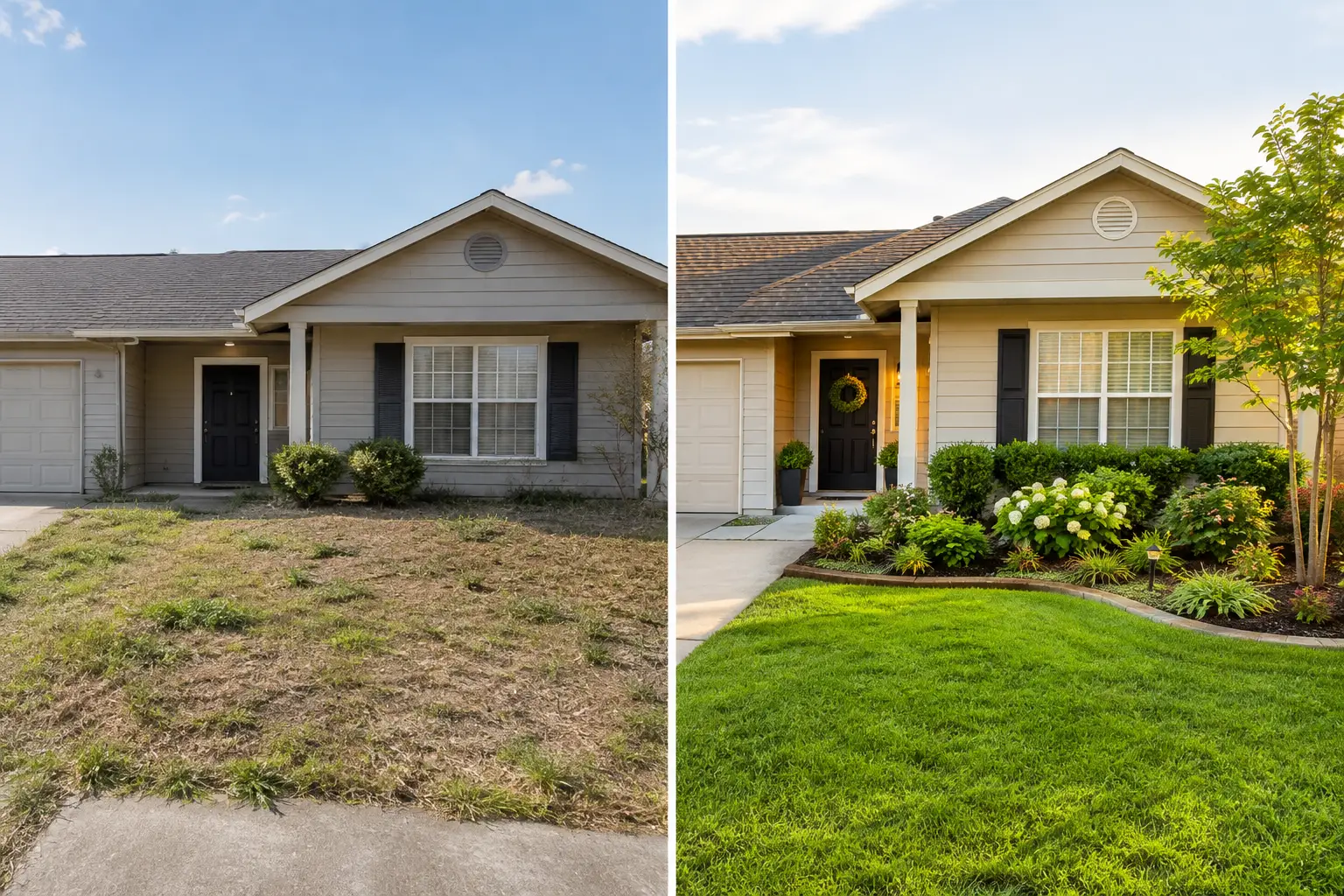
A striking before after front yard makeover rarely starts with a truckload of plants. It starts when you stand at the curb and notice what is not working: a walkway that feels too narrow, shrubs hiding the windows, bare soil around the foundation, or an entry that disappears after sunset. On Long Island, the best transformations balance immediate curb appeal with plants and materials that can handle changing seasons, summer heat, winter weather, and the way your household actually uses the space.
A front yard does not need to be large to make a strong first impression. It needs a clear plan. Whether your goal is a polished entry, more privacy from the street, a lower-maintenance planting bed, or a full landscape redesign, the right sequence turns scattered ideas into a yard that feels intentional from every angle.
Planning a Before After Front Yard Makeover
Start by looking at the front yard as a series of views, not one empty canvas. The view from the sidewalk should welcome visitors. The view from the driveway should make arriving home feel better. The view from inside the house matters, too, especially from front-facing windows.
Take photos from each of these spots before buying anything. They make it easier to see crowded areas, gaps in the planting beds, awkward corners, and features worth keeping. A mature shade tree, a healthy evergreen, a stone wall, or a well-placed walkway can become the anchor for the new design.
Then decide what success looks like. Some homeowners want color from spring through fall. Others want a more formal evergreen foundation planting that stays attractive year-round. A family with young children may prioritize a wider, safer path and open lawn space, while a homeowner on a busy Nassau County street may want screening that softens traffic and creates privacy. These goals can work together, but one should lead the plan.
Fix the framework before adding color
The biggest visual changes often come from the hardscape and bed lines, not the flowers. A crisp planting-bed edge instantly makes an older yard look cared for. A widened front walk creates a more generous arrival. Replacing a worn path, refreshing a stoop surround, or adding a small landing near the driveway can improve both appearance and daily function.
This is also the moment to address drainage. If water routinely collects near the foundation or washes mulch onto the lawn, new plants alone will not solve the problem. Grading, soil preparation, and drainage adjustments should happen before installation. It may not be the most glamorous part of a makeover, but it protects the investment you see above ground.
Lighting deserves early consideration as well. Path lights help guests navigate the entry, while subtle uplighting can highlight a specimen tree, stonework, or architectural detail. The goal is not to make the yard bright from the road. It is to make the entry feel safe, inviting, and easy to use after dark.
Choose Plants for Long Island Conditions
Plants create the personality of a front yard, but they need to fit the site. Before choosing colors, observe how much sun each area receives. A bed that gets strong afternoon sun needs a different plant palette than a shaded foundation beneath large trees. Soil moisture, wind exposure, and proximity to sidewalks also affect which plants will thrive.
For a year-round structure, combine evergreen shrubs with flowering shrubs, perennials, and seasonal annuals. Evergreens provide shape during winter, when a front yard can otherwise look flat. Flowering shrubs add seasonal moments, while perennials return each year with texture and color. Annuals are especially useful near the front door, mailbox, or walkway because they can change with the season and provide an immediate boost.
Avoid planting everything at the same height. A successful bed usually steps down from taller trees or screening plants at the back to medium shrubs, then lower flowering plants near the edge. That layering gives the landscape depth and keeps the front of the house visible instead of swallowed by greenery.
Use privacy plants with a long view
Privacy is one of the most common reasons homeowners refresh a front yard. Arborvitaes, Green Giant arborvitaes, Leyland cypress, and skip laurels can create a living screen, but the best choice depends on available width, sun exposure, desired mature size, and how much maintenance you want to handle.
A fast-growing screen can deliver quicker coverage, yet it also needs enough space to mature without crowding the house, driveway, or neighboring property. Planting too close together may look full at first, but can create airflow and pruning issues later. A thoughtful layout considers the plant's mature width, not just its size on installation day.
For partial screening, a mixed border can feel softer than a single straight hedge. Pair taller evergreens with flowering shrubs and ornamental grasses, leaving intentional openings where you want to preserve views or keep the entry visible. This approach gives the yard more seasonal interest while still creating separation from the street.
Make the Entry the Focal Point
Every front yard needs one area that naturally draws the eye toward the door. For some homes, that is a centered walkway. For others, it may be symmetrical containers, a curved bed that guides the eye, or a small ornamental tree placed where it frames the entrance.
Symmetry works well on traditional homes. Matching shrubs or containers on either side of the front steps can make the entry feel established and balanced. More casual homes often benefit from an asymmetrical arrangement, with a larger anchor planting on one side and a lower sweep of perennials or seasonal color on the other.
Containers are one of the easiest ways to make an entry feel updated without rebuilding the entire yard. Use substantial pots that suit the scale of the door and change the planting as the seasons shift. Spring bulbs and cool-season color, summer annuals, fall mums and ornamental accents, and winter greens can keep the entrance looking active all year.
Do not overlook the mailbox, house numbers, and front door area. Fresh mulch around a cleanly edged bed can make these small details look more deliberate. If the door color and plant colors compete, simplify the planting palette. Two or three coordinating colors usually create a stronger impression than a little of everything.
Budget in Phases Without Losing the Big Picture
A full before-and-after front yard makeover does not always need to happen at once. The key is to create a complete master plan before breaking the work into phases. That way, the first new bed, walkway, or privacy planting supports the finished landscape instead of becoming something that needs to be moved later.
A sensible first phase often includes cleanup, pruning, bed definition, soil improvement, and the structural plants that establish the layout. The second phase can add perennials, flowering shrubs, lighting, and decorative elements. Seasonal containers and annual color can fill gaps while younger shrubs grow into their intended size.
There are trade-offs. Smaller plants cost less initially and give you more flexibility, but they take time to create a full look. Larger trees and shrubs make a faster impact, especially when preparing for a special event or a home sale, but they require a higher up-front investment and careful installation. Neither choice is automatically better. It depends on your timeline, budget, and patience for growth.
Keep the Finished Yard Looking Like the After Photo
The most satisfying makeovers are designed with maintenance in mind. Mulch helps retain soil moisture, suppresses weeds, and gives planting beds a finished appearance, but it should not be piled against tree trunks or shrub stems. A proper watering routine during the first growing season is essential, particularly for newly planted trees and privacy hedges.
Pruning should follow the natural growth habit of each plant rather than forcing every shrub into the same shape. Keep walkways clear, remove damaged branches, and refresh seasonal color as needed. A few planned maintenance visits throughout the year can prevent the tidy new landscape from gradually becoming overgrown.
For homeowners who want knowledgeable support from plant selection through installation and ongoing care, Westminster Nursery brings local plant inventory and landscape experience together in one place. Bring photos and basic measurements of your front yard when you visit. They can turn a vague wish for better curb appeal into choices that fit your home, your property, and the Long Island seasons ahead.
The best front yard transformation should still feel good when the blooms fade, the weather changes, and you pull into the driveway on an ordinary Tuesday. Build around that feeling, and the after photo will have staying power.