
Backyard Drainage Example for Long Island Yards
See a backyard drainage example for Long Island yards, from grading and swales to dry wells, and learn when professional landscape support makes local sense.
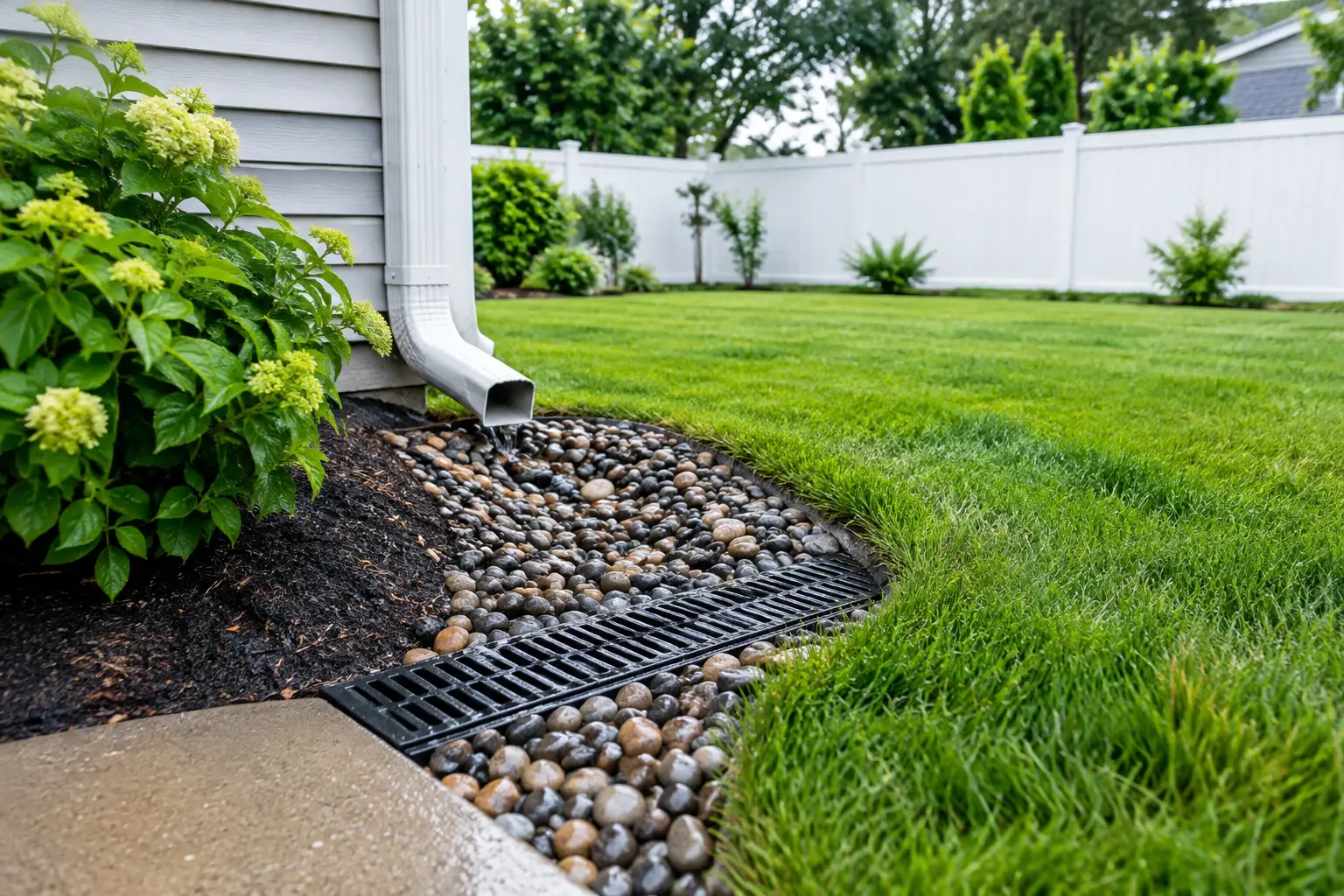
A backyard can look perfectly level on a sunny afternoon, then reveal its real problem after one heavy Long Island rain: water collecting along the patio, soaking a planting bed, or turning a favorite patch of lawn into mud. This backyard drainage example shows how a practical plan can move excess water away from the house while protecting the lawn, trees, shrubs, and outdoor areas your family uses.
For many Nassau County properties, drainage is not about one dramatic fix. It is about following the water, identifying where it enters the yard, and giving it a safe place to go. The right solution depends on the slope of the property, soil conditions, nearby structures, and how much water is coming from downspouts, neighboring lots, or hardscape surfaces.
A Backyard Drainage Example That Starts at the House
Picture a typical backyard with a patio behind the home, two downspouts emptying near the foundation, and a low lawn area about 25 feet away. After rain, water runs off the roof, spills beside the patio, and settles in the low spot. The grass thins, the soil stays soft for days, and mosquitoes become an unwelcome part of the evening.
A good drainage plan begins by addressing the source. In this example, each downspout is extended underground with solid drain pipe so roof runoff does not pour directly next to the foundation. The pipes carry water beyond the patio and connect to a dry well placed in a suitable area of the yard. A shallow swale, or gently sloped channel, guides surface water from the lawn toward that same collection area.
The goal is not to make the backyard unnaturally flat. It is to create subtle grades that encourage water to move away from the home and out of high-use spaces. Done well, the finished yard still looks natural, with a healthy lawn and planting areas that feel intentional rather than engineered.
Start by Reading Where Water Travels
Before choosing pipe, stone, or plants, watch the yard during a steady rain if it is safe to do so. You will learn more in 20 minutes of rainfall than from guessing at a dry lawn. Notice where water exits gutters, where it crosses the patio, and whether it pools against the house, fence, shed, or neighboring property line.
Soil matters as much as slope. Long Island yards can have sandy ground that drains quickly in one section and compacted soil or heavier fill that holds water in another. A dry well can work beautifully where soil can absorb water at a reasonable rate, but it may not be the best answer for every low spot. If groundwater is high or the area receives a major volume of runoff, the system may need a larger collection area, additional drainage runs, or a different outlet strategy.
Also look for changes made over time. A new patio, pool surround, retaining wall, or raised garden bed can redirect water in ways that were not obvious before construction. Even a few inches of added soil near the foundation can create a problem if it blocks the original grade.
Build the Solution in Layers
First, improve the grade
The simplest part of many drainage projects is regrading. Soil is added or reshaped to create a gentle slope away from the house. This keeps ordinary rainfall from lingering near the foundation and reduces pressure on more complicated drainage components.
Grading has limits. You cannot always build up soil near a door threshold, window well, patio edge, or property boundary. A yard with very little elevation change may also need more than a surface slope. That is where drainage infrastructure becomes useful.
Then, capture roof runoff
Downspouts concentrate a surprising amount of water. Letting them discharge close to the house can wash out mulch, saturate beds, and contribute to wet foundation conditions. Extensions can move water farther into the yard, while buried solid pipe offers a cleaner look and a more controlled route.
In the backyard drainage example above, the downspout lines run beneath the lawn to a dry well. The dry well is a stone-filled underground structure designed to temporarily hold water while it filters into surrounding soil. It keeps the surface of the yard cleaner and helps prevent a heavy roof flow from overwhelming one small area.
Finally, manage standing water in the lawn
A swale is often an excellent answer for broad, shallow lawn puddles. It is not a ditch with steep sides. It is a gradual, wide depression shaped into the landscape, usually covered with turf or planted with moisture-tolerant material. Water follows the low point during storms, then drains away rather than sitting in the middle of the yard.
For a localized soggy area, a French drain may be the better choice. This system uses a perforated pipe surrounded by clean stone and wrapped in filter fabric. Groundwater enters through the pipe and is directed to a suitable discharge point or collection area. French drains are useful, but they must be installed at the correct depth and pitch. A pipe with nowhere to drain will not solve the problem.
Let Planting Support the Drainage Plan
Drainage work does not have to leave a yard looking like a construction site. Once the grading and water routes are established, planting can help stabilize soil, soften swales, and bring color back to the space.
A rain garden is one attractive option for an area that receives periodic runoff. It is planted with varieties that can tolerate occasional wet conditions but do not require constantly saturated soil. The best plant choices depend on sun exposure, soil, and exactly how long water remains after a storm. For a more traditional foundation or border planting, shrubs and perennials should be selected for the actual moisture conditions, not simply for how they look on the day they are installed.
Mulch also deserves attention. A thick layer placed against the home can trap moisture and hide drainage issues. Keep mulch pulled back from siding and avoid creating a raised ring that directs water toward a plant's crown. Clean bed edges and correctly placed plant material make a noticeable difference in how water behaves.
When a Simple Fix Is Enough, and When It Is Not
Some backyard drainage problems are manageable with routine property care. Clearing leaves from gutters, extending a downspout, repairing a low section of lawn, or refreshing compacted soil may improve a minor issue quickly.
Call for professional landscape guidance when water repeatedly reaches the foundation, enters a basement or crawlspace, runs toward a neighbor's property, or continues to stand more than a day or two after normal rainfall. Persistent wet ground can damage turf, stress roots, undermine patios, and make the yard less usable season after season.
A professional assessment is especially worthwhile before installing a new patio, pool area, outdoor kitchen, or major planting project. Drainage should be part of the design from the beginning, not an afterthought once the lawn has been disturbed. Westminster Nursery's landscape team can help homeowners connect grading, drainage, hardscape, and planting into one plan that fits the way the property is used.
Avoid These Common Drainage Mistakes
The most common mistake is moving water only a few feet away from the house and assuming the job is done. If the outlet still drains onto a patio edge, into a low bed, or toward a fence line, the problem has simply changed locations.
Another is installing a French drain without confirming its outlet. Drainage pipes need slope and a destination. Likewise, filling a soggy lawn area with topsoil may temporarily hide the puddle but can create a new high spot that sends water somewhere else.
Be cautious about planting thirsty trees or shrubs as a substitute for drainage. Plants can support a well-designed landscape, but they cannot reliably absorb the volume of water coming off a roof during a strong storm. Use them as part of the solution, not the entire solution.
A dry backyard is not the goal. A healthy one is. When rain has a clear path away from the house and out of your favorite outdoor spaces, the lawn recovers faster, planting beds perform better, and the backyard is ready to enjoy when the sun comes back out.