
Mulch vs Stone Landscaping: What Fits Your Yard?
Compare mulch vs stone landscaping for Long Island beds, walkways, and foundations. See which choice fits your plants, maintenance routine, and budget.
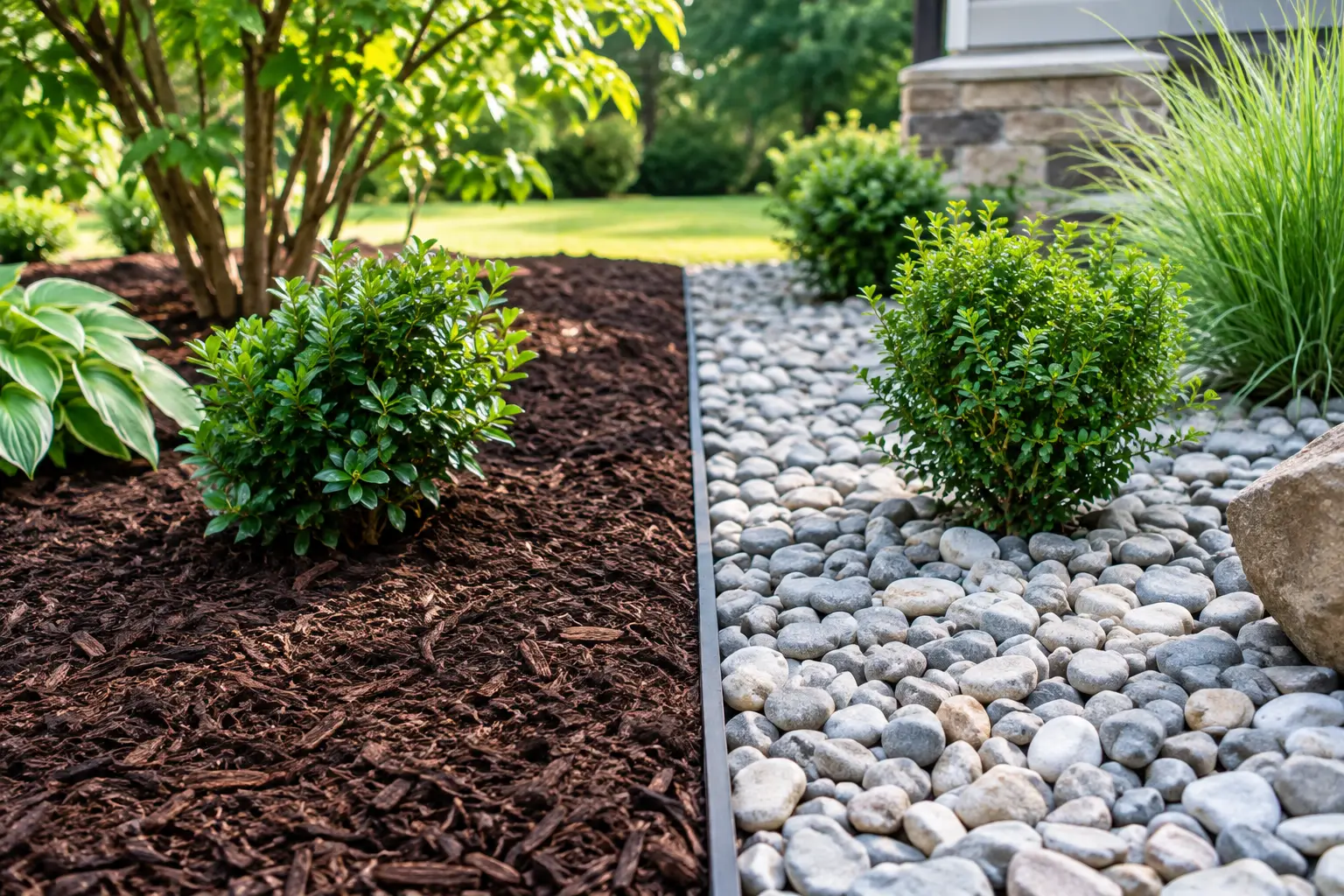
A fresh layer of dark mulch can make a planting bed look finished in an afternoon. Decorative stone can give a front foundation bed a crisp, lasting outline. When homeowners weigh mulch vs stone landscaping, the better choice is rarely about looks alone. It comes down to what is growing in the bed, how much sun and water the area receives, and how you want the space to work through Long Island’s changing seasons.
For many Nassau County properties, the strongest landscape is not an all-or-nothing choice. Mulch belongs around trees, shrubs, and colorful garden beds. Stone often earns its place along walkways, around drainage areas, and in low-planting foundation zones. Knowing where each material performs best helps you invest in a yard that looks cared for beyond the first weekend of spring.
Mulch vs Stone Landscaping for Planting Beds
Mulch is usually the better match for beds with living plants. It helps the soil hold moisture during hot summer stretches, buffers roots from temperature swings, and gradually adds organic matter as it breaks down. That matters around hydrangeas, azaleas, evergreens, perennials, vegetable plants, and the wide range of shrubs that give Long Island yards their structure.
A two- to three-inch layer of quality mulch also creates a clean contrast with green foliage and seasonal flowers. It makes a newly planted bed look established while helping reduce the amount of bare soil where weeds can take hold. For homeowners who refresh annual color near an entryway or swap seasonal plantings throughout the year, mulch is easy to move aside and replace.
Stone does not improve soil or retain moisture in the same way. In fact, light-colored stone can reflect heat toward plants, while darker stone can absorb and hold warmth. That can stress shallow-rooted plants in a sunny bed, particularly during July and August. Stone also makes planting, dividing perennials, and changing the shape of a garden more labor-intensive.
That does not make stone a poor choice around every plant. It can look excellent in a carefully designed bed featuring drought-tolerant selections, ornamental grasses, or architectural evergreens. The planting plan simply needs to be intentional from the start. A stone bed is best treated as a more permanent feature, not a flexible garden canvas.
Mulch protects roots when the weather shifts
Long Island weather can move quickly from wet spring conditions to dry heat, then into winter freeze and thaw cycles. Organic mulch moderates those changes at the soil surface. It is especially useful around newly installed trees, privacy hedges, and shrubs that are still developing strong root systems.
Keep mulch pulled back several inches from trunks and stems. Piling it high against bark, sometimes called a mulch volcano, holds excess moisture against the plant and can invite disease or pest problems. The goal is a low, even blanket over the root zone, not a mound against the base of the plant.
Where Stone Makes the Most Sense
Decorative stone is a practical choice where durability and drainage matter more than soil improvement. It works beautifully along a side yard path, beside a patio, under downspout outlets, around a pool area, or in a narrow strip between a driveway and foundation. These are locations where mulch may wash away, scatter onto pavement, or need frequent touch-ups.
Stone can also create a polished, low-changing look around a home’s foundation, especially where there are only a few permanent shrubs. Choose a size that fits the scale of the area. Fine gravel may travel easily underfoot, while larger river rock can overpower a compact front bed. Crushed stone provides a more structured appearance and may lock together better for certain pathways.
Before installing stone near a foundation, pay close attention to grading. The material should never disguise a drainage problem or direct water toward the home. A properly planned stone area can help move water away from high-traffic zones, but the slope beneath it is what does the real work.
Think twice before using stone under large trees
A ring of stone around a mature tree may look tidy at first, but it can make root-zone care more difficult. Trees benefit from oxygen, moisture, and organic matter near the soil surface. Mulch is generally the more tree-friendly finish, especially for young trees and specimen plantings that need consistent care.
If a stone detail is part of the design, keep it modest and avoid compacting the soil beneath it. Never build up material over the tree’s root flare, the area where the trunk widens at ground level.
Maintenance: Annual Refresh vs Long-Term Cleanup
Mulch needs replenishing because it naturally decomposes and fades. Most beds benefit from a spring refresh, although the amount depends on how much mulch remains from the previous season. This regular upkeep is also an opportunity to edge beds, inspect plants, prune damaged growth, and add new seasonal color.
Stone does not decompose, so it is often described as low maintenance. That is true in one sense, but not in every sense. Leaves, soil, and windblown debris settle between the stones over time. Once organic matter builds up, weeds can germinate in the surface layer. Pulling weeds from stone and cleaning accumulated debris can be more tedious than refreshing mulch.
Stone also tends to migrate. It can end up in lawn areas, on sidewalks, and along driveway edges, particularly after storms or snow removal. Raking it back into place is manageable in a small area, but a large stone bed may eventually need a more substantial cleanup.
Landscape fabric is sometimes placed beneath stone to limit weeds. It can help for a period, particularly under paths or purely decorative zones, but it is not a permanent solution. Soil and leaf litter still collect on top, and fabric can complicate future planting or repairs. In planted beds, a thoughtful layer of mulch and routine weeding is often the healthier, more adaptable approach.
Cost Depends on the Size and Purpose of the Area
At installation, mulch is typically the more budget-friendly material for broad planting beds. It covers a large area efficiently and is simple to spread around existing shrubs and perennials. Since it needs refreshing, its cost repeats over the years, but it delivers ongoing benefits to the soil and plants.
Stone generally has a higher upfront material and installation cost. Delivery, base preparation, edging, and the labor involved in moving heavy material all affect the final investment. Its long lifespan can make sense where you want a stable, non-organic surface, such as a pathway or drainage strip.
The right comparison is not simply which one lasts longer. Ask what the area needs to do. A shrub border needs healthy soil and moisture management. A walkway needs stable footing. A downspout outlet needs controlled drainage. Using the same material everywhere may be convenient, but it rarely gives every part of the property the support it needs.
Choose a Color That Supports Your Home and Plants
Mulch comes in natural brown, rich black, and reddish tones, among other options. A dark brown mulch often complements brick, stone, siding, and green foliage without drawing attention away from the plants. Black mulch offers strong contrast and can make bright annuals stand out, but it may fade over the season.
With stone, consider the home’s permanent colors first. Warm tan, buff, and mixed river stone often suit traditional homes and softer garden designs. Gray or charcoal stone can complement contemporary hardscaping and cooler siding colors. Bring a sample near the house and view it in morning and afternoon light before committing to a large quantity.
Color should also support the planting plan. If you want vibrant begonias, petunias, or seasonal containers to be the focal point, choose a ground cover that frames them rather than competes with them.
A Practical Plan for a Better Landscape
For most homes, use mulch around plants and stone where traffic, drainage, or long-term structure calls for it. A mulched front bed can support flowering shrubs and seasonal color, while a stone border along the driveway keeps the transition neat. A stone swale can handle runoff, while mulch beneath trees protects the root zone.
Westminster Nursery can help homeowners match the right mulch, stone, trees, shrubs, and seasonal plants to the way they use their property. For larger changes, a professional landscape plan can connect those choices into one cohesive yard instead of treating every bed as a separate project.
Stand at the curb and consider what you want each area to do before choosing its finish. When the material supports the plants, the drainage, and the way your family enjoys the space, the landscape will look better now and be easier to care for in every season.