
12 Best Plants for Pool Area Landscaping
Find the best plants for pool area landscapes on Long Island, with choices that handle sun, splashes, privacy needs, and easy seasonal care at your home.
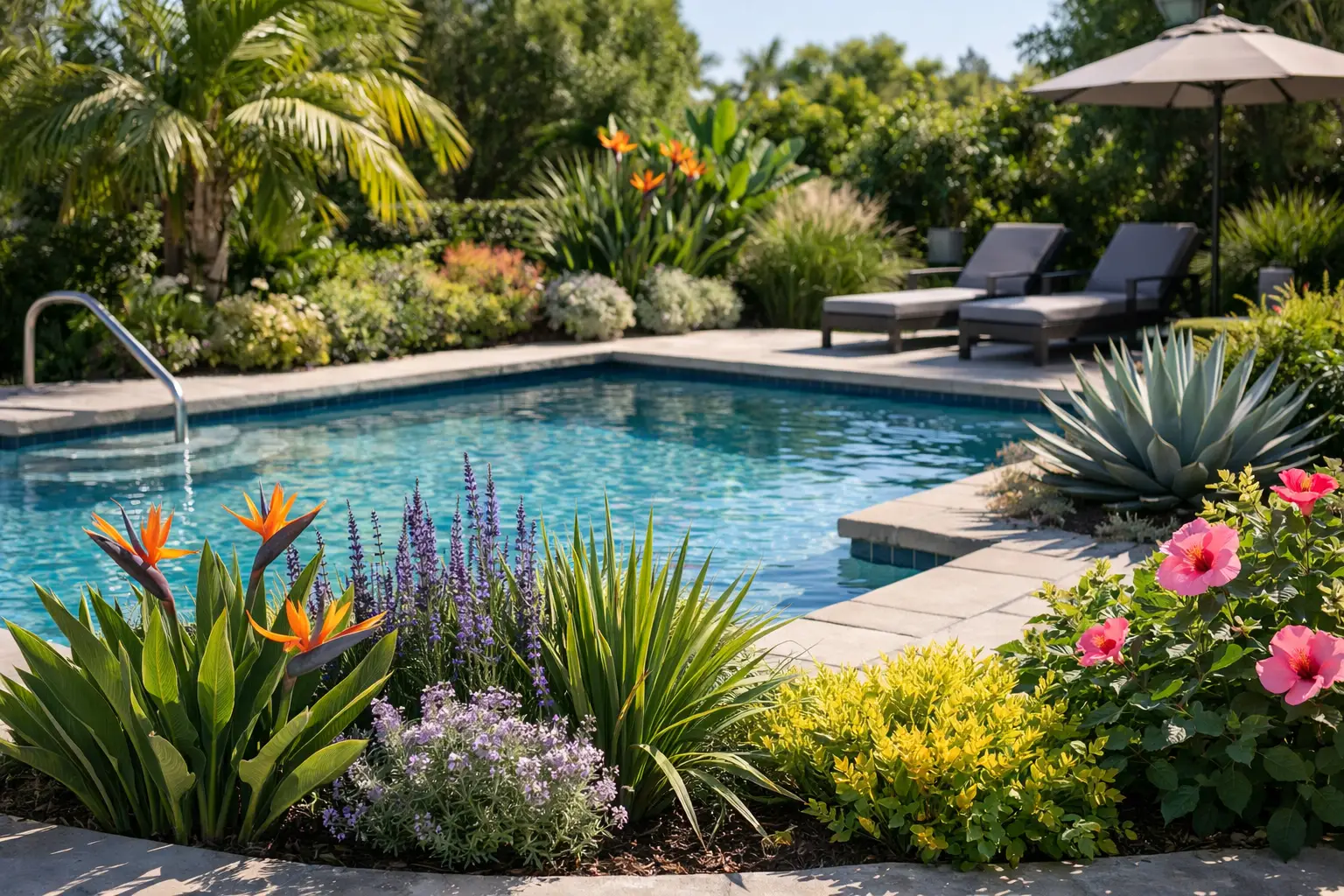
A pool should feel like a destination in your own backyard, not a bright patch of concrete with a few struggling shrubs around it. The best plants for pool area landscaping add privacy, soften hard edges, bring in color, and make the space feel established without creating a constant cleanup job. For Long Island homeowners, the right choices also need to stand up to humid summers, winter cold, reflected heat, and occasional splashes from treated pool water.
The goal is not to plant as much as possible. It is to choose plants that suit the sun exposure, your desired level of privacy, and how you actually use the space. A family pool deck needs clear walking paths and low-maintenance greenery. A more secluded lounge area may call for screening evergreens, ornamental grasses, and a few tropical-looking accents.
What Makes a Plant Pool-Friendly?
Before choosing varieties, think about placement. Plants closest to the water should be tidy, durable, and unlikely to drop lots of leaves, fruit, or petals into the pool. Avoid plants with aggressive roots near pool walls, plumbing, or decking, and be thoughtful about thorny selections around bare feet and active kids.
Poolside plants also face a warmer microclimate than the rest of the yard. Stone pavers and concrete reflect heat, while open pool areas often get full sun and wind. Plants that tolerate heat and have good disease resistance tend to look better through August. Even salt-tolerant choices can be useful near a saltwater pool, although regular splashing is different from living near the coast.
Keep larger shrubs and trees far enough from the pool that mature branches will not shade the water excessively or hang over the deck. Leave room to prune, mulch, and maintain each plant without turning routine care into a balancing act around lounge chairs.
12 Best Plants for Pool Area Landscaping
1. Arborvitae
Arborvitae is a reliable choice when privacy is the priority. Its dense evergreen foliage creates a living wall that helps block neighboring views and gives a pool area a more enclosed, finished look throughout the year. Green Giant arborvitae works well where there is room for a taller screen, while narrower varieties can suit tighter side yards.
Plan for mature width, not just the size of the plants at installation. Proper spacing allows air to move through the hedge and keeps each plant from competing too hard for water and nutrients.
2. Skip Laurel
Skip laurel offers another strong privacy option, especially for homeowners who want broad, glossy leaves rather than a needle-textured evergreen screen. It handles trimming well and can be maintained as a formal hedge or allowed to develop a more natural shape. In a pool landscape, skip laurel is especially effective behind a seating area or along a property line where year-round screening matters.
It appreciates consistent watering while becoming established. Once mature, it offers a substantial green backdrop for flowering perennials and container plantings.
3. Boxwood
For a polished, classic pool setting, boxwood is hard to beat. Its compact evergreen form works beautifully along the edge of a patio, around outdoor entertaining spaces, or as low structure in front of taller plantings. Boxwood does not provide the height of a privacy hedge, but it gives pool beds a neat, intentional shape even in the quieter months.
Choose a site with well-drained soil and avoid crowding plants too tightly. A simple row of boxwoods paired with stone, mulch, and seasonal containers can make a large deck feel more connected to the garden.
4. Panicle Hydrangea
Panicle hydrangeas bring long-lasting summer blooms without the delicate reputation of some older hydrangea types. They perform well in sunny locations, develop into substantial shrubs, and offer white flowers that gradually shift toward soft pink tones as the season progresses. Their flower heads are showy enough to frame a pool lounge area but not so messy that they overwhelm the deck.
They need regular water in their first seasons and may benefit from a deeper soak during a hot, dry stretch. Give them enough space to grow into their natural rounded form instead of forcing constant pruning.
5. Russian Sage
Russian sage is a smart choice for hot, sunny pool borders. Its silvery foliage and airy lavender-blue flowers provide a cool visual contrast to bright paving and blue water, while its drought tolerance makes it practical once established. It also brings movement to the garden without dropping heavy leaves.
This plant looks best when planted in groups rather than as a single specimen. Pair it with ornamental grasses, coneflowers, or compact evergreens for a layered planting that carries from summer into fall.
6. Lavender
Lavender delivers fragrance, soft purple flowers, and a clean Mediterranean feel that naturally suits a poolside setting. It likes sun, good drainage, and soil that does not stay wet. Along a sunny walkway or patio edge, lavender can make the approach to the pool feel as inviting as the water itself.
On Long Island, drainage is the deciding factor. If your soil holds water, consider placing lavender in raised beds or containers rather than a low spot beside the deck.
7. Ornamental Grasses
Ornamental grasses bring texture that shrubs cannot. Feather reed grass, maiden grass, and compact fountain grass can screen a fence, soften a corner, or create a relaxed transition between lawn and patio. Their upright forms are especially useful in modern landscapes where homeowners want clean lines without a rigid hedge.
The trade-off is seasonal cleanup. Many grasses are cut back in late winter or early spring, and taller varieties should be positioned where their mature height will not block a favored view of the yard.
8. Daylilies
Daylilies are dependable for sunny pool beds where you want color without a demanding maintenance routine. Their arching foliage helps soften the base of hedges and walls, while summer flowers add bright yellow, orange, red, pink, or purple accents. They are also easy to divide as they mature, making them a practical long-term planting.
Choose reblooming varieties if you want extended color. Keep them a few feet back from the pool edge, where their foliage can fill in planting beds without interfering with foot traffic.
9. Coneflowers
Coneflowers offer a bold, cheerful look and perform well in heat and full sun. Their sturdy stems and long bloom period make them a favorite for naturalistic pool gardens, especially when mixed with grasses and Russian sage. They also bring birds and pollinators to the landscape, so they are best placed away from the busiest dining or lounging areas if that activity is a concern.
Leave spent flower heads in place into fall if you enjoy their seed-head texture, then clean up the plants before spring growth begins.
10. Hibiscus
Hardy hibiscus gives pool landscaping a tropical look while surviving Long Island winters. Its dinner-plate-size flowers appear in late summer, when many other perennials are starting to fade. Red, white, pink, and bicolor blooms stand out beautifully against evergreen hedges and dark mulch.
Hardy hibiscus emerges later in spring than many garden plants, so mark its location and surround it with earlier-season companions. It prefers consistent moisture, particularly in full sun.
11. Palms and Tropicals in Containers
Nothing changes the mood of a pool deck faster than containers filled with palms, elephant ears, canna lilies, mandevilla, or colorful annuals. These plants create instant vacation energy and let you refresh the look from one season to the next. Containers are also ideal for tight patios where planting in the ground is not practical.
The convenience comes with extra watering. Pots dry out quickly beside hot paving, so use quality potting mix, select containers with drainage, and check them often during heat waves. Tropical plants should be treated as seasonal accents unless you have an indoor space for overwintering.
12. Lantana
Lantana is another strong seasonal option for sun-soaked poolside containers and beds. Its small, colorful flower clusters bloom steadily through summer and tolerate heat exceptionally well. Yellow, orange, pink, and purple varieties can match nearly any outdoor furniture or umbrella color.
Because lantana is typically used as an annual in this area, it is a simple way to change the personality of the pool garden each year. Use it near the front of a sunny bed or spill it from a container where the flowers can be appreciated up close.
Create Layers Instead of a Single Row
The most successful pool gardens usually combine different heights. A privacy hedge or taller grasses establish the background. Flowering shrubs and perennials fill the middle. Low evergreens, lavender, or seasonal annuals finish the front edge. This layered approach makes the landscape look fuller while keeping the pool deck open and usable.
Color deserves some restraint. A cool palette of white, blue, silver, and soft purple feels calm and upscale near water. Brighter lantana, hibiscus, cannas, and annuals bring energy to a family-focused space. Either can work, but repeating a few colors throughout the beds and containers creates a more pulled-together result than choosing every color at once.
For help matching plant sizes, sun conditions, and privacy needs to your specific yard, Westminster Nursery can help homeowners turn a bare pool perimeter into a landscape that feels welcoming from the first warm day through fall. Start with the view you want from your favorite pool chair, then build outward with plants that earn their place in the garden.