
Foundation Shrubs for House That Fit Long Island
Choose foundation shrubs for house that add curb appeal without crowding windows, siding, or walkways. Smart Long Island planting tips for lasting color.
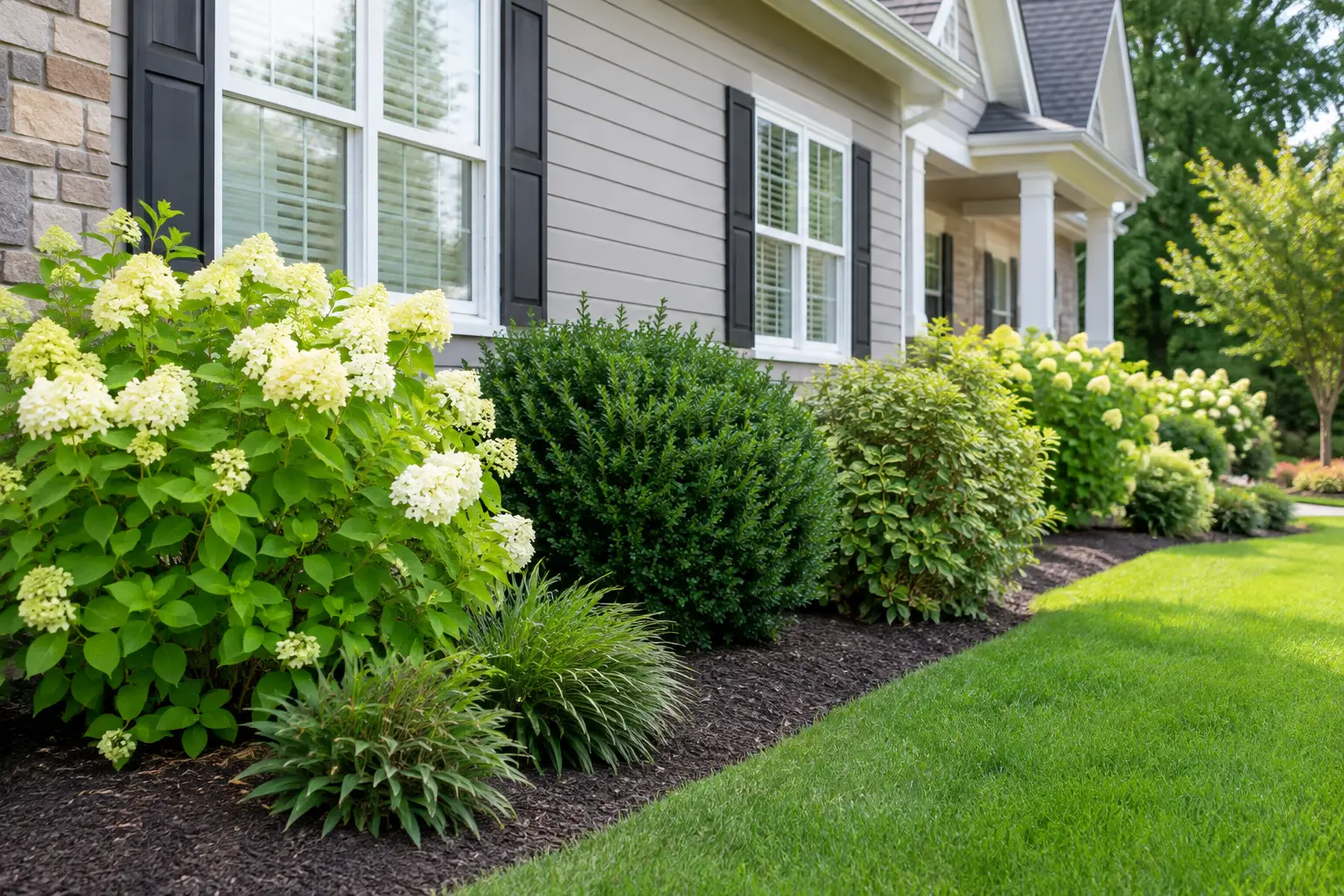
A front foundation bed should make your home look settled into its landscape, not swallowed by a row of oversized evergreens. The right foundation shrubs for house planting soften brick, siding, steps, and walkways while leaving room for windows, air circulation, and the mature size of every plant. On Long Island, that also means choosing shrubs that can handle winter wind, summer heat, dry soil beneath roof overhangs, and the occasional salt exposure near driveways and streets.
Start With the House, Not the Shrub
The most common foundation-planting mistake happens at the garden center: a small, healthy shrub looks manageable in a container, then grows into the windows or presses against the siding a few years later. Before choosing plants, look at the full wall of your home and identify what needs to stay visible. Windows, utility meters, dryer vents, hose connections, gates, and walkways all need clear access.
A good foundation bed has layers, but it should not be a solid green wall. Lower shrubs belong closest to paths and under windows. Medium shrubs can anchor blank sections of wall or frame an entry. Taller plants work best at corners, between widely spaced windows, or where the house has a tall, uninterrupted façade.
Give plants room based on their mature spread, not their current container size. As a general rule, place shrubs far enough from the house that their mature foliage will not rest against siding. This helps prevent moisture buildup, makes pruning easier, and keeps the planting looking intentional rather than cramped.
What Foundation Shrubs for House Plantings Need to Handle
Foundation beds have their own growing conditions. Soil next to a home is often compacted from construction. Rooflines can block rainfall, while dark siding and masonry reflect heat. In winter, wind can dry evergreen foliage, and snow piled beside a driveway may carry salt into the root zone.
Check how much direct sun the bed receives before shopping. A wall that gets blazing afternoon sun needs different plants than a shaded north-facing entry. Also pay attention to drainage. If water sits after a storm, solve that issue before adding shrubs. Most shrubs tolerate occasional rain, but few thrive with consistently wet roots.
Soil testing can be especially helpful in older Long Island landscapes. Concrete, masonry, and past construction materials can affect soil pH. Adding compost when preparing the bed improves soil structure, but avoid treating every plant problem with more fertilizer. A shrub in the wrong light or poorly drained soil will not be fixed by feeding it.
Reliable Shrub Choices for Long Island Homes
There is no single best shrub for every front yard. The right selection depends on sun, soil, deer pressure, desired maintenance, and how much winter interest you want. Mixing evergreen structure with flowering or deciduous shrubs usually gives a foundation bed more life across the seasons.
Evergreens for Structure All Year
Boxwood remains a classic choice for low, tailored hedges and formal entries. Look for varieties selected for your available sun and final height, and avoid packing plants tightly together. Good airflow is valuable in humid weather, especially when a hedge is clipped regularly.
Dwarf Japanese holly offers a similar neat, small-leaved look with a slightly different texture. It works well along walkways and in beds where you want an evergreen edge without the height of a larger hedge. Like boxwood, it looks best when allowed to retain its natural shape instead of being cut into an overly rigid mound.
Inkberry holly brings a darker green, more natural appearance and is a strong option for many Long Island landscapes. It appreciates consistent moisture and tends to perform well where the soil is not extremely dry. Plant more than one if you want a fuller, continuous effect, since individual plants can have a looser form.
Yews are useful where shade limits flowering choices. Their rich evergreen needles and dense habit make them dependable around traditional homes, but placement matters. They can eventually become substantial plants, and deer may browse them in some neighborhoods.
Flowering Shrubs for Seasonal Color
Hydrangeas are a favorite for foundation beds because they provide generous summer color and suit many home styles. Panicle hydrangeas are generally a practical choice for sunnier spaces and offer flowers that age beautifully into late season. Compact varieties fit beneath windows better than full-sized selections, but always verify the mature dimensions.
For shadier locations, smooth hydrangeas and certain bigleaf hydrangeas can add a softer look. Bigleaf types can be affected by winter weather, so their flower display may vary year to year. If consistent blooms are your highest priority, choose based on site conditions rather than flower color alone.
Spirea works well in sunny beds where you want a low, rounded shrub with reliable blooms and colorful foliage. It is especially useful along a front walk or in the first layer of a larger bed. Pruning at the correct time keeps it fresh and compact without sacrificing its natural shape.
Summersweet, also called clethra, is worth considering for part shade and moisture-retentive soil. Its fragrant summer flowers bring a different texture to the foundation than the usual spring-blooming shrubs. Virginia sweetspire is another appealing choice, with graceful white blooms and excellent fall color in many settings.
Design a Bed With Depth, Not a Straight Line
Rows of identical shrubs planted directly against the house can make even a beautiful property feel flat. Instead, pull the bed outward where space allows. A deeper bed gives shrubs room to develop and creates a place for perennials, seasonal annuals, bulbs, and mulch without crowding the foundation.
Use taller shrubs as anchors at corners or beside an entrance. Step down to medium-sized flowering shrubs, then finish with lower evergreen plants or perennials toward the front. Repeating a few plants across the bed creates a calm, connected look. Too many one-of-a-kind shrubs can make a small front yard feel busy.
Consider the view from inside the house as well. A shrub should frame a window, not block the daylight. For windows that sit close to the ground, choose plants that mature below the sill or use a lower perennial and annual combination for color.
When deciding where each plant goes, keep these four clearances in mind:
- Leave access to utility equipment, vents, and outdoor faucets.
- Keep foliage away from siding and window trim at mature size.
- Preserve a comfortable path width near steps and walkways.
- Avoid placing salt-sensitive shrubs where plowed snow accumulates.
Planting Details That Make a Lasting Difference
Planting day sets the tone for the next several seasons. Dig a hole about two to three times as wide as the root ball, but no deeper than the root ball itself. The top of the root flare should sit at or slightly above surrounding soil level. A shrub planted too deeply may struggle even if the rest of the installation looks perfect.
Loosen circling roots before setting container-grown shrubs in the hole. Backfill with the soil you removed, incorporating compost only when the existing soil truly needs improvement. Heavy amendments inside a small planting hole can create a pocket that holds water differently from the surrounding ground.
Water deeply after planting and continue watering consistently through the first growing season. Foundation beds beneath eaves often receive less rain than homeowners expect. A two- to three-inch layer of mulch helps retain moisture and gives the bed a clean finish, but keep mulch pulled back from stems and trunks.
Prune with a purpose. Remove damaged branches, lightly shape when needed, and learn whether your flowering shrub blooms on old wood or new wood before cutting it back. Hard pruning at the wrong time can mean a season without flowers.
Get the Right Plants for Your Specific Front Yard
A foundation planting is not just a purchase for one weekend. It is part of how your home will look from the street every day, through every season. Bring a few photos of your front bed, note the hours of sunlight, and measure the space below windows and beside walks before selecting shrubs.
At Westminster Nursery, local homeowners can shop a broad selection of shrubs, evergreen material, seasonal color, and landscape essentials with guidance suited to Nassau County conditions. For larger transformations, professional landscape design, installation, and maintenance can turn an uneven or overgrown foundation bed into a polished part of the property.
Choose plants with room to grow, give them a strong start, and your foundation bed will do what it should: make the house feel welcoming while still letting the home itself take center stage.