
How to Deadhead Petunias for More Flowers
Learn how to deadhead petunias for fuller, longer-lasting color in Long Island beds, pots, and baskets, plus the simple watering habits that help them.
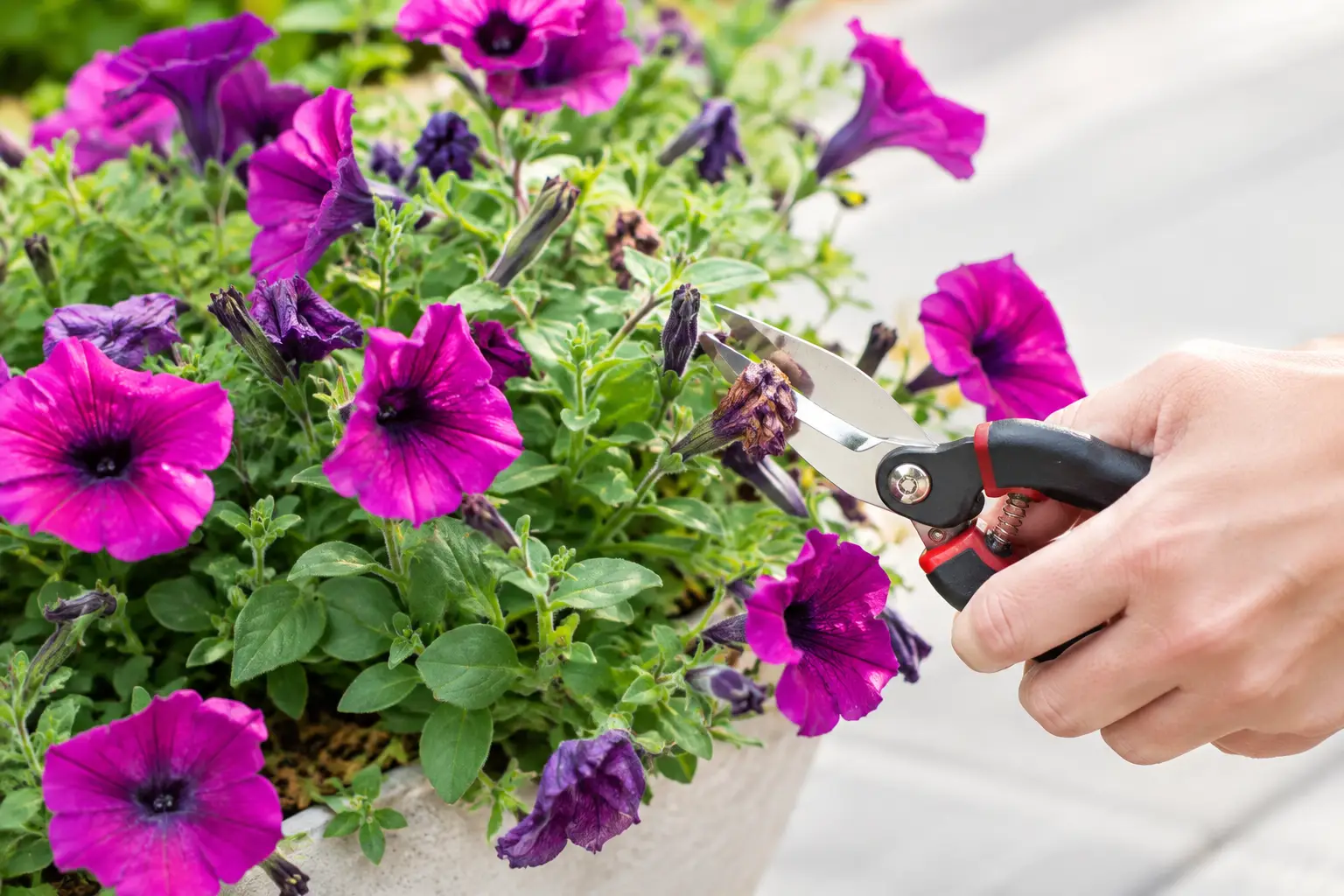
A petunia hanging basket can look spectacular one week and a little tired the next, even when it is still producing blooms. The usual reason is spent flowers and developing seed pods. Learning how to deadhead petunias keeps plants looking neat, encourages another round of blooms, and helps the color in your pots, beds, and window boxes work harder all season long.
For Long Island gardeners, this small task is especially worthwhile during the warm stretch of summer, when petunias grow quickly and containers can go from full to floppy in just a few days. A few minutes of attention once or twice a week often makes the difference between plants that fade early and plants that continue filling out your front walk, patio, or porch.
Why deadheading makes petunias bloom longer
A petunia flower has one main job: to make seed. Once a bloom fades and begins forming a seed pod, the plant directs energy toward finishing that process. Removing the faded flower and its developing pod tells the plant it has more work to do. In response, many petunia varieties continue producing new buds instead of slowing down.
Deadheading also improves the plant's appearance right away. Brown, papery flowers can collect in hanging baskets and become more noticeable after rain. Removing them helps the fresh blooms stand out and improves air circulation around crowded stems.
There is one important exception. Some newer petunia types are labeled self-cleaning. These varieties naturally shed many old blooms and may not need traditional deadheading as often. They still benefit from occasional grooming, trimming, fertilizer, and regular watering, especially when grown in containers. If your plant has lots of faded flowers clinging to the stems or visible seed pods behind them, it is a good candidate for deadheading.
How to deadhead petunias correctly
The key is to remove more than the petals. If you simply pull off the wilted flower, the green seed pod can remain behind and continue developing. Look just beneath the faded bloom for a small, swollen section where the flower meets the stem. That is the part you want to remove.
Hold the stem gently with one hand. With the other, pinch the faded bloom and the small stem directly behind it between your thumb and forefinger. Snip or pinch just above the next set of healthy leaves or a side shoot. Clean, sharp garden scissors or hand pruners make the job easier when stems are thick, but your fingers are usually enough for routine maintenance.
Work around the entire plant rather than taking all the old flowers from one area first. On a hanging basket, start at the outer edges and move toward the center, lifting trailing stems as you go. In a garden bed, check the lower stems too. Faded blooms often hide beneath the fresh color on top.
If a stem is long, bare, or mostly finished blooming, do not be afraid to cut it back farther. Trim it by about one-third, making the cut just above leaves or a branching point. This is not the same as deadheading a single bloom, but it encourages the plant to branch and prevents a leggy, thin look.
What a spent flower looks like
Fresh petunia blooms are soft, open, and brightly colored. A spent bloom will look wilted, closed, faded, or dry to the touch. Behind it, you may see a narrow green tube or a rounded pod beginning to swell. Remove the flower, tube, and pod together for the best result.
Do not worry if you remove a small amount of stem with each flower. Petunias are vigorous annuals. Light pinching encourages a fuller plant, provided it is getting enough sun, moisture, and nutrition.
When to deadhead petunias
Check petunias every few days during peak bloom, particularly after heavy rain, hot weather, or a weekend away from the garden. You do not need to make deadheading a major project every time. Pulling a handful of faded blooms while you water containers is often enough to keep plants presentable.
A more thorough grooming once a week is useful for baskets, planters, and high-visibility areas near an entryway or patio. In a large bed planting, you can focus first on the plants most visible from the street or seating area, then work through the rest as time allows.
Morning is a comfortable time to do the job because plants are usually less stressed and you can see the spent blooms clearly. Avoid cutting plants back hard during the hottest part of a very dry afternoon. If they need a larger trim, water them first and give them a little recovery time afterward.
Deadheading vs. cutting petunias back
Deadheading removes individual faded flowers and developing seed pods. Cutting back, sometimes called shearing, shortens several stems at once to renew the entire plant. Healthy petunias often need both over the season.
When plants begin flowering only at the tips and their centers look bare, a light haircut is usually more helpful than plucking every old bloom. Cut back roughly one-quarter to one-third of the plant, aiming for stems with leaves below the cut. Then water thoroughly and apply a suitable flowering-plant fertilizer according to the label. New growth and buds should follow as the plant recovers.
The trade-off is temporary. A freshly trimmed petunia may have fewer blooms for a week or two, but it often returns denser and more colorful than a plant left to stretch and set seed. This approach is especially helpful for hanging baskets and large containers by midsummer.
Give deadheaded petunias what they need next
Deadheading cannot solve every petunia problem by itself. A plant that is short on sun, water, or nutrients may still bloom poorly even when every faded flower is removed. Petunias perform best with at least six hours of direct sun, though intense afternoon heat can dry containers quickly.
Check pots and baskets daily in hot weather. Soil that is dry an inch below the surface needs a deep drink until water runs from the drainage holes. At the same time, avoid letting containers sit in standing water. Petunia roots need moisture, but they also need oxygen.
Regular feeding matters because petunias are heavy bloomers. A slow-release fertilizer at planting time can help, while a water-soluble fertilizer used as directed can support containers through the season. Yellow leaves, slow growth, and weak flowering may be signs that the plant needs more nutrition, though overwatering and compacted soil can cause similar symptoms.
Good drainage is particularly important after summer storms in Nassau County. If blooms are battered by rain, remove damaged flowers once the plants dry. This simple cleanup keeps the display fresh and reduces the chance that decaying petals will stick to foliage.
Common deadheading mistakes to avoid
The most common mistake is removing petals while leaving the seed pod behind. Take the small stem section beneath the flower as well. Another mistake is waiting until the plant is covered with brown blooms and long, tangled stems. Regular light grooming is easier on both the gardener and the plant.
Avoid stripping every leaf from a stem while you work. Leaves fuel the new growth that produces future flowers. Also, do not assume every petunia variety behaves the same way. Compact bedding petunias, trailing types, and self-cleaning selections can all have different grooming needs. Watch how your particular plants respond, then adjust your routine.
If your baskets have become sparse despite good watering and feeding, a moderate trim may be the better move. For help choosing vigorous seasonal color, containers, soil, and plant food suited to your sunny or partly shaded space, Westminster Nursery can help you build a display that stays inviting from spring planting through the later summer weeks.
The best time to deadhead is simply when you notice a faded bloom. Keep a small pair of pruners near your watering can, pinch a few spent flowers as you pass by, and let your petunias keep putting their energy where you want it: into fresh color at your door, along your walkway, and across the patio.