
A Guide to Choosing Patio Planters That Last
Use this guide to choosing patio planters for Long Island homes, from materials and sizing to drainage, sun exposure, and plant pairings that thrive here.
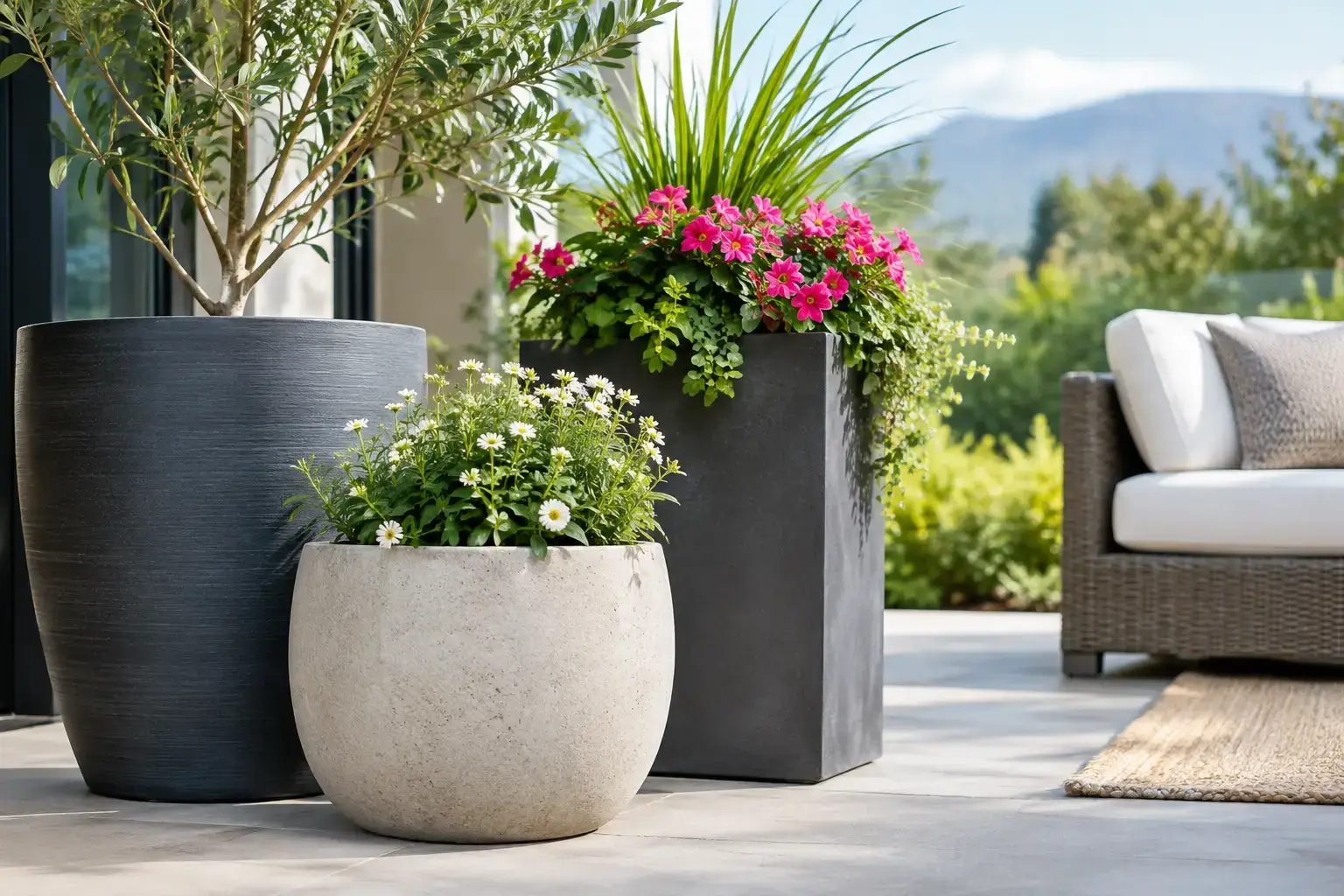
A planter that looks perfectly sized in the garden center can feel tiny beside a wide patio door, while an oversized container can quickly become impossible to move once it is filled with soil and water. This guide to choosing patio planters helps Long Island homeowners make the right call before bringing home containers, annual color, herbs, tropicals, or shrubs for the season.
Patio planters do more than hold plants. They frame an entry, soften hardscapes, create privacy around a seating area, and bring a finished look to decks, porches, pool areas, and front steps. The best choice balances style with real-world needs: sun, wind, weight, drainage, plant size, and the way you use the space.
Start With the Patio, Not the Plant
Before choosing a color or material, stand back and look at the area from the street and from inside your home. A container arrangement should relate to the scale of its surroundings. Small pots can disappear against a broad brick façade or a deep porch, while tall statement planters can make a narrow walkway feel crowded.
For an entryway, matching containers on either side of the door create a classic, welcoming effect. Make sure there is ample room to open the door and pass comfortably. On a large patio, use a few substantial planters to define zones rather than scattering many small containers across the surface. One tall planter near a corner, paired with lower pots near seating, often looks more intentional than a collection of unrelated styles.
Think about viewing distance, too. Fine leaf detail and delicate blooms are best appreciated close to a chair, table, or front step. From the curb, bold foliage, taller forms, and high-contrast flowers have more presence.
Choose a Planter Material for How You Live
Material affects appearance, but it also determines weight, moisture retention, durability, and winter care. There is no single best patio planter for every home.
Ceramic and glazed pottery
Glazed ceramic planters bring rich color and a polished look to front entrances and protected patios. They are generally heavy enough to stay put in breezy conditions, which is helpful in exposed Long Island yards. Their trade-off is weight and cold sensitivity. If water remains inside through repeated freezing and thawing, some pottery can crack. Reserve especially valuable pieces for sheltered locations or empty and protect them before winter.
Terra cotta
Terra cotta has a warm, traditional garden feel that works beautifully with herbs, lavender, flowering annuals, and Mediterranean-style plantings. Because it is porous, soil dries more quickly than it does in plastic or glazed containers. That can be useful for plants that dislike wet roots, but it means more frequent watering during hot summer weather. Standard terra cotta is also more vulnerable to winter damage outdoors.
Lightweight resin and plastic
Resin and quality plastic containers are practical choices for decks, balconies, upper-level spaces, and planters that need to be moved seasonally. They are easier to handle and often hold moisture longer, a benefit for busy households. Look for thick, UV-resistant styles with convincing finishes rather than thin containers that may fade or flex over time. On a windy patio, add weight carefully at the base or choose a broader planter profile.
Fiberglass, composite, and metal
Fiberglass and composite planters offer clean modern shapes without the weight of concrete. Many are suited to larger-scale designs and can handle changing weather well, though quality varies. Metal containers make a striking contemporary accent, but dark finishes can heat up quickly in full sun, putting extra stress on roots. Use them thoughtfully for sun-loving plants, provide consistent moisture, and avoid locations where a hot container will be against bare skin or delicate foliage.
Size Matters More Than Most Shoppers Expect
A larger planter gives roots room to grow and contains more soil, which helps moderate moisture and temperature swings. Small containers dry out fast in July and may limit even vigorous annuals by midsummer. If you want a planter to carry a big tropical, a small shrub, or a mixed arrangement through the season, give it more volume than you think you need.
As a practical rule, choose a container that is at least a few inches wider than the root ball of a single focal plant. For mixed plantings, select a pot wide enough to space plants without crowding them at installation. The arrangement will fill in. Packing plants tightly may look lush on day one, but it leads to reduced airflow, more frequent watering, and plants competing for nutrients.
Height matters as much as diameter. Deep-rooted selections, such as small evergreen shrubs or upright tropicals, need meaningful soil depth. Shallow bowls are better for low-growing annual color, succulents, or temporary table arrangements.
Do not forget the final weight. A large ceramic planter filled with wet soil can weigh hundreds of pounds. Choose its permanent location before filling it, especially on a deck or rooftop surface with load limitations.
Drainage Is Non-Negotiable
A beautiful planter without drainage holes is a cachepot, not a ready-to-plant outdoor container. Roots need oxygen as well as water. After a heavy Nassau County rainstorm, a container without drainage can become a bathtub, leading to yellow leaves, root decline, and plants that collapse despite regular care.
Look for open drainage holes at the bottom. If a decorative container has none, use it as an outer cover for a nursery pot that can be lifted out for watering, or have proper drainage added when the material allows. Avoid filling the bottom with rocks in an effort to improve drainage. This reduces the amount of soil available to roots and does not solve standing-water problems. Start with drainage holes, use a quality container mix, and place the pot where water can exit freely.
Saucers are useful under planters on delicate surfaces, but do not allow pots to sit in a pool of water for long. Raise large containers slightly on planter feet when practical to improve drainage and protect the patio below.
Match the Planter to Sun, Wind, and Watering Habits
Your patio has its own microclimate. A south-facing area near a light-colored wall can be far hotter than the rest of the yard. An open corner may receive steady wind that dries foliage and tips top-heavy pots. A covered porch may stay noticeably drier even after rain.
For full sun, choose generous containers that hold enough soil to buffer roots from heat. Pair them with heat-tolerant annuals, ornamental grasses, herbs, or sun-loving tropicals. In part shade or shade, foliage plants, begonias, impatiens, and textured mixed containers can bring plenty of color without requiring intense light.
Be honest about watering. A collection of small terra cotta pots in full sun can be rewarding, but it needs close attention in summer. If weekends away, work travel, or a packed family schedule make daily watering unlikely, larger resin or glazed containers are often a more forgiving choice. Grouping pots together also creates a slightly more humid pocket and makes watering faster.
Build a Planting With Height, Fullness, and Movement
The familiar approach of a tall center plant, rounded fillers, and trailing plants still works because it gives an arrangement structure. It is not a rule that every planter must follow. A sleek row of architectural grasses, a single palm in a substantial pot, or a monochromatic collection of flowering containers can look equally strong.
For a balanced mixed planter, start with one focal element that matches the container's scale. Add companion plants that offer contrast in leaf shape, bloom color, or texture. Finish with trailing selections only if they suit the amount of sun and the way people move around the pot. Cascading plants are beautiful along railings and patio edges, but they can snag feet or lawn equipment beside a busy path.
Color should connect to the home rather than compete with it. A neutral planter lets seasonal flowers do the work. A bright blue, red, or patterned container can become the focal point on a simple brick, siding, or stone backdrop. Repeating one planter color in two or three locations helps the whole outdoor space feel coordinated.
Plan for the Season Ahead
Annual containers are an easy way to refresh a patio from spring through fall, while evergreen shrubs, grasses, and hardy perennials can provide a longer-lasting foundation. It depends on whether you enjoy changing the display through the year or prefer a lower-maintenance structure with a few seasonal additions.
If you plan to leave containers outside through winter, select materials rated for outdoor freeze-and-thaw conditions and make room for proper drainage. Avoid planting tender tropicals or summer annuals with permanent woody plants unless you are prepared to change the arrangement as seasons shift.
For help matching container styles with the right plants, Westminster Nursery offers the selection and local growing knowledge to make patio shopping feel straightforward. Bring a photo of your space, note how many hours of sun it receives, and measure the area before you shop. A little planning at the start turns a planter into a patio feature you will enjoy every time you step outside.