
Why Are Hydrangeas Not Blooming? Fix the Cause
Why are hydrangeas not blooming in your Long Island yard? Find the pruning, weather, light, soil, and watering issues that can keep flowers away this year.
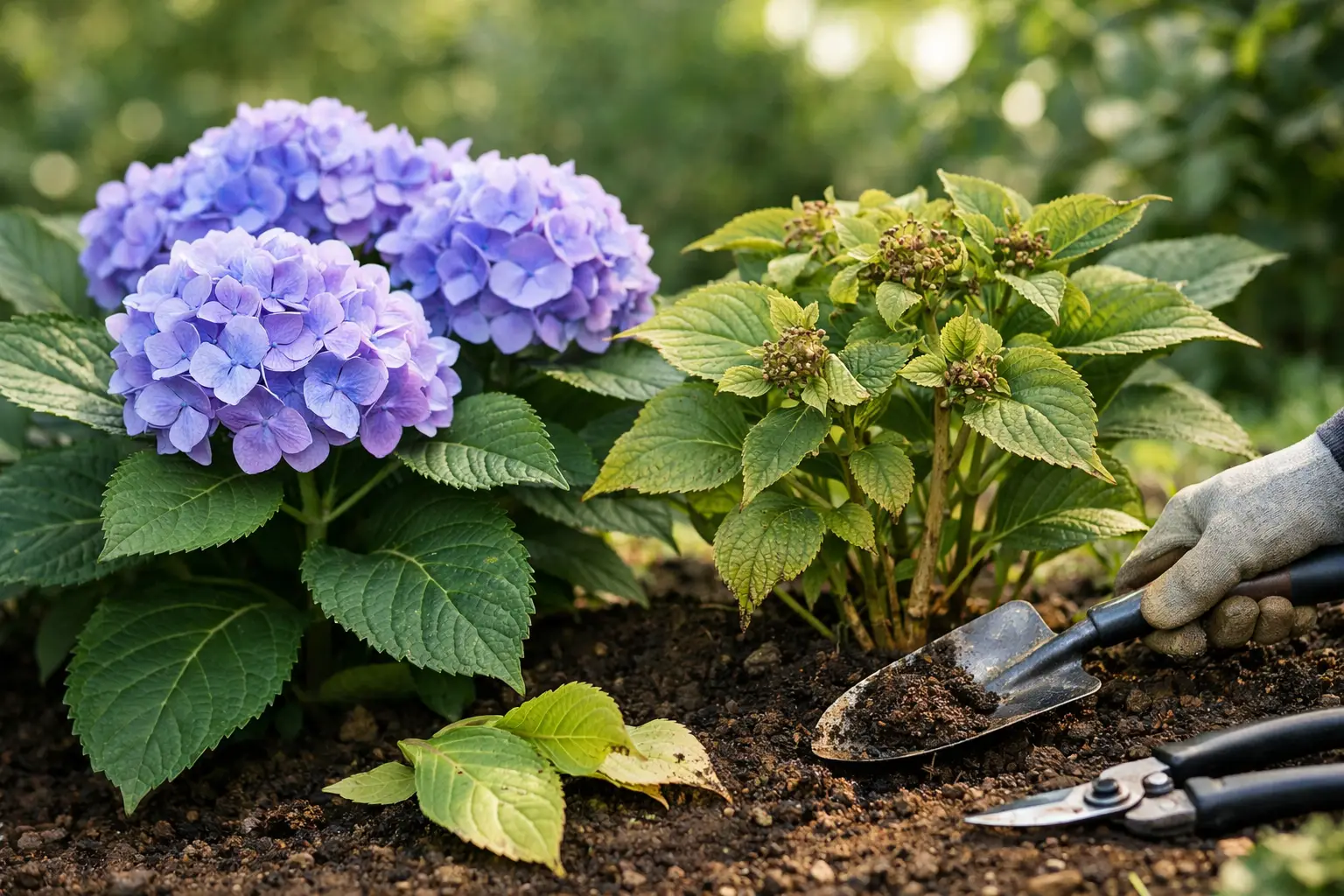
A hydrangea covered in glossy leaves but missing its signature flowers can be one of the most frustrating sights in a Long Island landscape. If you are asking, “why are hydrangeas not blooming,” the answer is usually not that the plant is failing. More often, it is a timing issue involving pruning, winter weather, sun exposure, or a mismatch between the variety and its location.
The good news is that most bloom problems can be identified and improved. Start by looking at the type of hydrangea you have and what happened in the garden over the last year. A healthy-looking plant may be holding a very specific clue.
Why Are Hydrangeas Not Blooming? Start With the Type
Not every hydrangea forms flowers the same way. This matters more than any fertilizer or watering routine.
Bigleaf hydrangeas, including many familiar mophead and lacecap varieties with blue, pink, or purple flowers, often bloom on old wood. That means their flower buds are formed on stems produced during the previous growing season. If those stems are cut back at the wrong time or damaged by winter cold, the plant can leaf out beautifully in spring without producing flowers.
Oakleaf hydrangeas also generally bloom on old wood. Panicle hydrangeas, such as varieties with cone-shaped white blooms that often turn pink, and smooth hydrangeas with round white flower heads, bloom on new wood. They set buds on growth made during the current season, making them more forgiving after winter and easier to prune.
If you inherited a hydrangea with the house or are not sure what variety is planted, bring a clear photo of the leaves, stems, and any old flower heads to Westminster Nursery. Identifying the type is the fastest way to make a better care decision.
Incorrect Pruning Is a Common Bloom Killer
A well-intended spring cleanup is one of the top reasons hydrangeas miss a flowering season. With old-wood hydrangeas, cutting stems down in early spring can remove the buds that would have opened later that summer.
For bigleaf and oakleaf hydrangeas, prune only after flowering, if pruning is needed at all. Remove spent blooms, dead or damaged stems, and a few of the oldest canes at the base to improve air movement. Avoid shearing the entire shrub into a tight ball. That may look tidy for a week, but it can cost you next year’s flowers.
Panicle and smooth hydrangeas can be cut back in late winter or early spring because they bloom on new growth. Even then, do not feel obligated to cut them to the ground. Removing about one-third of the oldest stems and shaping lightly often creates a stronger, more natural plant.
Watch for Accidental Damage
Pruning is not always done with hand pruners. Deer browsing, heavy snow, branch breakage, and aggressive fall cleanup can all remove buds. Before trimming, look closely at the stems. On old-wood varieties, plump green buds near the upper portion of a living stem are potential flowers. Preserve them whenever possible.
Long Island Winter Weather Can Damage Flower Buds
In Nassau County gardens, a late cold snap can be especially hard on bigleaf hydrangeas. The roots and stems may survive, yet exposed flower buds can be damaged after a cycle of mild weather followed by sharp cold. The plant then grows leaves from lower buds but has few or no blooms.
This is why location makes such a difference. A planting spot near a foundation, fence, evergreen screen, or other wind buffer can give an old-wood hydrangea better winter protection. Avoid placing it where winter winds sweep across an open lawn or where afternoon sun causes an early warm-up followed by overnight cold.
For hydrangeas that repeatedly lose buds, winter protection can help. After the ground cools in late fall, apply a 2- to 3-inch layer of mulch around the root zone, keeping it away from the stems. In exposed locations, a simple breathable burlap barrier around the plant may reduce wind stress. Do not wrap the shrub tightly in plastic, which can trap moisture and create other problems.
If winter injury happens year after year, consider adding a panicle or smooth hydrangea to the landscape. These dependable bloomers are excellent choices for sunny borders, foundation plantings, and mixed shrub beds because they flower on new growth.
Too Much Shade Means Leaves Without Flowers
Hydrangeas are often labeled as shade plants, but deep shade is not the same as the filtered light many varieties prefer. A bigleaf or oakleaf hydrangea can survive beneath a dense tree canopy while producing very few flowers. The plant directs its energy toward stretching for light and maintaining foliage.
Most hydrangeas perform best with morning sun and afternoon shade. On Long Island, four to six hours of gentle sun is a strong target for bigleaf and oakleaf types. Panicle hydrangeas can take more sun and often bloom most heavily with six or more hours, provided they receive consistent moisture.
Before moving a mature shrub, observe the site on a sunny day. A spot that seemed bright in spring may become heavily shaded after trees leaf out. Sometimes selective pruning of overhead branches, rather than moving the hydrangea, provides the extra light it needs. Moving is best done when the plant is dormant, usually in early spring or fall.
Fertilizer Can Create a Leafy Plant Instead of a Flowering One
More fertilizer does not automatically mean more flowers. Nitrogen-heavy lawn fertilizer can encourage lush green leaves at the expense of blooms, particularly when it reaches nearby shrubs through runoff or broad application.
If your hydrangea is dark green, vigorous, and flowerless, take a break from high-nitrogen feeding. A balanced, slow-release fertilizer formulated for flowering shrubs can be applied according to the label in spring. One measured application is usually enough for established plants. Newly planted hydrangeas may need time to build a root system before they deliver a full display.
Soil pH affects the color of many bigleaf hydrangeas, not whether they bloom. Acidic soil tends to produce blue flowers, while more alkaline soil leans pink. Changing pH is not a cure for a plant that has lost its buds, lacks light, or has been pruned at the wrong time.
Water Stress Can Interrupt Bud Development
Hydrangeas have large leaves and need steady moisture, especially during their first few seasons and during hot summer stretches. A plant that repeatedly dries out may conserve resources by reducing flowering. At the same time, soil that stays saturated can damage roots and weaken the whole shrub.
Water deeply at the base when the top few inches of soil feel dry, rather than giving the plant a quick daily sprinkle. Mulch helps soil stay evenly moist and keeps roots cooler. If water puddles around the plant after rain, improve drainage or consider relocating it to a raised area before root problems become severe.
Give Young or Stressed Plants Time
A hydrangea planted recently may spend its first year settling in rather than putting on a major flower show. Transplant shock, root disturbance, summer heat, and a change in light can all delay blooming. This does not mean the plant was a poor choice.
Focus on consistent watering, proper mulch, and the right amount of light. Avoid frequent moves, repeated fertilizer applications, or hard pruning while it establishes. Healthy roots lead to stronger stems, and stronger stems set the stage for blooms.
A flowerless hydrangea is often a fixable garden mystery, not a permanent disappointment. Take a closer look at its variety, its pruning history, and the conditions around it before making changes. With the right plant in the right spot and a little patience through the seasons, your hydrangea can return to being the colorful focal point it was meant to be.