
Which Hedge Grows Fastest for Long Island Privacy?
Wondering which hedge grows fastest? Compare Green Giant arborvitae, Leyland cypress, and skip laurel for a fuller Long Island privacy screen at home.
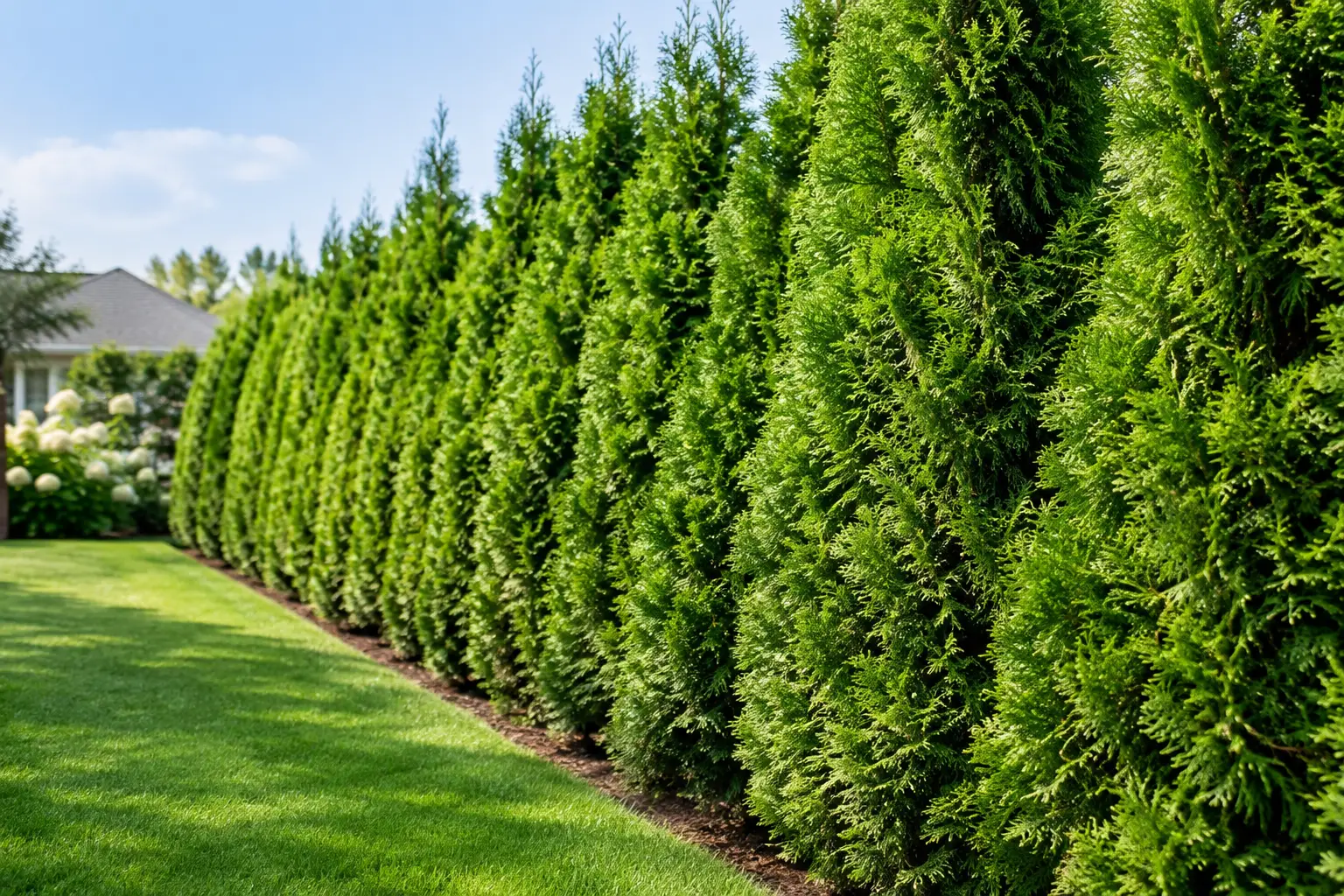
A bare property line can feel a lot more exposed once the neighbors are outside, the patio furniture is out, and every backyard gathering is in view. If you are asking which hedge grows fastest, the short answer for many Long Island homes is Green Giant arborvitae. But fast growth is only useful when the plant also fits your sun, soil, space, and maintenance expectations.
A privacy hedge is not a one-season purchase. The right choice can turn an open yard into a green, comfortable outdoor room for years to come. The wrong one may outgrow its spot, struggle in winter, or leave gaps where you wanted coverage. Here is how to choose a fast-growing hedge that works in Nassau County and across Long Island.
Which hedge grows fastest in Long Island yards?
Among the most popular privacy plants, Leyland cypress can be the fastest grower, often adding 3 to 4 feet in a good year once established. Green Giant arborvitae is close behind, with a dependable growth rate of roughly 2 to 3 feet per year. Skip laurel grows more moderately, usually 1 to 2 feet annually, but offers a very different look and can be a smart choice where a broadleaf evergreen hedge suits the landscape.
Growth rates are not guarantees. A healthy plant in full sun with room for roots will establish much faster than one planted in compacted soil, deep shade, or a narrow strip beside pavement. Proper planting and regular watering during the first growing seasons matter just as much as the variety on the tag.
Green Giant arborvitae: the dependable privacy favorite
Green Giant arborvitae earns its reputation because it combines fast growth with a dense, rich green screen. It has a naturally pyramidal shape, stays evergreen through winter, and typically reaches 30 to 50 feet tall over time. For homeowners who need screening from a neighboring yard, a busy road, or a rear property line, it delivers a substantial living wall without constant shearing.
Plant Green Giants in full sun to partial shade, allowing enough width for their mature size. While they are often planted in a row, crowding them too tightly can reduce airflow and create a hedge that is thin at the base. A staggered planting can give a fuller result and a more natural appearance, especially on larger properties.
Green Giants are a strong fit for many Long Island landscapes because they handle winter weather well once established. They still need consistent moisture after planting. Deep watering encourages roots to move beyond the original root ball, which is what helps the hedge grow quickly and stand up to dry stretches later on.
Leyland cypress: speed with more planning required
Leyland cypress is hard to beat when the priority is height in a hurry. Its feathery evergreen foliage and rapid growth can create an impressive screen quickly. Mature plants can reach 40 to 60 feet or more, so this is not a hedge for a narrow side yard or a space directly under utility lines.
The trade-off for that speed is size and maintenance. Leylands need generous spacing, sun, and good air circulation. They can become very wide if left untouched, and heavy pruning into old wood may not produce fresh green growth. If your goal is a formal, tightly clipped hedge, this is usually not the easiest choice. If you have a larger sunny boundary and want an informal evergreen screen with serious growth potential, it may be exactly the right plant.
Skip laurel: fast enough, broadleaf, and polished
Skip laurel is not the tallest grower in the group, but it deserves attention because it makes a handsome, dense evergreen hedge. Its glossy green leaves offer a softer, more traditional look than needled evergreens, and its white spring flowers add seasonal interest. It often matures around 10 to 18 feet tall, though pruning can keep it lower and more structured.
This plant is especially useful when you want privacy without the towering scale of Green Giant arborvitae or Leyland cypress. Skip laurel handles sun to partial shade and responds well to pruning. It is a good option for front-yard borders, patio screening, and locations where a substantial hedge is needed but a 40-foot tree would overwhelm the property.
Fast growth starts before the hedge goes in
Buying taller plants can make an immediate visual difference, but planting technique determines how quickly the hedge takes off after installation. Start with a site that receives the light the plant needs. Green Giants and Leyland cypress perform best with plenty of sun, while skip laurel has more flexibility with afternoon shade.
Dig a planting hole that is wider than the root ball but no deeper. The top of the root ball should sit level with, or slightly above, the surrounding soil. Planting too deeply is one of the most common reasons new shrubs struggle. Backfill with the native soil, water slowly and thoroughly, and apply a 2- to 3-inch layer of mulch while keeping mulch away from the trunks.
For the first year, check the soil beneath the mulch rather than relying on a set schedule. If it is dry a few inches down, water deeply. New hedges need moisture at the root zone, not a quick daily sprinkle on the foliage. A regular deep soak helps establish roots that support strong top growth.
Do not push a newly installed hedge with excessive fertilizer. A balanced approach is better. Healthy soil, water, sunlight, and correct spacing do more for long-term growth than overfeeding. If a soil test identifies a deficiency, address that specific need rather than guessing.
Spacing is the difference between a screen and a problem
The fastest hedge is not always the one that creates privacy fastest. A row planted too close may look full in year one, then compete for water and light in year three. The plants can become stressed, uneven, or vulnerable to disease.
For Green Giant arborvitae, spacing commonly falls around 5 to 8 feet apart, depending on whether you want a dense screen sooner or individual trees with breathing room. Leyland cypress generally needs even more room, often 8 to 12 feet apart. Skip laurels are commonly placed 3 to 5 feet apart for a continuous hedge, with wider spacing for a looser look.
Your desired finished height matters, too. A low hedge along a walkway needs a completely different plant plan than a tall screen between backyards. Before choosing, look up and out: consider overhead wires, mature width, driveway clearance, windows, fencing, and the neighbor's side of the property line.
Choose for the conditions, not just the growth rate
Long Island yards can vary dramatically from one block to the next. Some have sandy, quick-draining soil. Others hold water after a storm. Coastal locations may receive stronger wind and salt exposure, while more sheltered neighborhoods can have shade from mature trees and nearby homes.
Deer pressure can also affect the decision. Arborvitae may be browsed where deer are active, especially in winter. A deer-resistant strategy can involve plant selection, protective measures during establishment, and thoughtful placement. No hedge choice is truly maintenance-proof, but planning around the realities of your yard prevents disappointment.
If you need year-round privacy, choose an evergreen. If winter screening is less critical, certain deciduous shrubs can grow quickly and bring flowers or fall color, but they will not provide the same coverage once leaves drop. For most homeowners seeking a lasting visual barrier, evergreen structure is the priority.
Get the right hedge from the start
The best privacy hedge is the one that fills in quickly without becoming a future headache. Green Giant arborvitae is the go-to choice for many properties because it offers vigorous growth, dense evergreen coverage, and manageable care. Leyland cypress can deliver more speed where there is ample sun and space. Skip laurel brings a refined broadleaf look to areas where a medium-height evergreen hedge makes more sense.
At Westminster Nursery, homeowners can explore privacy hedge material in person and get practical guidance based on the actual sun, soil, and scale of their property. For larger projects, professional landscape planning and installation can help create spacing and plant combinations that look intentional from day one.
A hedge will grow for decades, so take a few extra minutes at the nursery to match the plant to the yard. The right row of evergreens does more than block a view - it gives your family a greener, more comfortable place to enjoy every season.