
12 Best Shade Trees for Long Island Yards
Choose the best shade trees for Long Island yards, with practical guidance on mature size, planting space, fall color, and dependable summer daily comfort.
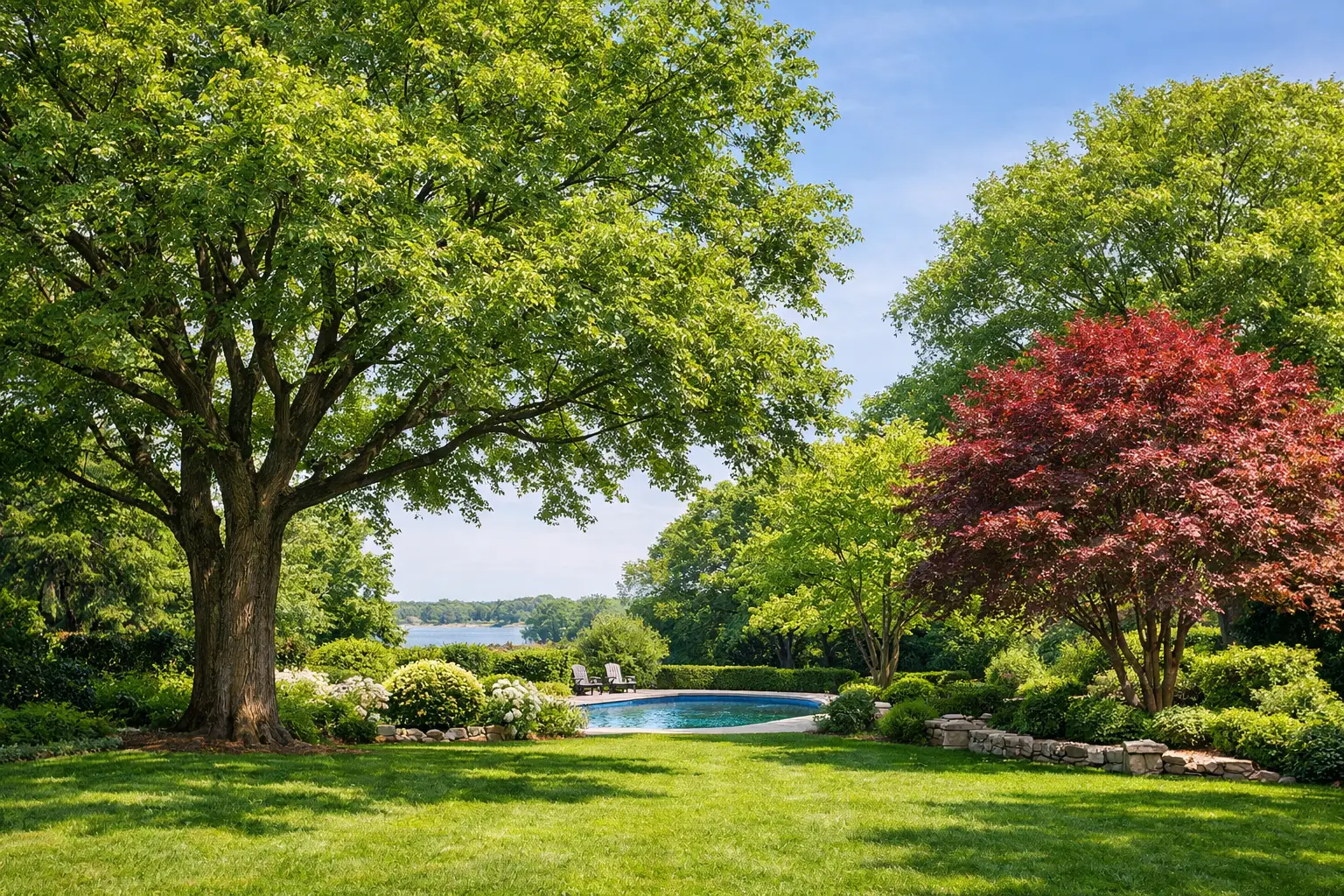
A shade tree changes how a yard gets used. It can make a sunny patio comfortable in July, cool the front of the house, frame a play area, and give a new landscape the feeling that it has always been there. The best shade trees for Long Island are not simply the fastest growers. They are trees that fit your available space, handle local weather, and still look beautiful decades from now.
What Makes a Great Shade Tree?
A great shade tree earns its place through a broad canopy, strong branching structure, and reliable performance in local soil and weather conditions. Nassau County properties often have compact lots, clay-heavy or sandy soil, coastal wind, and varying levels of summer heat. That means mature size matters as much as fall color or growth rate.
Before choosing a tree, look up and look down. Overhead wires, rooflines, driveways, patios, septic areas, and underground utilities all affect where a tree can safely grow. A tree that reaches 60 feet tall may be perfect for a wide backyard but overwhelming beside a ranch home or narrow side yard. Plan for the mature canopy, not the size of the tree on planting day.
12 Best Shade Trees for Long Island Landscapes
1. Northern Red Oak
Northern red oak is a classic choice for large yards. It develops a broad, rounded canopy that delivers substantial summer shade, then puts on a memorable display of red to russet fall color. It is adaptable, long-lived, and makes a handsome statement tree when given room to spread.
Plant it away from foundations, utility lines, and small ornamental beds. Mature red oaks need space, but few trees bring the same sense of permanence to a property.
2. Swamp White Oak
Despite its name, swamp white oak does not require a wet yard. It handles heavier soils and occasional moisture better than many other oaks, making it a strong option for areas that hold water after a hard rain. Its rounded crown provides dense shade, while its leaves have a subtle silvery underside that catches the breeze.
This is a practical, durable tree for homeowners who want the longevity of an oak without selecting strictly for dry soil.
3. White Oak
White oak is one of the finest long-term investments for a spacious landscape. It grows more deliberately than some quick-growing choices, but patience is rewarded with a majestic, wide canopy and excellent strength. Its deep green summer foliage and rich fall tones give it four-season presence.
Choose white oak for an open lawn where it can mature without crowding buildings. Once established, it becomes the kind of tree people associate with established Long Island neighborhoods.
4. Red Maple
Red maple offers an appealing balance of shade, manageable growth, and bright seasonal color. Its leaves create a pleasing canopy through summer, and many selections turn vivid red or orange in fall. It is also a good choice for homeowners who want a tree that establishes faster than an oak.
Red maples can adapt to many conditions, although they perform best with consistent moisture while young. Avoid planting too close to sidewalks or driveways, since surface roots can become more noticeable as the tree matures.
5. Sugar Maple
For traditional shade and standout autumn color, sugar maple remains a favorite. Its dense canopy helps cool a lawn or patio, while fall leaves can range from golden yellow to orange and red. It is especially attractive in a larger yard with reasonably well-drained soil.
Sugar maple is not the right answer for every hot, dry, exposed site. If your property has reflected heat from pavement or poor soil, ask for guidance on a more tolerant maple or another shade-tree option.
6. Tuliptree
Tuliptree, also called tulip poplar, grows tall quickly and brings a high canopy with large leaves that cast generous shade. In late spring, it produces distinctive greenish-yellow flowers that resemble tulips. Its upright shape makes it especially useful in deeper backyards where height is welcome.
This tree needs room and is best kept away from power lines. It can shed leaves or small twigs during stressful weather, so it is not ideal directly over a pool, parking spot, or carefully maintained patio.
7. American Sycamore
American sycamore is built for big spaces and bold shade. Its large leaves, striking mottled bark, and spreading habit create an unmistakable presence. It tolerates urban conditions well and can be a smart choice for a large lawn, commercial property, or open estate-style setting.
The trade-off is cleanup. Sycamores drop large leaves, bark, and seed balls, so place one where its scale and character can be appreciated without creating extra work around a tight outdoor living area.
8. Dawn Redwood
Dawn redwood gives homeowners something different: a fast-growing shade tree with soft, feathery foliage that turns warm orange-brown in fall. It is a deciduous conifer, meaning it loses its needles in winter, but its handsome trunk and graceful branching still provide structure during the colder months.
It does best in soil that does not stay dry for long periods. With enough room and moisture, dawn redwood becomes an impressive focal point and a welcome source of summer shade.
9. Ginkgo
A male ginkgo is one of the toughest urban shade trees available. It handles pollution, compacted soil, and many challenging conditions while developing a distinctive canopy. Its fan-shaped leaves turn clear golden yellow in fall, often dropping in a dramatic, nearly all-at-once display.
Be specific when selecting one: male cultivars are preferred for home landscapes because female ginkgo trees produce messy, strong-smelling fruit. A nursery professional can help identify suitable selections.
10. Sweetgum
Sweetgum brings glossy, star-shaped leaves and exceptional fall color, often showing several shades of red, purple, orange, and yellow at once. It develops a dense, rounded canopy that works beautifully on a larger lawn.
Traditional sweetgums produce spiky seed pods that can be inconvenient near walkways and patios. Fruitless varieties solve that concern, making them a much better fit for many residential properties.
11. Japanese Zelkova
Japanese zelkova is a refined choice for medium to large yards. Its vase-shaped form, handsome bark, and arching branches provide shade without the massive footprint of a mature oak or sycamore. It is often used where homeowners want a polished street-tree look with dependable summer coverage.
Its canopy becomes broader with age, so give it enough clearance from the house. Zelkova is an excellent option when a property needs graceful structure as well as shade.
12. Littleleaf Linden
Littleleaf linden creates a dense, heart-shaped leaf canopy and has a tidy, rounded-to-pyramidal habit. Its fragrant early-summer flowers are a pleasant bonus, and its size is easier to manage than some of the largest shade trees on this list.
Lindens can attract bees when in bloom and may need occasional monitoring for insect activity. Still, for a lawn, driveway edge, or larger front yard, they offer a beautiful balance of form, fragrance, and cooling shade.
Plant for the Canopy You Want Later
Even the best tree can struggle if it is planted too deeply or placed in the wrong location. Set the root flare slightly above surrounding grade, create a wide planting area, and use mulch around the root zone without piling it against the trunk. Regular deep watering during the first growing seasons is far more valuable than frequent light sprinkling.
Skip the temptation to crowd a new tree with annuals or turf right up to its trunk. A clean mulch ring reduces competition for water and helps protect the bark from mowers and string trimmers. As the tree grows, thoughtful pruning can encourage a strong structure and prevent future conflicts with roofs, lights, and walkways.
For homeowners planning a new landscape, Westminster Nursery can help match shade trees to the scale, soil, sun exposure, and style of your property. The right selection makes the difference between a tree that merely survives and one that becomes a favorite part of the yard.
A good shade tree is not a quick seasonal purchase. Stand where you want to sit on a hot August afternoon, picture the canopy overhead, and choose the tree that gives that spot room to become a lasting part of home.