
12 Best Flowering Trees for Yard Curb Appeal
Find the best flowering trees for yard color in Nassau County, from dogwoods and cherries to crape myrtles, plus tips for choosing the right fit at home.
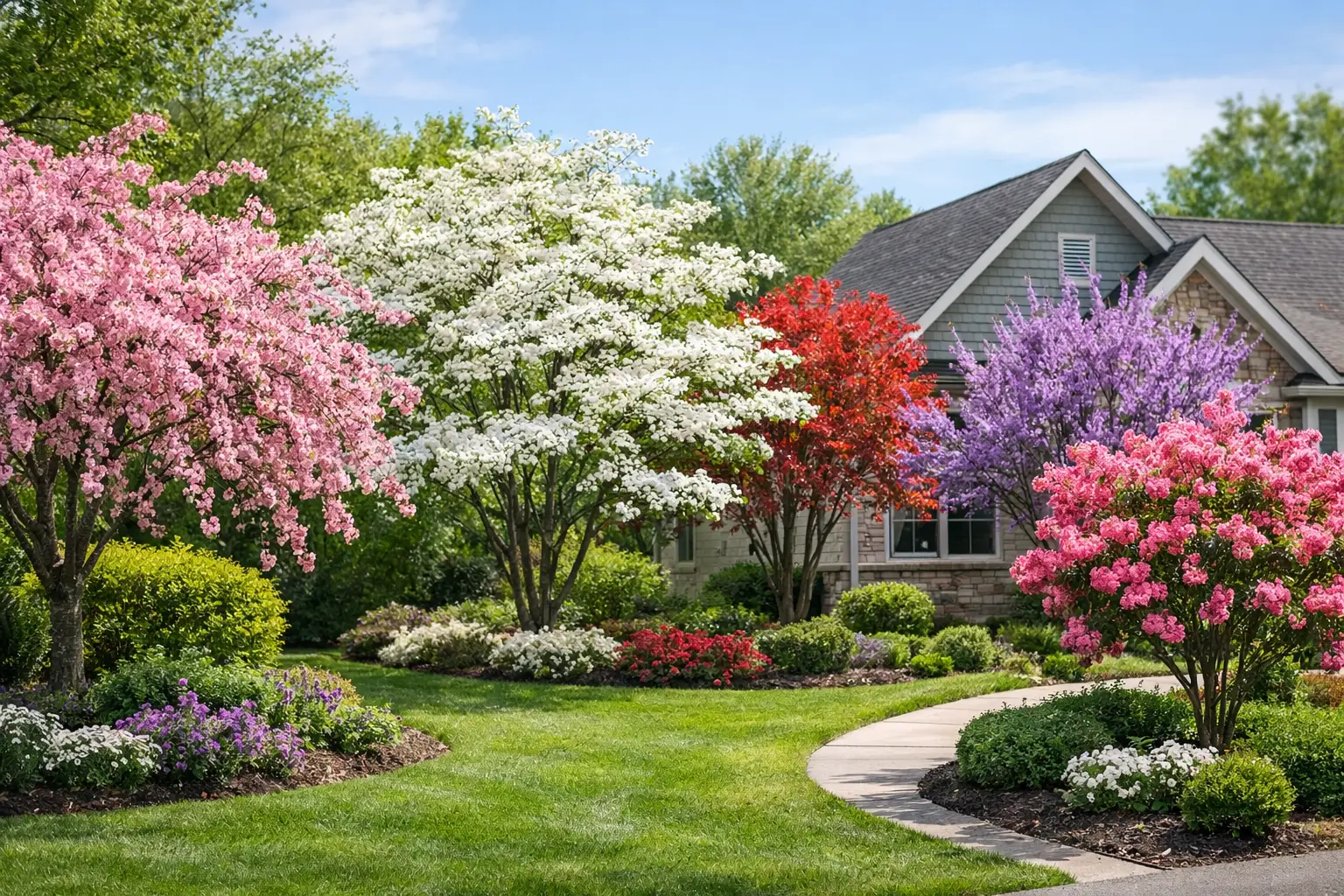
A flowering tree can change the feeling of a property before anyone reaches the front door. One well-chosen tree adds spring color, shape, shade, and a focal point that makes foundation plantings and lawns feel finished. For Long Island homeowners, the best flowering trees for yard spaces are the ones that bring a strong seasonal show while standing up to local winters, summer humidity, and the realities of the space you have.
The right choice is not always the tree with the biggest bloom. Mature size, sunlight, drainage, deer pressure, maintenance, and where the tree will be viewed all matter. A compact tree may be perfect near a patio or front walk, while a larger specimen can anchor a broad lawn or create a memorable entrance.
Choosing the Best Flowering Trees for Your Yard
Before selecting a variety, look up and look around. Overhead wires, rooflines, driveways, walkways, pools, and neighboring trees can limit where a tree belongs. Measure the planting area with the mature canopy in mind, not the size of the container it comes in.
Most flowering trees bloom best with at least six hours of direct sun. Some, especially dogwoods and redbuds, appreciate a little relief from harsh afternoon sun and can work beautifully at the edge of taller trees. Drainage is equally important. Long Island soils vary widely, and a tree that sits in standing water after rain may struggle no matter how attractive it looked at planting time.
For a front yard, think about the view from the street and from inside the home. For a backyard, consider where blooms will be enjoyed most - beside a deck, outside a kitchen window, or beyond a seating area. The strongest landscape plans repeat color and texture across the property instead of placing every flowering feature in one spot.
12 Flowering Trees That Earn Their Place
1. Eastern Redbud
Eastern redbud is one of spring's first announcements. Its rosy pink flowers cover bare branches before the heart-shaped leaves emerge, creating a warm burst of color after winter. It typically reaches 20 to 30 feet tall and wide, making it a manageable choice for many residential landscapes.
Redbud works well as a lawn specimen or at the edge of a woodland-style planting. Give it sun to partial shade and well-drained soil. It has a naturally graceful form, so allow room for its branches to develop rather than squeezing it tightly between structures.
2. Flowering Dogwood
Flowering dogwood has a classic, layered branching habit and showy white or pink bracts in spring. Its red fall berries and rich autumn foliage extend its appeal beyond bloom season. This tree is especially effective near patios, front entries, and shaded property edges where its horizontal form can be appreciated.
Dogwoods prefer moisture-retentive but well-drained soil and benefit from a sheltered spot. They are not the choice for a hot, exposed strip beside pavement, but in the right location they offer four-season interest with a refined look.
3. Kousa Dogwood
For homeowners who want a dogwood with later blooms, Kousa dogwood is an excellent option. It flowers in late spring to early summer, after many other flowering trees have finished. White, star-like bracts cover the canopy, followed by distinctive raspberry-like fruit and attractive exfoliating bark as the tree matures.
Kousa dogwood generally handles full sun better than flowering dogwood, though it still appreciates adequate water during dry periods. Its mature size, often 15 to 25 feet, suits smaller lawns and garden beds.
4. Flowering Cherry
Flowering cherries deliver the spring display many homeowners picture when they think of ornamental trees. Clouds of pink or white blossoms can turn a front yard into the standout on the block for a few vivid weeks. Upright, spreading, and weeping forms offer very different looks, so the habit matters as much as flower color.
Choose a sunny location with good air circulation and avoid low, wet ground. Cherries can require more attention than some tougher selections, but their bloom display makes them worth considering for a prominent, well-maintained location.
5. Crabapple
Crabapple is a practical favorite because it delivers much more than spring flowers. Pink, red, or white blooms are followed by small fruit that can add color into fall and support birds. Many modern varieties are selected for stronger disease resistance and persistent fruit.
With sizes ranging from compact forms to 20-foot-plus specimens, there is often a crabapple for a challenging space. Ask about varieties suited to your site, particularly if you want minimal fruit drop near a walk, driveway, or patio.
6. Saucer Magnolia
Saucer magnolia produces oversized, goblet-shaped blooms in shades of pink, purple, and white. It is a true statement tree for a front lawn or large planting bed, especially where early spring color is a priority. Mature plants often grow 20 to 30 feet tall with a broad, rounded presence.
The trade-off is timing. Early flowers can be affected by a late frost, and the tree needs space to look its best. Plant it where the developing canopy will not compete with tight foundation beds or crowd a narrow side yard.
7. Star Magnolia
Star magnolia brings a softer, more compact version of the magnolia look. Its fragrant white flowers open early in spring, and its smaller mature size makes it a strong candidate for courtyards, entry gardens, and homes with limited planting room.
It performs best in sun to light shade and benefits from protection against strong winds. Use it as a specimen where its early flowers are visible from indoors, because this is a tree that makes late winter feel shorter.
8. Crape Myrtle
Crape myrtle is prized for months of summer flowers, colorful bark, and a graceful multi-stem form. Its blooms appear when spring-flowering trees are long finished, making it useful for extending color through the hottest part of the season. Newer selections offer a range of mature heights and flower colors.
On Long Island, placement matters. Crape myrtle needs full sun and performs best in a warm, protected location. A sunny south- or west-facing area can make a noticeable difference, especially for younger plants during winter.
9. Japanese Tree Lilac
Japanese tree lilac flowers in early summer, producing large, creamy white clusters with a noticeable fragrance. It is a dependable, medium-sized tree that can reach roughly 20 to 30 feet tall and works well as a lawn specimen or street-side accent.
Its bloom timing fills a useful gap after spring favorites fade. Give it full sun and enough room for airflow, and enjoy its dark green foliage and attractive bark through the rest of the growing season.
10. Serviceberry
Serviceberry offers delicate white flowers in early spring, edible berries in early summer, and impressive orange-red fall foliage. It can be grown as a multi-stem clump or trained as a small tree, which gives it flexibility in both naturalistic and more formal landscapes.
This is a smart choice for homeowners who want seasonal interest without a heavy, oversized canopy. It adapts to sun or partial shade, though fuller sun typically produces stronger flowering and fall color.
11. Fringe Tree
Fringe tree is a distinctive choice for gardeners looking beyond the usual flowering tree selections. In late spring, airy white flowers hang from the branches like soft fringe, creating a light, almost cloudlike effect. It usually matures around 15 to 20 feet tall and wide.
Fringe tree is especially effective near a patio or in a mixed border where its texture can be seen up close. It prefers sun to partial shade and well-drained soil. Because it has a naturally loose shape, it looks best when allowed to grow without constant shearing.
12. Hydrangea Tree Form
For small spaces, a tree-form hydrangea can bring dramatic flowers without the footprint of a traditional ornamental tree. Large white panicles appear in summer and often age into soft pink tones as the season progresses. While technically a shrub trained into tree form, it performs the same visual job in a compact garden.
Place it near an entry, patio, or front bed where its long bloom period can be enjoyed daily. It needs regular water while establishing and may benefit from support or pruning to maintain its tidy form.
Make the Planting Work for the Long Term
A flowering tree needs a strong start. Dig a broad planting hole, keep the root flare at or slightly above finished grade, and avoid burying the trunk under mulch. A two- to three-inch mulch layer helps conserve moisture and regulate soil temperature, but keep mulch several inches away from the bark.
Water deeply and consistently during the first growing season, especially during dry stretches. Newly planted trees do not have the established root systems needed to handle drought on their own. Pruning should be purposeful, too. Remove damaged or crossing branches, but do not over-prune a tree simply to make it look smaller than its natural mature form.
For help matching bloom time, mature size, and site conditions, visit Westminster Nursery with a few photos and basic measurements of your planting area. Seeing trees in season and discussing the space with experienced local plant professionals makes it much easier to choose a tree that will look just as good years from now as it does on planting day.